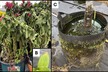


At the Lehr- und Versuchsanstalt für Gartenbau (LVG) in Bad Zwischenahn-Rostrup, Lower Saxony, Germany, woody alternatives to boxwood for low hedges have been tested under practical conditions for many years. The trials focus on identifying species that can replace boxwood, which has been severely affected by pests and diseases, while meeting requirements for winter hardiness, resistance to pests and diseases, hedge density and growth performance. Among the candidates, Rhododendron Bloombux® from the Inkarho® breeding programme has shown strong results.
 © Inkarho
The LVG is currently conducting its third trial on boxwood alternatives. The present study was established in 2015 and includes 50 different taxa, comprising deciduous and coniferous woody plants as well as perennials. For the trial, one-metre hedge segments were planted in triplicate. The plants are trimmed twice a year, in July and October, to a height and width of approximately 20 cm. Assessments include growth vigour, hedge density, and biotic and abiotic damage. Ongoing issues with boxwood have generated significant interest in the findings within the green sector.
"Bloombux has shown consistently positive results in the trials and has proven to be a practical alternative to boxwood," says Björn Ehsen, who has overseen the research from the outset. From the beginning, Bloombux demonstrated uniform growth and good suitability for topiary. The dwarf rhododendron also performed well due to its tolerance of calcareous soils, winter hardiness and abundant flowering in June.
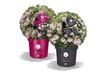
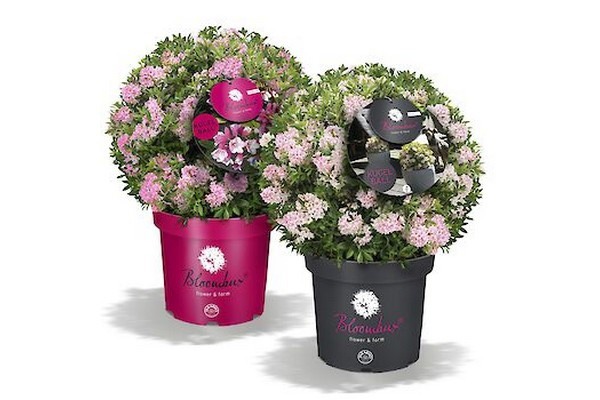
In addition to its performance as a low hedge, Bloombux proved suitable for mass planting. This is illustrated in a display at the adjacent Park der Gärten in Bad Zwischenahn. The plant can also be used in spherical forms or in containers, although these applications were not part of the specific trial.
Ehsen notes certain limitations. "Bloombux is a rhododendron with specific site requirements. Adequate nutrient supply is essential, and a sunny to semi-shaded position with humus-rich, well-drained soil is recommended. If these conditions are taken into account, Bloombux is a worthy alternative."
Similar long-term trials have been conducted at other locations in Germany, with comparable results. In Erfurt, Bloombux was classified as a "recommended alternative", provided its site requirements were met. In Dresden-Pillnitz, it also received a positive overall assessment. The dwarf rhododendron performed well in a demonstration garden of the Landwirtschaftskammer Niedersachsen in Hannover-Ahlem, where various species were evaluated for use in cemetery plantings. The results remained stable even at drier, sunnier sites.
For more information:
Inkarho
https://www.inkarho.de/nl/