
Bob Kotut of Karen Roses Ltd. in Kenya applied Trianum for the first time on a few plots in 2012. Other products from the NatuGro range followed in November 2013. The results convinced him that NatuGro benefits his crops. ‘Incidences of disease have dropped drastically, and the branches are heavier and up to 20% longer. NatuGro and Trianum absolutely offer value for money.’
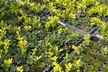
Karen Roses Ltd., which measures 70 hectares and has over 1,000 employees, has two production locations, one in Nairobi and one in Eldama Ravine. The company grows a wide range of standard and polyantha roses. About 90% of these roses are directly sold to buyers in Europe. A limited amount of the roses make their way to the Netherlands, where they are auctioned.
Initial introductions
On the recommendation of his adviser, in 2012 owner Bob Kotut first applied Trianum on a plot infected with Agrobacterium. ‘I was curious about what effect it would have,’ he explains. ‘Initially I didn’t notice much, but after a while the crop became visibly healthier and stronger. That resulted in increased productivity, branch length, and branch weight.’ The untreated part of the plot continued to show poor performance and the harvest was less than half of the intended yield. Last year, that part of the plot was cleared. The treated part of the plot is still in production and is currently producing 75% of the intended yield. ‘In relation to the original situation, that’s an increase of 50%,’ Kotut confirms. ‘And there’s still more room for improvement.’
More resistant crop
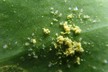
Last year, the grower realized that a young crop on a plot of 1.8 hectares was continuously plagued by powdery mildew and downey mildew. Hardly any healthy branches were produced, and those few were much too short. Kotut says, ‘No matter what we used, the mildew just kept coming back. The Koppert consultant told me that NatuGro might be able to reverse the situation, because this programme increases the resistance of the crop both above ground and underground. I decided to follow his advice. The first application was in November. Irrigating the crop monthly with Trianum-P, ProTerrum, ProParva, and ProFortum had a gradual but clearly positive effect.’
Surprisingly good
In June 2014, Kotut calculated exactly how much improvement he had seen. ‘The branch production on an annual basis is now 8% higher. The average branch length has increased by 20% to reach 52 cm. Product loss due to powdery mildew has been reduced by 30%. Downey mildew has been all but eliminated - even in May, when the rainy season started, we didn’t have problems. During that period, we normally deal with loss percentages of 30% due to downey mildew. Added to that is the fact that if the crop is stronger, you don’t have to resort to chemical agents as often. So it’s a win-win situation. I would say the results are surprisingly good!’
Patience and perseverance
On the basis of his experiences, Bob Kotut concluded that Trianum and the other NatuGro products work well and have a noticeable effect. ‘We’ve switched over to using it on poorly-performing crops to increase their vitality, promote productivity and branch length, and make the plants more disease-resistant,’ he sums up. Each of these goals has been achieved. ‘It didn’t happen from one day to the next, but I wasn’t expecting that to happen. It simply takes time to restore the biological balance in the root environment and to strengthen a crop in a sustainable way. Patience, perseverance, and working carefully will ultimately ensure the desired results, and that also means that you won’t have to use chemical agents as much. That reduces stress at the company, too. We now apply Trianum-P on 30 hectares of roses, and we are currently using the other NatuGro products on 8 hectares. The NatuGro products absolutely offer value for money.’
For more information
Koppert Biological Systems