

Researcher Kathleen Buckingham:
The environmental costs of Valentine’s Day flowers
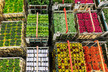
"The cut-flower – or floriculture industry – was developed in England in the late 19th Century and now stands at an estimated US$33 billion. The Netherlands, United States and Japan account for nearly half of the world’s flower trade with the majority of the market being distributed via the Netherlands. The Netherlands makes up only 10 per cent of production volume but accounts for 60 per cent of global export. Since the 1990s, production has shifted towards countries where climatic conditions can provide year round production with low labour costs, with Colombia, Kenya, Ecuador and Ethiopia the world’s greatest producers. Whilst controls do exist, there are huge implications for the environmental impact of the industry.
"Chemical pollution is an issue. The cut-flower industry is a short-cycle production process that requires the extensive use of agrochemicals which have a negative effect on the air, soil and water supply.
"The industry has loose regulatory status because flowers are not edible crops and are exempt from regulations on pesticide residues, although they carry significantly more pesticides than allowed on foods. It is estimated that one-fifth of the chemicals used in the floriculture industry in developing countries are banned or untested in the US. In 2015, the Montreal Protocol (signed in 1987 to prevent the depletion of the ozone layer) deadline for changing floricultural chemical use of Methyl Bromide came into effect in all developing countries. Already 100 per cent phased out in the US since 2005, Methyl Bromide is a toxic chemical hazardous to humans, five times more potent than Carbon Dioxide and destructive to the ozone layer with an Ozone Depletion Potential of 0.6 (with CFCs classified as 1)."
Read the full article at the Policy Forum