
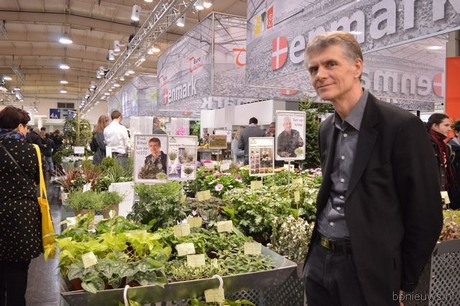
Poul Riber at the IPM Essen.
Increasing popularity greens
Green plants were always considered as grandma plants. However, lately they seemed to have increased in popularity. "Just like grandma's food, grandma's plants are also making their comeback in Europe," says Riber.
Increasing production main export countries
In spite of the increased popularity of these plants, it is a tough market for this Danish grower to participate in. According to Riber, there are a lot of greens on the market and he says this is due to the increased production in his main export countries and the current situation in Russia. "We used to sell a lot to Germany and Sweden, but lately they increased their own production volumes. As these companies also have to deal with the declined requests from Russia, they have to supply their own country with plants and this is being promoted by the country itself. So it does not leave much room for our plants. On top of that, we, here in Denmark, have to deal with high energy costs and high labour costs; the cost of one hour of labour in Denmark is the highest in Europe. So, all in all, these current developments put us in a challenging position," he says.
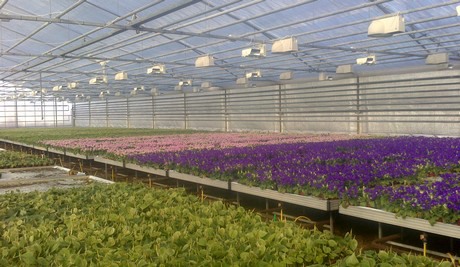
One of Riber's greenhouses with green plants and Campanula medium Lady in pink and blue.
Seasonal production
So can Riber survive in this situation? According to Riber, the fact that they are producing different plants every season is why they are still in the market. "It is good to show something new every time and they are easier to sell than year round plants," he says. Besides that, he also belongs to a Danish marketing collaboration, called Ladybird Flowers, that consists of three Danish nurseries. "Each of these nurseries has specialized in a niche production of interesting plants. So, together it comprises a wide range of products, which makes selling the plants easier," he says.
For more information
Lady Bird Flowers
Poul Riber
Email: [email protected]