

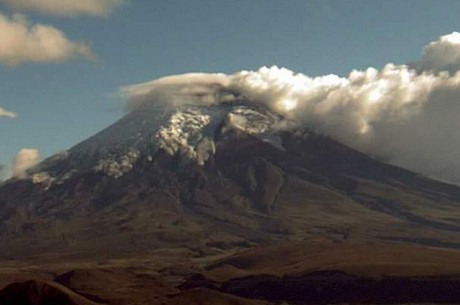
Photo taken by one of the webcams of volcanodiscovery.com.
Magma active
According to Volcano Discovery, the surface activity of the volcano has been mostly low during the past weeks, characterized by degassing/steaming and occasional very weak ash emissions. However, the overall seismic activity of the volcano is still elevated and some few deep-seated explosive events are being recorded (on average 1-3 / day). "This type of activity possibly indicates that a magma source remains active inside the edifice. The most likely scenario of the coming days to weeks is that surface activity remains at a low level and or continues to decrease, with intermittent small ash emissions possible that would only affect the immediate areas surrounding the volcano. However, even though it is much less likely now, an increase in internal and external activity of the volcano cannot be excluded either,'' Volcano Discovery reports.
Impact flower farms
In August 2015, the volcano was spewing ash, which damaged some flower farms in that area. The farms along the river were not damaged at that time, but they are still under threat. When the volcano erupts, these farms could be severely damaged by a secondary effect; the lahars. These will come down from the ice-capped Cotopaxi volcano. This large lahar can burst the banks and everything that is in its path. Rocks, trees, and so on will all be brought down and might destroy some farms in the South. However, there are mixed opinions about how heavy the damage will be for the farmers when the volcano actually erupts. Some say the damage will not be that terrible and others say it will. According to Volcano Discovery, the risk of lahars is still elevated. "Fortunately, we are located in the northern part of the Country, in Cayambe (north of Quito), so when or if the volcano erupts, we will be probably safe," says Davila.
Fear for losing customers
After these small explosions in August, of which the ash damaged some farms, the entire market was affected by the Volcano. As well as the fear of losing their farms, the growers were also worried that they would loose their buyers before the volcano even erupts. According to Davila, this is not their primary concern anymore. "When talking to other growers, I don't think that is a problem at the moment. Our real problem now is an over supply of flowers in market", he says.