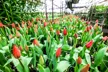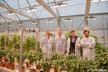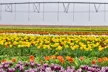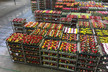


Modern growers are increasingly becoming entrepreneurs who must know all about the many aspects of a modern-day greenhouse cultivation company. According to Mans, that leads to further developing essential resources, such as a climate computer or a water management system. "Nowadays, regulation and control by a climate computer play an essential role in any of the larger companies." However, despite that fact, he believes that having green fingers is still very important. "Certainly in the case of NWG, it is about making the right observations and using this information to choose the correct settings at the right time."
In the last few years, Mans has developed NWG even further. He became more aware of his energy consumption, which was the first step towards making savings. However, the biggest added value is the optimal growth that he has experienced. "An optimal greenhouse climate greatly improves quality. I can now also deliver top quality products during the more difficult growing periods in the year. Insight into every detail of the plant's growing process leads to many other opportunities."
The climate computer plays an important role in the pursuit of growth optimization. Mans has recently switched to Priva for his climate control needs. "I have made that choice because it gives me more options to achieve the ideal, balanced greenhouse climate. I get calculations in advance based upon a variety of parameters. And that helps me to take the right decision at the right time in order to achieve my goal."
For a grower, the Priva Connext computer is a form of operational safety. "It continuously makes backups. We also have two water systems and two combined heat and power systems, because continuity is essential for a production company. You always have to be able to deliver." Being certain that you can always deliver brings Marius Mans to the final, yet undiscussed, subject of crop protection. "Fighting diseases and pests has a very high priority in gerbera growing. The gerbera is a bushy plant with a lot of leaves close to each other, which makes it difficult to treat diseases and fight pests. For that reason and also because we want to demonstrate corporate social responsibility, biological control is extremely important. It has to do with having the right balance and an integrated approach. A lot of knowledge has been gained about biological control in the Netherlands, which has given us an advantage over growers from other parts of the world. That helps us to be able to hold and improve our strong position in the future."
For more information
Priva
Zijlweg 3
2678 LC De Lier
The Netherlands
P.O. box 18
2678 ZG De Lier
T +31 (0)174 522 600
F +31 (0)174 522 700