

Lace bugs on ornamentals in the nursery
by Tom Dudek, Michigan State University Extension, and Dave Smitley, MSU Department of Entomology
When lace bugs develop on herbaceous perennial plants, the adults probably overwinter in a protective location like on the ground in leaf litter. They emerge as spring growth starts. Adult females attach their eggs to the undersides of the leaves, often along the mid-ribs, sometimes covering them with a black, varnish-like coating. The nymphs complete their life cycles quickly, and one to several generations can occur during the growing season; most often there are two generations. During a warm summer, lace bugs can complete a generation in as few as 30 days. Most often by the end of September, all life stages can be found on a host plant.
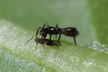
Photo 1. Close up of adult lace bug. Photo: Missouri Botanical Gardens.
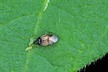
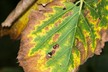
Michigan State University Extension suggests nursery growers and scouts look for yellow spots on the upper leaf surfaces of infested perennials like aster, chysanthemum, helianthu, rudbeckia and solidago. Feeding on the undersides of leaves with their piercing-sucking mouthparts causes yellow spots to appear on upper sides of leaves. Lace bug damage can be confused with spider mite feeding damage, but look for the presence of the lace bugs themselves or the shiny, black fecal spots on the undersides of infested leaves. Also, if there are numerous lace bugs, there will be cast skins present on the leaves (Photo 2).
Photo 2. Lace bug feeding damage with adults. Photo: The Ohio State University.
Because lace bugs are sucking-insects like aphids, the most effective insecticides are imidacloprid, dinotefuran or clothianidin applied as a soil drench. Products that contain these active ingredients are Safari, Flagship, Gaucho and several other imidacloprid products – note that these products are neonicotinoid insecticides. Orthene, Tristar, Aria or Endeavor can be used as a foliar spray (these are not neonicotinoid insecticides). Tristar is not harmful to pollinators after the spray residue dries.
Source: MSU Extension