

Gebr. Valstar originates from 1978, founder Jac Valster started the cultivation of Marantaceae in Honselersdijk.
Expedition in Brazil
Gebr. Valstar is active in breeding, propagation and production of Calathea varieties. A large number of decorative varieties have been successfully upgraded and introduced to the market. There are regular visits to the tropical rainforest in Brazil to discover new varieties of this diverse plant family. About 60 varieties are currently known, of which the Gebr. Valstar sells about 25 commercially.
The breeding of Calatheas is a continuous process and that has given the grower a lot of attention. Their own varieties such as the 'Greystar' and the 'Triostar' have been awarded with a Holland Award for the best innovation in plant cultivation. By maintaining the cultivation of young plants on their own locations, the quality of the plants can be optimized. The cuttings are also traded commercially. In order to guarantee exclusivity, Gebr. Valstar also own varieties that are exclusively grown.
Technical highlights
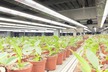
Both breeding locations are modern and designed for the cultivation of indoor plants. Automation and internal logistics have been optimized so that all employees can do their work under good conditions. The grower has 'smart' camera systems for sorting. The cameras assess the plants at height and thickness. The sorting systems then ensure that uniform selections are made. Because of this way of working, the quality and uniformity of the plants are optimal.
Sustainable production
Sustainability is also an important issue for the grower. Gebr. Valstar is constantly looking for sustainable solutions within the growing process. The Calathea is a tropical plant and therefore needs a warm environment. The grower uses residual heat from a waste processing company at the Roosendaal location. At the Maasland site, the company has been connected to geothermal heat since 2018. Together with surrounding companies, investments have been made in this, still new, form of energy. A risky investment, but it offers a great opportunity to reduce CO2 emissions. With this, they opt for a more sustainable future of Calathea cultivation in the Netherlands.
source: OZ Export