


Produce Marketing Association’s June 10 virtual Floral Roundtable featured ecommerce experts and entrepreneurs who stressed that the right tech, sound data, the ability to continually evolve, and finding ways to differentiate or serve a niche are among the keys to business success.
Ecommerce gaining traction is a trend PMA identified prior to the COVID-19 pandemic; however, stay-at-home orders across the United States from mid-March through late May/early June in many states bumped online floral sales significantly among consumers who gifted flowers, whether for themselves or others.
Panelists said March sales were negatively impacted because of consumers’ uncertainties and concern for the unknown, as well as disruptions in the floral supply chain. Across the board, however, sales for April, May and the Mother’s Day holiday, and into June were up for direct-to-consumer deliveries.
The panelists shared personal stories about the unique challenges they and their companies faced in the three months since the pandemic forced changes to consumer behaviors and daily living, the marketplace, and business operations. The upheaval caused by COVID-19 taught us nothing is certain, said one panelist. Adapting required making ongoing modifications to the supply chain, leaning into relationships with supply and transportation partners, and simplifying where possible, including making SKU rationalizations.
Where did demand come from? Closing of retail florist shops and supermarkets initially shifting focus to stock essentials played a part. In addition, consumers were looking for ways to stay connected to their network of friends and family. Ecommerce helped make those connections when social distancing limited in-person gatherings. Panelists said they expect the strong market to continue through September.
Panelists, which included representatives from Poppy, Urban Stems, FTD’s new CEO Charlie Cole, and distributor DiMare Fresh, listed several factors that were key to business continuity and success during the lockdown:
- Sound forecasting and planning
- Product quality, which is paramount to encourage repeat purchases
- Trust and good relationships with suppliers, partners
- Being nimble and able to adapt at various points in the supply chain
- Focusing on imminent needs, prioritizing
For those considering getting into digital sales, panelists cited the following musts:
- Ensure you have a sound tech, including people, infrastructure and capabilities.
- Machine learning, artificial intelligence and data are critical. It’s important to capture customer zip codes to start the routing algorithms and match product offerings to availability in the customer’s area. “Win locally first,” advised one panelist.
- Make it easy and convenient for customers to pay. Google Pay and Apple Pay are no brainers. Include them as payment options. The ability to pay in installments has appealed to Millennials and Gen Z. Platforms like Afterpay that check credit worthiness of customer and accommodate installment payment plans can optimize payment stack.
- Be efficient with marketing. Paid social and paid search (Bing and Google) are both needed to support digital marketing, but make sure the order of operations is right.
- Pick a lane for digital marketing and go deep, advised one panelist.
- Tell a strong visual story with marketing. Invest in good creative, including photography.
- Verify metrics from Google and Facebook; verify performance.
- Find your niche. Differentiation is underrated. “Don’t get caught in a sea of sameness.”
- Test and iterate as a marketing, operations and product team.
- Need the right labor for high-volume and seasonal holidays, must be nimble and have contingency plans in place.
One of the ecommerce panelists on the roundtable focuses on the wedding and events market and serves independent floral creatives, many of whom work from home. The niche serves a “white space” that existed in the market and caters to brides and event planners who want more cost-effective, yet beautiful floral for special occasions. The etailer connects floral suppliers and wholesalers with this pool of “latent talent.” The company provides marketing and other back-office operations to their designers. Because of the strong relationship with their grower, the etailer was able to quickly pivot during the pandemic and within two-to-three weeks shifted to direct-to-consumer sales.
Other attributes today’s consumers care about include transparency, ethical and local sourcing, product quality, their customer experience, and availability of on-trend products. Establishing clear expectations with sourcing partners and working with growers so they know what’s on trend are also important. What’s not necessarily imperative to succeed in floral ecommerce; however, is a background in floral. While it’s important to have people who understand floral design and merchandising on staff, successful ecommerce teams also include those with varied experience like tech, marketing, design and even fashion backgrounds.
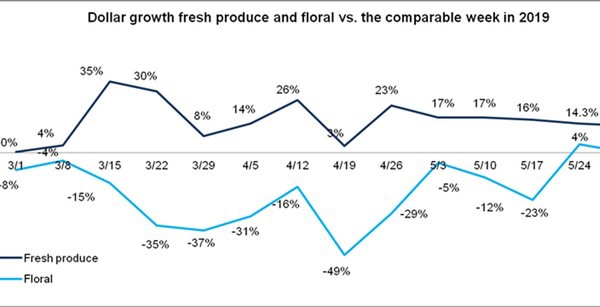
In addition to the roundtable discussion, PMA presented floral sales data from IRI for the period March 15 to May 15, which includes Easter and Mother’s Day. Sales heading into Easter began to uptick, but in addition to challenges presented by COVID-19, timing of the holiday also impacted Easter sales. Heading into Mother’s Day, sales crept up to –5 percent compared to last year. That tells us supermarkets brought product in and it was sold out. Post Mother’s Day data indicates floral sales are up 4 percent overall compared to this time last year.
For more information: PMA
PMA
www.pma.com