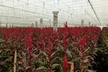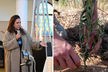

This winter, Bill Miller, professor at the horticulture section of Cornell University, observed two very interesting natural phenomena while forcing thousands of flower bulbs for trials at the Kenneth Post Laboratory Greenhouses.
Like most years, several of those forced tulips showed signs of tulip breaking virus (TBV). Technically, TBV is a disease. But one of the main symptoms is dramatic bloom color alterations including intricate bars, stripes, streaks, featherings or flame-like patterns.
This phenomenon contributed to the historic first collapse of a bubble economy, the famed Dutch “Tulip Mania” of the 17th century. Tulips with TBV helped fuel a speculative futures market, driving bulb prices to extraordinary levels. Single bulbs of coveted “broken” varieties commanded prices as high as 4,200 guilders at a time when a skilled craftsworker might earn 300 guilders a year.
A tulip ‘thief’ at KPL
"The second phenomenon we witnessed is exceptionally rare. In fact, in 22 years of bulb research and observing nearly 1 million tulips flowers, I’ve only seen it once before. Amongst the normal blooms, we observed a small plant with a muddy-colored flower. The Dutch call this a “dief” – literally a thief," says Miller.
These are actually ancient cultivars, usually with brownish-orange or brownish-pink flowers. It’s unlikely anyone ever selected for this germplasm with its mundane blooms. The plants are usually small and weak and rarely grow bulbs large enough to flower before they split.