


Two New Guinea Impatiens were recently submitted to the UMass Extension Plant Diagnostic Lab. While the growth of one plant appeared normal, the second had significantly shortened internodes, tight, bunchy growth, and leaves of diminished size. The plant appeared otherwise healthy. Suspected causes were misapplication of a growth regulator (PGR), or mite infestation. Feeding by broad mites may produce similar symptoms; however, no mites or insect pests were observed on dissection of buds and meristems.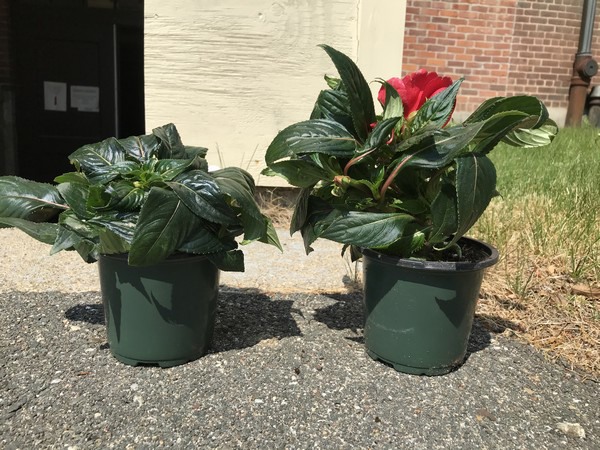
Photo by Angela Madeiras
In the end it was determined that application of a paclobutrazol-based PGR to hanging baskets positioned above the plants in the greenhouse was the cause of the issue. While moisture levels in the baskets were carefully managed to avoid runoff, scattered leakage of the drip system used to deliver the PGR resulted in differential impact to the Impatiens crop below. This case emphasizes the importance of precision in utilizing PGRs in order to achieve desired results, as well as the need for attention to how treatments to one crop may potentially affect another crop in a crowded house.
For more information:
University of Massachusetts Amherst
www.umass.edu