

At Kwekerij Bos Bloemen in the Dutch town of 's-Gravenzande, the focus from mid-April to the end of October is entirely on one flower: the celosia. This unique summer flower, known for its velvety combs and whimsical shapes, has been cultivated by Koos Bos and his son Philip for nearly 30 years.
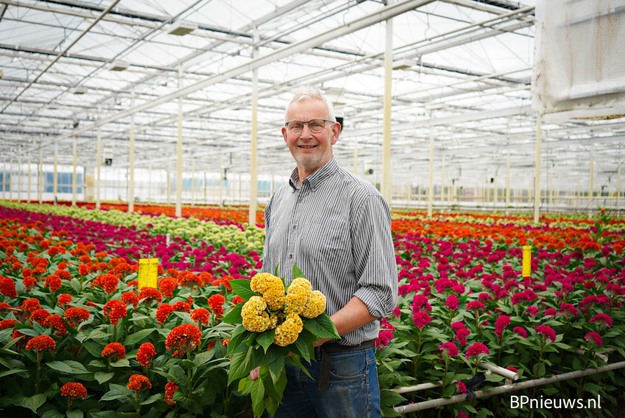 © Mirthe Walpot | FloralDaily.comKoos Bos
Velvet
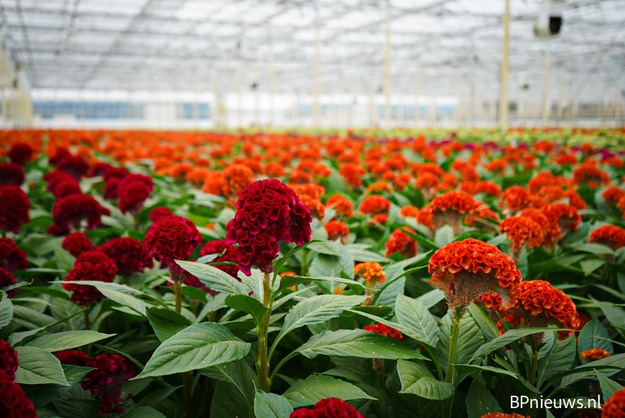
Koos speaks proudly about the celosia and remains fascinated by its growth even after all these years. "It begins as a small comb emerging from the plant. Initially, it's flat, but then it starts to curl and continues curling. The flower feels as soft as velvet," he explains while we walk through the greenhouse, observing the various stages of the celosia.
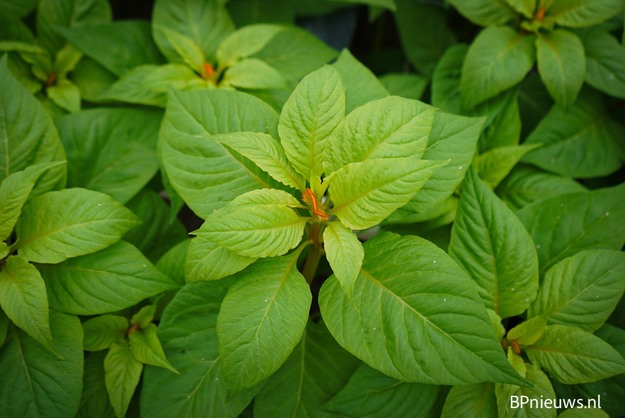 © Mirthe Walpot | FloralDaily.comThe early stage of the celosia
Challenging cultivation
According to him, celosia cultivation is a challenging cultivation, mainly because the plant comes from seed. "Celosias are sown, not cut. When you sow plants, there is much more variation in growth power than with cuttings. So you have quite a lot of loss in cultivation, which is something that characterizes the product." Light also plays a major role. "It is a plant that consumes an incredible amount of light. In the summer it can do very well, but when things get more difficult, it quickly fails. That's when you start to see growth differences."
"Because the growth power of each plant is different, you never get the uniformity of a rose or chrysanthemum." Koos doesn't mind this. "It's a plant of which you only put one or two stems in a mixed bouquet. With roses you want them all to be the same, here it can be different.
 © Mirthe Walpot | FloralDaily.com
Growth control
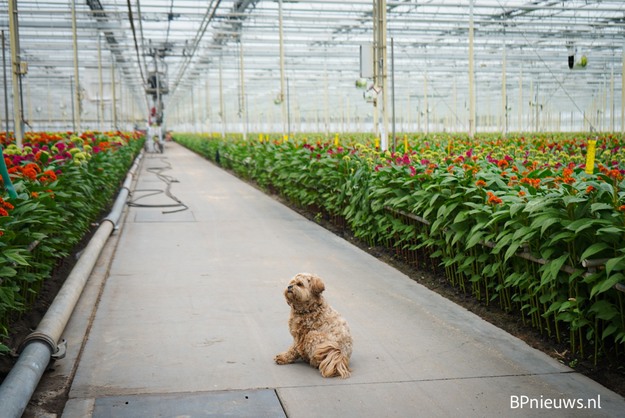
"Celosias grow like crazy and can grow up to two meters. That's a bit too big for a bouquet," laughs Koos. "The growth has to be well-controlled. With breeding that has improved a lot, but we are not as far as with lisianthus, if we ever get that far."
"In spring, summer, and autumn, we grow celosias, but it's not profitable in winter," Koos explains. "Celosias require a lot of light, so during winter, we temporarily switch to chrysanthemums. The setup for growing chrysanthemums can also accommodate celosias, but chrysanthemum cultivation is much easier to automate."
 © Mirthe Walpot | FloralDaily.com
Colors
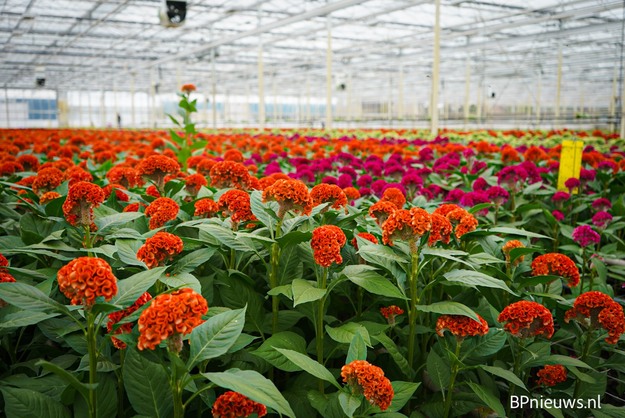
In the greenhouses, various types of celosias are always grown together. "We always have colors that complement each other nicely," Koos says. The colors range from dark pink to light green, but Koos explains that this doesn't make much difference in practice. "Color preference is very personal. Some people prefer dark colors, while others like light ones. Ultimately, though, the market will want whatever you have, whether it's light or dark."
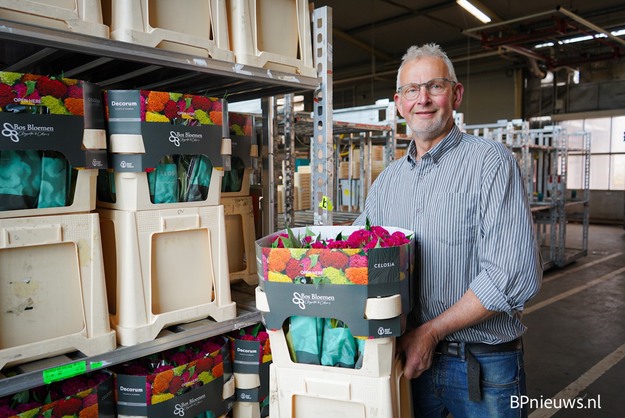
Currently, they grow five different colors, which are also supplied as mixed arrangements. "Typically, customers make small purchases of one, two, or three buckets, with some exceptions. In the weeks leading up to Mother's Day, however, there are also customers who buy in bulk."
 © Mirthe Walpot | FloralDaily.com
The celosias from Bos Bloemen are delivered under the Decorum label
Mixed, exclusive bouquets
On average, about 30,000 stems are harvested each day, but this number increases significantly around Mother's Day. However, this year, there was some concern leading up to the holiday. "Due to the warm weather, sales were a bit slower two weeks before Mother's Day," Koos explains. He notes that celosias, which are primarily sold in Europe, are perfect for mixed, exclusive bouquets. Bloomon bouquets, in particular, do well with celosias. "It needs to remain an exclusive product, and that's only possible with small-scale cultivation," he adds.
 © Mirthe Walpot | FloralDaily.com
Continuity
Bos Bloemen began cultivating celosias at a different location back in 1995. Since 2005, they have been growing them at their current 3-hectare facility. "Nearly thirty years ago, we started as growers aiming to offer celosias on the market for an extended season," Koos explains. "We have them available from mid-April to the end of October, covering half the year. This has provided us with a certain level of continuity. The market anticipates our return each year," he adds. "This continuity and our ability to meet market demand have shaped the way we operate here."
For more information:
Kwekerij Bos Bloemen
Alsemgeestlaan 15
2691 PJ 's Gravenzande
+31 (0)6 -18 93 92 29
[email protected]
https://decorumplantsflowers.com/kwekers/bosbloemen/