

"It can't come quick enough", says Neil Alcock of Seiont Nurseries, a plug and liner producer in Caernarfon, Gwynedd, when talking about the new UK-EU Sanitary and Phytosanitary (SPS) agreement that was announced earlier this week. The new agreement aims to streamline trade in agricultural and food products by reducing border checks and aligning certain standards. This development is part of a broader effort to reset post-Brexit relations and enhance economic cooperation. "I welcome the agreement to renegotiate and reset our trading relationship with the EU."
 © Seiont Nurseries
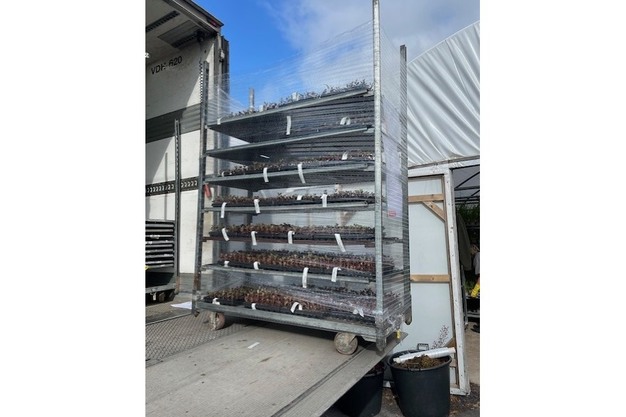
Seiont Nurseries new Coprosma Eclipse, being loaded for Italy this week
Seiont Nurseries still exports to the EU and, in fact, shipped to France and Italy this week. According to Alcock, there is a lot of work to prepare shipments. "Especially if there are many different plant varieties." Then there are all the additional costs, he continues. "They are incurred by us and also by our customers who currently pay for EU clearance."
So, Alcock will be very happy when the new agreement will take them back to where they were before Brexit. "We have fantastic new plants here at Seiont, which we want to share with our EU customers. We work with a partner in Holland, Carl Keijzer, who can keep in contact with customers throughout the EU and also together with Genesis Plant Marketing we have a program of new varieties which are being developed for that Market"
 © Horticultural Trades Association
And more in the industry are pleased with the development. In this article of the HTA that was published right after the UK-EU Leaders Summit, it was mentioned that HTA CEO Fran Barnes welcomed the summit's goal to improve UK-EU relations but stressed the need for immediate action to resolve ongoing border disruptions that are hurting horticultural trade, especially at inland border facilities like Sevington. The HTA called for a UK-EU plant health agreement based on mutual recognition to make trade smoother and cheaper. They also pushed for better border policies, including introducing a trusted trader scheme and improving communication between authorities and businesses. "Whilst we await the details, we anticipate that the agreement should remove the need for unnecessary certification and checks on plants and plant products, which will save the sector millions and cannot come soon enough."
Grower Jonathan Whittemore said growers welcome the removal of trade burdens like border checks, which have caused disruption and costs without improving biosecurity. Retailer Neil Grant highlighted that trade barriers have raised prices, reduced choice, and caused delays leading to damaged stock and staffing challenges. Landscaper Dave Strows explained that trade barriers have caused delays, damaged goods, and higher costs, affecting the ability to deliver quality gardens. They all welcome any steps that reduce these issues and praised the HTA's efforts in achieving the SPS agreement.
Also European companies are happy with the collaboration with the HTA and the new SPS agreement. The UK and EU are key trading partners, and the UK remains the largest export destination for plants and flowers from the EU. The annual export value of flowers & plants from the EU to the UK exceeds £1.3 billion (€1.45 billion). 83.5% of the £1.4 billion of plants, trees, bulbs & flowers imported into the UK come from the EU.
In yesterday's HTA article in which EU-UK horticulture associations mark their close collaboration, Sylvie Mamias, Union Fleurs Secretary General, said the following on the SPS agreement: "The roadmap towards an SPS Agreement, announced earlier this week at the high-level EU-UK Summit, promises to help streamline trade flows. This is a direct testament to the importance of industry cooperation to resolve disruptive settings impacting supply chains and to support governments in making informed decisions. This, in turn, ultimately benefits all: operators based in all producing and supplying countries, intermediaries and final consumers in destination markets. We look forward to continuing working closely together with HTA to ensure operational delivery of these high-level commitments." Matthijs Mesken, Director of VGB (Association of Wholesalers in Horticultural Products) said that "a strong agreement will support the longstanding trade relationships between our Dutch members and UK businesses and help further strengthen these ties in our sector. Together, we deliver high-quality flowers and plants to UK consumers." Mark Jan Terwindt, CEO of Royal Anthos added: "As the Dutch Trade Association for flower bulbs and nursery stock, Royal Anthos values the close cooperation with the HTA that has evolved in the past years because of Brexit. As North Sea neighbours, our mutual interest is to ensure maximum efficiency for our members with the trade of flower bulbs and nursery stock towards the UK, with a focus on an effective 'Green Corridor'. Royal Anthos very much favours the latest development regarding the UK-EU agreement to work towards an SPS agreement."
Concerns
However, there are also concerns regarding the clarity and timing of the agreement. Our colleagues at FreshPaza recently published an article addressing these issues. In it, Mike Parr, CEO UK & Ireland at PLM Seafrigo, described the EU reset as "the biggest U-turn to date." "The EU reset announcement makes a mockery of the last nine years. During this period, businesses in the supply chain associated with the fresh produce industry have put a huge amount of time, effort, not to mention significant financial investment to establish appropriate protocols within the new Brexit trading landscape.
 © MikeParr"Producers, logistics suppliers, industry stakeholders, and government representatives attended countless meetings to work towards a solution that would allow a fair and seamless transfer of produce into and out of the UK. Many companies, including PML Seafrigo, have worked tirelessly to try and remain ahead of the curve and to be "Brexit fit". In our case, we went as far as investing in a transport and logistics hub with remote HMRC / Defra-approved Border Control Post status to enable a faster transit of consignments out of the Port of Dover. Just two weeks ago, discussions were held regarding the much-anticipated plant health border checks, due to commence on 1st July. Baroness Hayman insisted there was to be no easement on the deadline and that the new required checks would be rolled out – this despite the issues the industry has repeatedly flagged concerning Sevington's inability to cope with the required level of inspections. We are now faced with the biggest U-turn of them all. And true to form, without any firm guidance to those affected most. There are no specific timings on when the new SPS protocol will start, which will cause further bedlam at the border. In the absence of clear guidance, do we default to the original BTOM plans due to come into effect on 1st July, or are we able to kickstart the Authorised Operator Status scheme?"
Richard Ballantyne, Chief Executive of the BPA, said: "This agreement means that many new border control posts that were built at a cost of over £120 million to industry to manage checks that never fully materialised are now likely to become obsolete. Government should cover the full costs of these white elephants and put this episode behind us."
Portsmouth International Port, owned by Portsmouth City Council, is among those calling for urgent clarity. The council invested £6 million of its own funds, on top of government grants, to construct a highly specialised facility for post-Brexit inspections.
Steve Pitt, leader of Portsmouth City Council, said: "We have repeatedly asked for a clear direction on the future of the border control posts. Ours is a significant piece of infrastructure that takes up two acres of operational land and has meant a loss of commercial opportunity for the port. This specialist facility cost over £23 million to build, and its future is now uncertain."