

An increasing number of florists are now calculating their environmental footprint using FlorIT, the Florist Impact Tool. This tool was specially developed by Greenhouse Sustainability in collaboration with the Dutch florist trade association VBW.
"Awareness around sustainability is growing, and so is the willingness among florists to take action," says Bram Rijkers, Chief Operating Officer at Greenhouse Sustainability. "We want to support our members in taking those steps."
 © Greenhouse Sustainability
FlorIT, the environmental footprint tool designed specifically for florists, was launched last year by VBW (Koninklijke Vereniging Bloemist Winkeliers/Royal Dutch Florist Association). A selected group of florists successfully tested the tool during its development phase. Earlier this year, the practical trial was completed, and FlorIT was officially rolled out.
"We're currently in the recruitment phase," says Bram Rijkers, Director at VBW. "Our field representatives are reaching out to florists to explore how we can support them on sustainability and whether this tool is a good fit for their business. The initial feedback from the industry has been very positive."
Customized tool
VBW connected with Greenhouse Sustainability through the florist network FloraNL with a singular goal in mind: To find a practical way to make the impact of sustainable choices more visible—complementing the existing Barometer Duurzame Bloemist certification, which shows how sustainably a florist operates.
"We realized it made the most sense for us, as a trade association, to take the lead on this," says VBW Director Bram Rijkers. "Using existing tools as a foundation, and combining them with additional input from our sector, Greenhouse Sustainability developed a tailor-made tool for florists."
The result: FlorIT—a practical footprint calculator specifically designed for floristry. The tool calculates a florist's environmental footprint based on various factors, including square footage of the shop, energy use, transport, commuting, and packaging. Florists input their own data, but they're supported throughout the process by VBW.
"We want to make it as easy and accessible as possible for our members," Rijkers explains. "That's why we emphasize a personal approach—starting real conversations and clearly explaining what footprinting actually involves." To that end, VBW recently hosted several webinars to introduce FlorIT and engage more florists. "The goal is to get people excited, and the webinars really help. We'll definitely continue those and look for other ways to lower the barrier to entry. That's how we hope to reach an even broader group."
So far, responses have been largely positive. "Awareness around sustainability keeps growing, and so does the willingness to take real steps—especially with all the public debates around sustainable products and practices," Rijkers notes. "For many florists, footprinting is a clear and tangible way to show they're committed to sustainability. We're working to get people involved step by step, so they can gradually start using the tool."
Still, Rijkers acknowledges that not every florist is equally engaged. "Especially those nearing retirement or the end of their business lifecycle often have different priorities—and that's completely understandable. But the group that is eager to move forward with sustainability is only expected to grow in the years ahead."
 © Greenhouse Sustainability
Certificate
According to Rijkers, using the FlorIT tool is just the beginning for florists. "FlorIT gives you insight into your business's environmental impact. Once you understand where that impact lies, you can identify opportunities for improvement. And we want to support florists with that too—as VBW ourselves, and together with our partners."
VBW has already teamed up with several sustainability-focused partners, including an automotive partner that helps florists transition to greener vehicles, and a packaging specialist offering eco-friendly alternatives. "This way, florists can take targeted steps that make the biggest difference for their specific business."
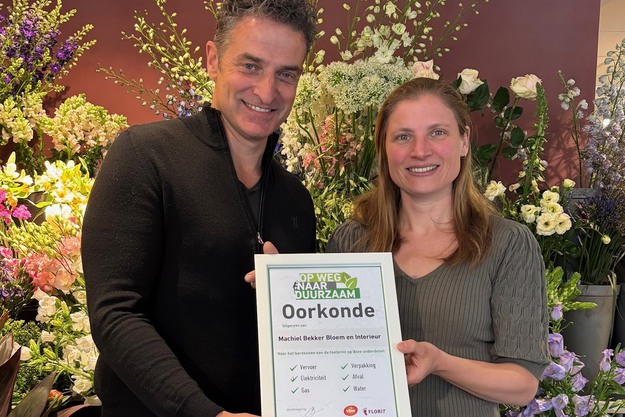
But Rijkers emphasizes that it's just as important to show the outside world that you're taking sustainability seriously. "That's why every florist who completes their footprint calculation receives a certificate from us. It's a way to recognize their efforts and help them communicate their commitment to sustainability."
The goal is also to spark a ripple effect in the industry. "We want sustainability to really catch on among florists. Every small step adds up—and by scaling up bit by bit, we're moving the whole sector forward."
For more information:
Greenhouse Sustainability
[email protected]
www.greenhouse-sustainability.com