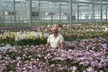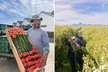

Lately, many Dutch growers feel like they have been taking quite a beating in the media, and some of them feel that it is time to fight back.
"It's time we stand up for ourselves, this really hits me, right to the core," says Aad Verduijn, a seasoned expert in horticulture. "I'm honestly fed up with outsiders—people who have no real understanding of what we do, deciding how our story gets told."
According to Aad, the time has come for the horticultural community to take the lead in telling its own story. "We need to make clear what's true, but also what's not. Because a lot of what's being said about our sector simply doesn't reflect reality."
 © Aad VerduijnAad Verduijn
In recent months, several national media stories have painted a negative picture of the Dutch horticulture sector. Almost every report has focused on what's going wrong—often labeling practices as problematic or even unethical. As a result, horticulture is being unfairly branded as a "toxic industry."
"But let me be very clear to all those critics," says Aad Verduijn, a proud Westlander and long-time ambassador of Dutch horticulture. "We, those of us working in glasshouses, are professionals who are constantly innovating. We're not spraying toxins around. We are part of a world-leading sector in sustainable and responsible food production. We're setting an example for the entire global agricultural industry."
Aad, who this spring celebrated ten years as a greenhouse guide, says it's time for the sector to speak up. "We need to tell our own story—what's true, and yes, even sometimes what's not," he says.
Through his business, Aad organizes weekly tours and excursions for a wide range of visitors: international business leaders, local and foreign politicians, students, and—most importantly—horticultural entrepreneurs from around the world who see the Dutch model as the gold standard.
"And yet," he says, "here in our own country, this incredible sector keeps getting dragged through the mud. And believe me, it's based on half-truths, clickbait headlines, and framing by people who—more often than not—have never even set foot in a greenhouse, let alone worked the soil themselves."
The facts at a glance
Aad Verduijn wouldn't mind taking a seat at one of those popular talk show tables, just to set the record straight. Better yet, he'd love to invite those TV hosts into the greenhouse for a proper tour. "Let them see the reality with their own eyes," he says.
And what would they see? Aad doesn't hesitate to list the facts:
- The sector is heavily focused on biological crop protection, strict hygiene protocols, and smart, innovative growing systems.
- Each year, Dutch greenhouse growers use less and less chemical crop protection—in fact, almost none at all.
- Growers are continuously monitored, audited, and trained to keep raising the bar.
- Every drop of water, every action, every system used in greenhouse cultivation is planned, measured, and aimed at improving sustainability and efficiency.
"And yet… the media keeps slapping this label on us," Aad says with frustration. "As if we're recklessly spraying chemicals everywhere. As if we're not working day in and day out on smarter, cleaner solutions. As if we're not deeply committed to helping nature thrive—not fighting against it."
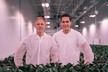
During his greenhouse tours, Aad gives visitors an honest look at daily life in the sector, no smoke and mirrors, just the real deal. "Not long ago, I had the honor of guiding Jack Ma, the founder of Alibaba and one of the biggest tech entrepreneurs in the world. He came here because he sees efficient food production as one of the most urgent global challenges. And after the tour, he told me, 'This was absolutely incredible. What I saw here, you won't find anywhere else in the world.'"
Aad shakes his head. "If someone like that, who's seen everything, can be blown away by what we're doing here, then how is it that our own country keeps portraying this sector in such a negative light?"
 © Aad VerduijnJack Ma, second from the left, visiting the World Horti Center
And Jack Ma isn't the only one impressed by Dutch horticulture. None other than Sir David Attenborough praised the sector in his acclaimed documentary A Life On Our Planet.
In his words: "Dutch farmers have become experts at getting the most out of every hectare – raising yields tenfold in two generations while using less water, fewer pesticides, less fertilizer, and emitting less carbon."
Recognition and no hysteria
"Yes, of course there are exceptions," Aad admits. "There are a few companies that mess it up for the rest. But they are just that: exceptions, not the rule. Because 99% of this sector is fighting. Fighting to do better. To grow cleaner. To become more sustainable. And that deserves recognition, not suspicion, not labels, not hysteria."
What frustrates Aad the most is how often Dutch growers have to defend themselves at home. "It's just not fair that here, in our own country, we constantly have to battle ignorance and mistrust. Let Eva Jinek, Jeroen Pauw, Wilfred Genee, Humberto, Arjen Lubach, or the national newspapers come walk alongside us. Let them see with their own eyes how one-sided their coverage has been, about a sector that is admired worldwide as a frontrunner."
Aad is ready. "I'm ready, and so are other horticultural entrepreneurs. We have nothing to hide. What we have is something beautiful to show: the care, the precision, the innovation, the passion for our craft."
His message is simple: "Ask your questions. Come and see it for yourself. And only then, form your opinion. Because I've had enough of others deciding what our story is. We want to tell it ourselves. And here it is: No, we're not perfect. But we're damn good at what we do. And we're standing at the top for a reason."
For more information:
Westland Horti Tours
[email protected]
www.westlandhortitours.nl