

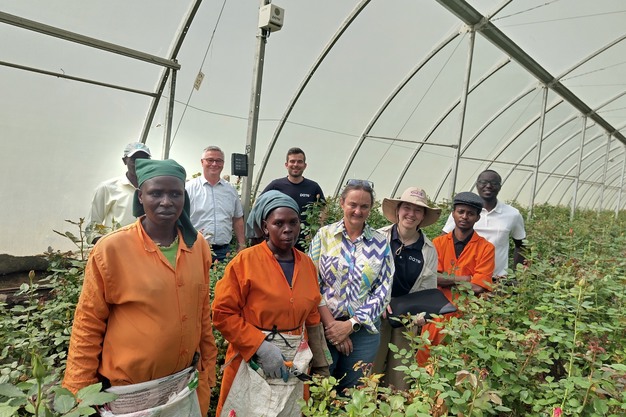
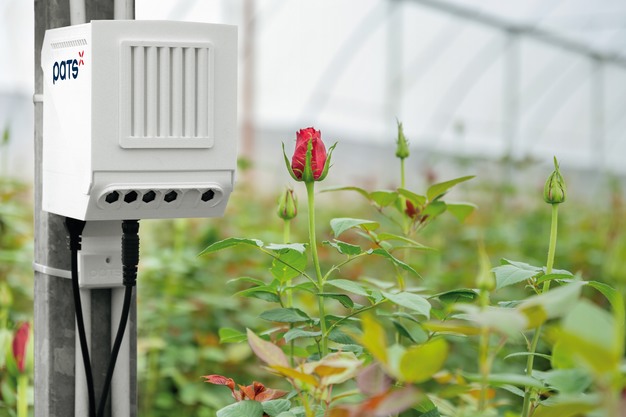
At rose grower Nini - part of Herburg - in Naivasha, Kenya, an automated camera system from PATS is currently being used to monitor False Codling Moth (FCM). Nini is one of the participants in a project aimed at improving early detection and monitoring of FCM using the PATS-C system. Two greenhouses at the 60-hectare farm are now equipped with the technology.
 © PATS
The reason behind the project is clear: more than a year ago, pressure from the European Union increased significantly on Kenyan and Ethiopian growers to prevent the export of flowers carrying FCM. "For us as growers, the moth was never a big issue," explains Philippe Veys of Nini. "There was hardly any visible damage, so it never received much attention until the EU tightened its regulations. Now the risks of shipment interceptions and even market closures have increased considerably, but there's no truly effective treatment available. So, understanding and controlling the moth starts with good monitoring."
Scouting and monitoring
Traditionally, Nini relies on scouting teams to get an idea of the FCM pressure. "Then came PATS, offering an automated monitoring solution using cameras. Through a project supported by the Dutch government and the embassy, we were able to install the system in a few of our greenhouses."
The system has now been running for several months. "It's also a learning process for PATS," says Philippe. "It's an AI-based system, and they're still refining how to recognize FCM specifically, especially since many other moths are also flying around here. They're training the system based on flying patterns, because apparently each moth species has a distinct way of flying," he laughs. "I'll tell you, this is opening up a whole new world for me."
 © PATS
Prediction
For Nini, the main question is whether the automated data aligns with the traditional scouting results. "And so far, it does. We see what we see in person reflected in the system's output. We've already taken some actions to lower pressure, and the system has confirmed those effects. The next step is determining whether the system can also predict pressure increases, allowing for earlier intervention."
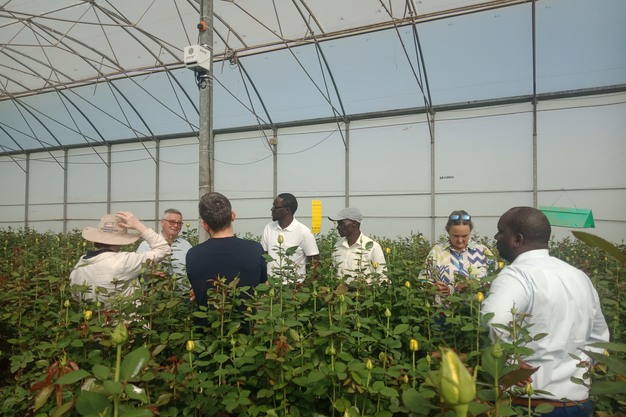
At the same time, there are practical challenges. "Our farm has 70 greenhouses. Would we need 70 cameras? How do we apply this in a cost-effective way? That's what we're exploring now." Despite these questions, the potential is clear. "If it works for FCM, maybe it can work for other pests or diseases too, whether with fixed cameras or maybe drones. That's still to be seen. But we're convinced certain applications will definitely succeed."
 © PATS
Results to be expected
For now, Nini hasn't adjusted its crop protection strategy based on the data yet. "That could come next, but again, it comes back to scale - how do we cover 60 hectares with this technology?" The collaboration with PATS is going well. "They're responsive and open, and they follow up closely on the data we send. We expect to have solid results by the end of the year."
For more information:
PATS Delftechpark 26, 2628 XH, Delft, NL
[email protected]
www.pats-drones.com