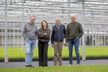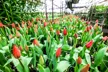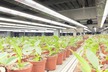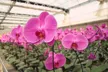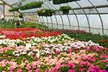


Inside a greenhouse in the village of Jarkynbaevo, Kyrgyzstan, rows of flowerpots stretch across the floor. Each one, carefully planted and nurtured by young farmer Jologon Kozhoshev, tells a story of return, resilience, and ambition.
After years spent working abroad, Jologon came home to rebuild his life from the soil up, carrying with him new skills, bold ideas, and a deep commitment to his land.
Jologon's love for farming began early. He learned to grow cucumbers and experiment with flowers, developing skills that would one day take root far beyond his village.
Like many young men from this village, Jologon had to leave farming behind and migrate to Russia in search of work and stability. While working there, he heard about a new opportunity to work for up to six months on farms in the United Kingdom (UK).
"That immediately caught my attention," he says. "I've always been curious to learn more about farming techniques used in Europe."
His time in the UK became an informal apprenticeship. On the farm, he studied the soil, planting and harvesting techniques, and the systems behind the farming business. Even everyday errands turned into learning opportunities.
"I studied what was sold in supermarkets," he explains. "Every store had frozen vegetables. That gave me an idea of what might work back home."
When he returned to Kyrgyzstan, he was ready to invest in the land he had always loved. He brought back new skills, fresh motivation, and a vision to grow healthy, pesticide-free produce for his community.
In 2024, Jologon received a grant from the International Organization for Migration (IOM)'s Matching Grants Programme under the "Safe Migration of Seasonal Workers from Central Asia to the UK" initiative.
The grant allowed him to buy agricultural supplies and install a heating system. With the money he earned while working in the UK, he bought construction materials and built a 400 square-metre greenhouse from scratch.
Soon after, he began cultivating a variety of vegetables, including cucumbers, broccoli, Brussels sprouts, and cauliflower. But it was the flower market that caught his attention. With Issyk-Kul being a well-known tourist destination in Central Asia, demand was strong and growing.
Before long, Jologon's greenhouse was thriving.
 © IOM Kyrgyzstan 2025/Zhyldyz Niiazalieva
"There's real interest in flowers here, especially among resorts," he explains. "I saw a chance to grow the business."
That season, he sold 5,000 flower plants and made a net profit of 250,000 Kyrgyz soms, around 3,000 USD. It was enough to repay two loans and clear his debts.
Flowers are only part of the story. Jologon's ultimate dream is to unite local farmers through an agricultural cooperative. With the rising costs of fuel and farming supplies, he believes that working together would allow farmers to share resources, exchange knowledge, and reduce expenses.
 © IOM Kyrgyzstan 2024/Dmitry Motinov
"My dream is to start a cooperative where people in my village can learn sustainable farming and innovative practices," he says. "We could go beyond just selling vegetables. We could process food and offer frozen produce like I saw in the UK. Then we could reinvest the profits into our own community."
As he works toward that goal, Jologon has also become a trusted neighbour. He often offers his services by pruning hedges, tending gardens, and assisting elderly residents.
 © IOM Kyrgyzstan 2025/Zhyldyz Niiazalieva
For him, farming is more than a way to earn a living. It is a way to stay rooted, give back, and build something stronger for those around him.
"The path to success is through your own land and your own hard work," he says.
Source: UN Migration