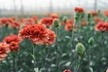


By 2:00 a.m., the road from Dadar Station to Mumbai's Sau Meenatai Thackeray Flower Market stirs to life. Trucks roll into the municipal market, carrying 8 to 20 tonnes of marigolds (genda) and chrysanthemums (shevanti) from districts like Sangli, Satara, Kolhapur, Pune, and Nashik in central Maharashtra. An hour later, foragers from villages across the state reach Dadar railway station, carrying small bundles of leaves and flowers after travelling long distances—sometimes farther than the trucks.
Vidarbha forager, Panchshila, as she calls herself, spreads her floral offerings on a footpath between Dadar station and the phool mandi—Mumbai's bustling flower market. Her bundle includes thorn apples (dhatura), poisonous yet sacred to Shiva, and waxy banyan leaves (bad ka patta) from her last trip to Wadegaon in Akola district. Come rain or blistering heat, her livelihood depends on walking, climbing, and gathering across forests and fields she doesn't own but has learned to read and glean with quiet precision.
"We don't have fields of our own," Panchshila says plainly. "We bring what we can from the forests or what's left in others' fields. Waha phirna padhta hai, phir phir ke kuch milta hai." For her, gathering means moving in loops—returning to places where something might remain. Unlike commercial farmers who rely on predictable seasons, her quiet adaptation to the land's shifting rhythms offers a fragile lifeline in an unpredictable climate.
Read more at India Water Portal