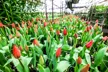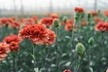


Two studies have found that more than half of sampled edible flowers in Thailand were contaminated with hazardous pesticides. The findings were presented at the 33rd Medical Academic Meeting held at the Impact Forum in Muang Thong Thani, Nonthaburi, from July 11 to 13.
The first study was conducted by Ratiyakorn Srikote of the Food Quality and Safety Office, under the Department of Medical Sciences, in collaboration with officials from the department's offices in Chiang Rai, Nakhon Ratchasima, Songkhla, and Chonburi. It focused on contamination of edible flowers by hazardous chemicals used as pesticides.
A total of 192 edible flower samples were collected from gardens and markets across 13 health zones nationwide. Of these, 115 samples — or 59.9% — were found to be contaminated with pesticides. The contaminated samples included 46 jasmine samples (24%), 43 rose samples (22.4%), 16 vegetable hummingbird samples (8.3%), 8 wild ramose herb samples (4.2%), and 2 cowslip creeper samples (1%).
The study found contamination with 33 different types of pesticides, ranging from 0.01 to 6.2 milligrams per kilogram.
Read more at Asia News Network