

Since June, seven Intratuin garden centers in the Netherlands have been running a unique pilot project: instead of using chemical pesticides, they're releasing beneficial insects right on the shop floor. These tiny allies are taking on the pests, offering a greener, more sustainable solution for plant care.
This trial ties in perfectly with Intratuin's commitment to sustainability and the ongoing shift toward eco-friendly crop protection.
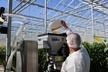
"We get an incredible number of questions about chemicals on plants," said Elise Wieringa, Sustainability Manager at Intratuin, during the Dutch Grower's Day at GreenTech Amsterdam. On stage, the discussion touched on both the challenges and opportunities involved in making horticulture more sustainable.
The garden center chain's goal is simple: do things better, do them greener. That means working closely with growers, and in this pilot, also with supplier Van Iperen. Their crop specialists are on hand to make sure the beneficial insects thrive and the pilot runs smoothly.
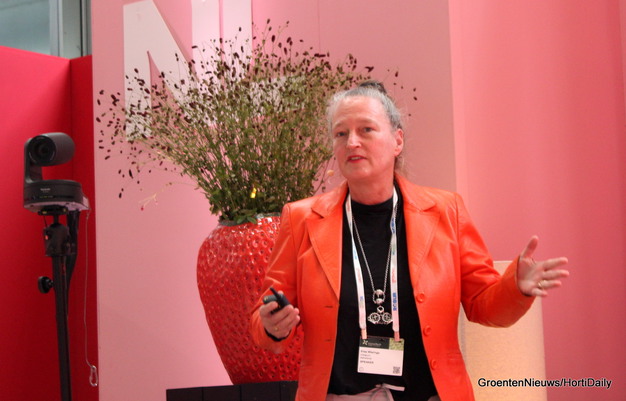 © Thijmen Tiersma | FloralDaily.comIlse Wieringa at GreenTech Amsterdam
Customer demand
Intratuin has set itself some bold targets. By 2030, half of all gardens in the Netherlands should be "green," and 70% of the product range should be "chemical-free." For the garden center chain, "chemical-free" means using only products approved for organic cultivation. According to Sustainability Manager Elise Wieringa, these ambitions are driven by strong customer demand for more environmentally friendly gardening solutions.
Bugs on the job
The pilot with beneficial insects will run until the end of this summer, but it's already delivering valuable insights. "We're learning what works, what could be improved, and how to roll this out on a larger scale," says Intratuin.
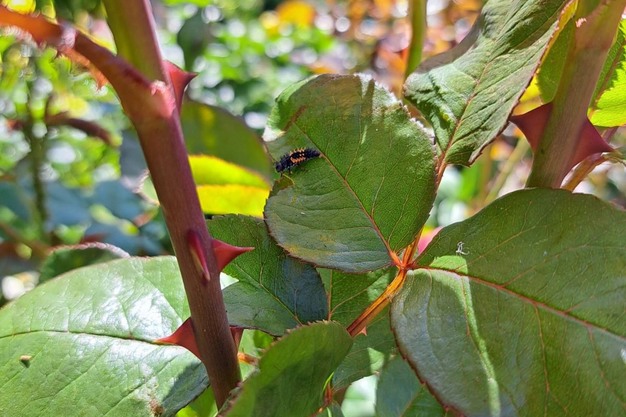
Some early successes? Aphids on roses are being tackled effectively, staff are gaining new knowledge and enthusiasm, and customers are reacting positively — many are even keen to play their part.
During her talk in Amsterdam, Elise also urged the sector to rethink its strict zero-tolerance approach to insects. "Maybe we need to let go of the idea that not a single aphid should be allowed on a plant," she suggested.
Interestingly, similar sentiments are emerging in other sectors too, such as open-field lettuce production. Growers there are worried (link in Dutch) about the rapid loss of crop protection products, especially when no effective alternatives are available yet.
Critical view on assortment
For Intratuin, this pilot is one step closer to the ambitious targets they've set. At the trade fair, Elise also highlighted other factors that can make more sustainable growing possible. One of her key points was about "not making things too complicated."
"We humans have made it too difficult with all these complex varieties," she explained. In practice, some of those varieties simply aren't easy to grow. In such cases, Elise suggested that the entire supply chain should work together to identify varieties that thrive without chemicals — plants that can be grown with strong natural resilience. "As a grower, just tell us: this variety can't be grown chemical-free," she encouraged.
Intratuin knows it will also need to change. The garden center chain will have to look beyond what's available on the market, and start focusing on how products are grown. "Many growers are already working hard on sustainable cultivation, but to really make an impact, that change needs to run through the entire chain — right down to our shop floor," Intratuin said in a pilot update (link in Dutch).
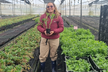
 © Intratuin
For more information:
Intratuin
https://www.intratuin.nl/duurzaamheid-2030