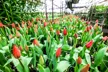


A family in the municipality of Cuautepec, Hidalgo, dedicated itself to the cultivation of lisianthus, known as Eustoma grandiflora, and transformed local floriculture. This venture was started by Javier Gutiérrez Martínez, his parents, and his sister. This plant is native to semi-desert areas in the United States and Mexico. Both the Dutch and the Japanese have improved this plant's genetics, but the Gutiérrez family imports the seed from the Netherlands for artisanal cultivation in greenhouses.
Javier, an agronomist, points out that lisianthus can last up to 25 days in a vase if properly cared for. Its strength and diversity of colours make it popular in specialised florists. It's not a common crop in Mexico, but it's a novelty in Hidalgo. Production cycles take four to five months, with the possibility of three cuttings per plant.
Stem care is crucial to avoid fungus. There are 70 varieties available, but only 14 of them are being grown in Hidalgo. The varieties being grown yield white, lilac, pink, green, flowers as well as flowers with other color combinations. The weekly harvest is sold in Plaza La Unión de San Pedro, in Acaxochitlán, attracting buyers from all over the country, from Durango to San Luis Potosí.
"The beautiful thing about this is the purpose they serve. Flowers accompany significant moments in people's lives. They can be a gift, an offering in churches, a party decoration, a bride's headdress, her bouquet, or used to commemorate the deceased. That's very valuable for us," stated Velina Martínez.
The family used to grow tomatoes and marigolds, but found a more viable alternative in the lisianthus. Javier managed to adapt the crop to local soil, innovating through trial and error.
The project stands out for its environmental approach, using beneficial microorganisms instead of pesticides. Despite not being an edible flower, they grow them in an almost organic fashion, reducing the environmental impact. They are also looking to expand through local partnerships and are considering exporting lisianthus abroad.
Source: lasillarota.com