

"In Ethiopia, there is an increasing trend of diversifying summer flower varieties within the existing horticultural sector. The shift from a reliance on limited flower varieties to the cultivation of Eucalyptus foliage species marks a promising development for diversifying Ethiopian flower varieties. This move is driven by the understanding that diversifying flower varieties offers numerous benefits, such as increased market share in potential destinations and improved business stability," says Mekonnen Solomon, a horticultural expert in the Ethiopian Ministry of Agriculture.
Mekonnen explains that the demand for Eucalyptus foliage species in Gulf countries and the Middle East market has dramatically increased recently. "This is due to its popularity in the floral industry for arrangements and decorations, as well as its unique texture and aromatic properties. Its aesthetic appeal contributes to its growing demand worldwide."
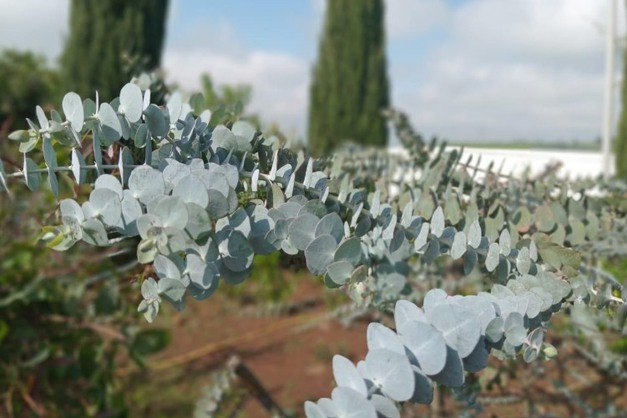 © Ethiopian Ministry of Agriculture Afri Flower Eucalyptus foliage species
For the past 15 years, Southeast Asian countries have been the primary suppliers of Eucalyptus foliage to Gulf and Middle Eastern countries. "Importing Eucalyptus foliage from Vietnam to the Middle East takes about 7-8 hours by air. In comparison, Ethiopia is strategically located, making it an ideal option for exploring the Eucalyptus foliage market in the Middle East and Gulf states."
The estimated flight time from Ethiopia to Middle Eastern countries is about 1.87 to 2.5 hours at an average airplane speed of 567 MPH. "This allows fresher foliage to reach these markets, improving delivery times and enhancing customer satisfaction. The cost of transporting flowers and foliage from Ethiopia to the Middle East and Gulf countries is significantly cheaper than from Vietnam."
"The average freight cost for 1 kg of flowers or eucalyptus foliage from Ethiopia to Middle Eastern and Gulf countries like Saudi Arabia, Oman, and Beirut is about $1.30 to $1.37 USD. In contrast, it costs $4 to $5 per kg from Vietnam. Therefore, Ethiopia's proximity and shorter air distance would significantly reduce transportation costs for these perishable products, lowering overall logistics and production costs," says Solomon.
Due to this awareness and the potential advantages of these Eucalyptus foliage varieties, © Ethiopian Ministry of Agriculture several Ethiopian flower companies in highland and midland areas have started introducing and cultivating different varieties. The Ethiopian highlands and midlands are ideal for growing a wide range of Eucalyptus species.
Eucalyptus planting in Ethiopia dates back to Emperor Menelik II, who introduced it from Australia in 1895 to address a shortage of fuelwood and construction materials. Currently, Ethiopia has around 506,000 hectares of Eucalyptus, the largest in Africa, compared to 8 times Kenya's coverage and 5 times Rwanda's. There are 55 species of Eucalyptus trees in Ethiopia, including Eucalyptus camaldulensis, Eucalyptus citriodora, and Eucalyptus globulus.
The introduction of ornamental Eucalyptus foliage species is new in Ethiopia. Afri-Flower PLC and Gallica Flowers, from Ecuador and France, respectively, are among the first foreign companies to demonstrate the cultivation of these species in Ethiopia. Another Dutch flower farm, Friendship Flower, is also conducting trial cultivation.
"The main Eucalyptus varieties introduced in Ethiopia's highlands and midlands are Silver Dollar (cinerea), Baby Blue, Parviflora, and Lemon Bush. These are noted for their small stems and colorful young stems, with scents of peppermint and lemon. They represent a new chapter in Ethiopia's flourishing flower industry. Unlike traditionally established Eucalyptus plantations, these new varieties are used as 'fillers' in mixed flower bouquets, supplying florists and export markets," Solomon explains.
 © Ethiopian Ministry of Agriculture
Initially, exporting these valuable species was challenging due to Ethiopian customs regulations requiring a minimum selling price. "Unlike other flowers like roses, Eucalyptus commercial summer flower foliage lacked a minimum selling price set by the National Bank of Ethiopia. This led to valuable varieties being wasted. However, Ethiopia's major horticulture trade fair in April 2025 shed light on the importance of these species."
Consequently, the Ministry of Agriculture, with the National Bank of Ethiopia and Customs Authority, has set a minimum floor price for Eucalyptus commercial summer flower foliage, subject to periodic reviews based on market data.
 © Ethiopian Ministry of Agriculture
Currently, these farms have started exporting Eucalyptus commercial summer flowers and expanding their operations. "Many more farms are eager to diversify their flower production using unused and vacant land. Eucalyptus commercial summer flower foliage offers a cost-effective alternative to roses and summer farm ventures. These can be grown eco-friendly, creating job opportunities and improving household incomes for local farmers through contract farming schemes."
For more information
Mekonnen Solomon
Ethiopia Ministry of Agriculture
Email: [email protected]
www.moa.gov.et