


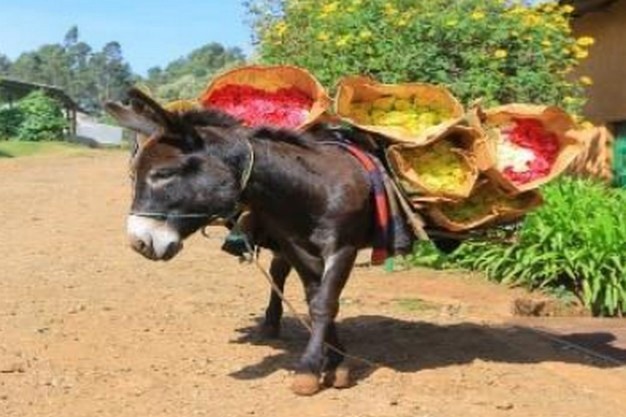
"One foggy winter morning in August, my co-workers and I had the opportunity to visit flower farms located on the hillsides of Menagesha and the Welisso cluster in Ethiopia. During our visit, we heard the sound of hooves striking the ground behind us. A rural woman, working at the flower company, appeared from the greenhouse riding a donkey that carried a bundle of flowers on its back. 'I must be a monkey's uncle; can this stubborn donkey do that?' asked one of my colleagues. The woman, with a glimmer of skepticism, suddenly responded in a way that seemed somewhat disrespectful. My friend was taken aback by her remark and asked, 'Why did she make that kind of comment? What mistake did I make?'" says Mekonnen Solomon, a horticultural expert in the Ethiopian Ministry of Agriculture.
In reality, he hadn't made a mistake, Mekonnen says. "Still, such disgrace often stems from deep-seated beliefs that challenge the traditional ways of rural women in that community. Without donkeys, women working in flower companies would face significant stress. Donkeys aren't just beasts of burden; they symbolize a partnership that improves the livelihoods of rural women and empowers them within their communities. In that rugged mountainous area, donkeys aren't seen as obstinate or useless. Misconceptions about donkeys are shaped by everyday language. When people compare others to donkeys, it often comes across as an insult to their intelligence. The truth is, the woman riding the donkey on the flower farm doesn't want her animal companion to be seen as worthless or inflexible."
 © Ethiopia Ministry of Agriculture
Donkey transport in commercial flower farms in Ethiopia is a relatively new phenomenon, especially in areas where greenhouses and pack houses are not optimally integrated. "The lack of connection has led to challenges in logistics operations, including inefficiencies in workflow, delays in delivery, and potential losses in product quality. Therefore, using donkeys to bridge the logistics gap between greenhouses and pack houses is seen as an innovative and sustainable solution, particularly in areas where manual trolleys are less feasible."
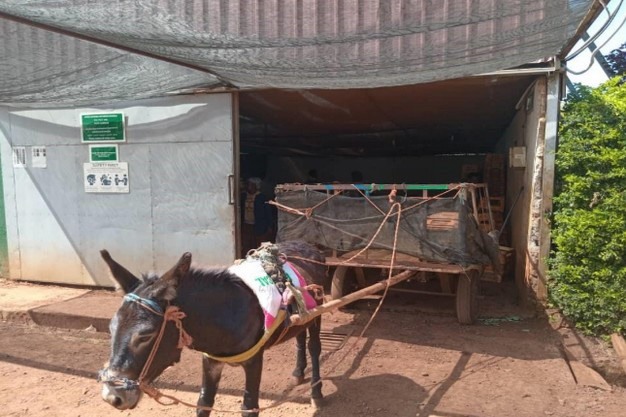
The use of manual labor, wheelbarrows, and hand carts for transporting flowers from greenhouses to pack houses in the highland flower-producing areas of Ethiopia is a common practice, particularly in clusters where infrastructure may be limited. "Wheelbarrows and hand carts are typically one- or two-wheeled devices that consist of an upright frame, a base plate, and handles, allowing the user to tilt the cart back and roll it along the ground. They usually feature solid rubber wheels at the base and a vertical frame with handles at the top. Farm workers often exert less effort when handling flowers with a hand cart, which reduces the likelihood of straining their muscles. It is not uncommon for manual laborers to carry plastic buckets filled with flower stems on their shoulders to transport flowers from the greenhouse to the packing houses," he adds.
 © Ethiopia Ministry of Agriculture
Gezachew, the duty general manager of Gallica and owner of six donkeys, believes that donkeys are the most valuable assets on his farm. He recognizes that donkeys perform logistical tasks at a rate eight times higher than manual labor. According to Gezachew, one farm laborer carries around 60 rose stems per trip, while a donkey can carry approximately 480 stems per trip from the greenhouse to the packing house. "Currently, manual laborers work 8 hours, while donkeys work for about 4 to 6 hours to fulfill the daily shipment targets of the company. This highlights the physical capability and endurance of donkeys as working partners. Although the cost of an average-sized donkey varies, prices typically range from $82 to $85, which is equivalent to two months' salary for one field laborer at the company."
Degu, the farm manager at Assela Flower, said, "Our donkeys are symbols of flexibility and determination, allowing farms to endure and adapt in the face of logistical obstacles during the rainy season while achieving demanding tasks. This remarkable animal is known for its ability to withstand harsh conditions, carrying heavy burdens with a quiet determination that often goes unnoticed. Despite its humble appearance, the donkey embodies a unique form of strength that is both sturdy and reliable, making it a valuable companion in challenging environments."
While wheelbarrows and hand carts contribute significantly to transportation on even terrain, they have several shortcomings, including instability, difficulty navigating uneven ground, and limited load capacity. "A single wheel can easily get caught or stuck, making it harder to move the load smoothly. They are generally not suited for rough roads or long distances compared to donkey transport. The initial cost of equipment, along with routine maintenance, is also quite high."
Today, there is a noticeable trend of companies rediscovering and adopting older transportation technologies. "This isn't just nostalgia—it is also a conscious choice to use simpler, cheaper, and often more environmentally friendly technologies compared to man-made, high-maintenance equipment. In essence, the trend isn't a complete rejection of modern innovations, but rather a selective re-embracing of older technologies for their unique qualities and reliability."
 © Ethiopia Ministry of Agriculture
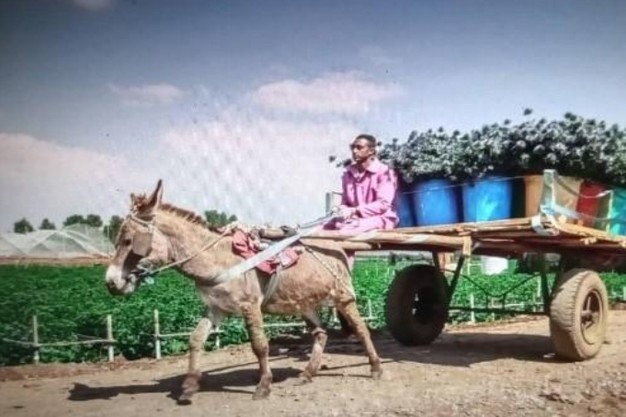
In the rugged topography and cliff areas of Menagesha, Holeta, and the Welisso Horti Cluster of Ethiopia, flower farms are gradually replacing human labor, hand trucks, and two-wheel carts with donkey transport. "Farm workers transporting flowers from greenhouses to pack houses with manual carts on steep terrain expend significantly more energy than on flat ground. This increased energy expenditure leads to faster fatigue and decreased productivity. The slopes, loose soil, and uneven terrain make it harder to walk quickly and maintain balance. Workers with hand carts need to move cautiously, which reduces the overall speed of transportation."
Most roads in the highland horticulture clusters of Ethiopia are dry-weather roads, which become inconvenient for human or cart transport during the rainy season and hinder smooth operations. "From June to September, heavy rainfall and muddy conditions significantly impact logistics, causing delays. Even on flat roads, the mud and slippery conditions make it difficult for carts and vehicles to transport flowers from greenhouses to pack houses. For these reasons, flower-producing and exporting companies in the highland clusters prefer donkey transport over human or cart-based systems."
Donkeys ease the workload for flower companies, reducing the physical strain of carrying heavy loads and performing repetitive tasks, he explains.
 © Ethiopia Ministry of Agriculture
Today, there are initiatives by flower companies in Ethiopia's rugged regions to provide shelter, veterinary services, and proper feeding for donkeys. Gallica Flower has already allocated 2 to 3 acres of land to accommodate its donkeys.
"To sum up, donkeys are a cost-effective alternative to manual labor in remote areas, particularly for farms with limited technology and resources," Mekonnen says. "Their ability to traverse uneven terrain makes them ideal for agricultural tasks. In rugged landscapes, donkeys are indispensable to businesses, serving as essential transport for flower farms—even in an era dominated by hand carts and motorbikes."
"Yet, just as marginalized groups require representation, donkeys also need organizations that advocate and speak on their behalf. Raising awareness about their needs helps promote better treatment and care. Flower companies that utilize donkeys for labor have an ethical obligation to ensure their well-being. This includes providing adequate care, proper living conditions, and humane treatment. Ensuring the health and well-being of donkeys leads to more sustainable and productive outcomes for businesses. Healthy animals are more efficient workers, which ultimately benefits both the animals and the companies that rely on them," he concludes.
For more information
Mekonnen Solomon
Ethiopia Ministry of Agriculture
Email: [email protected]
www.moa.gov.et