
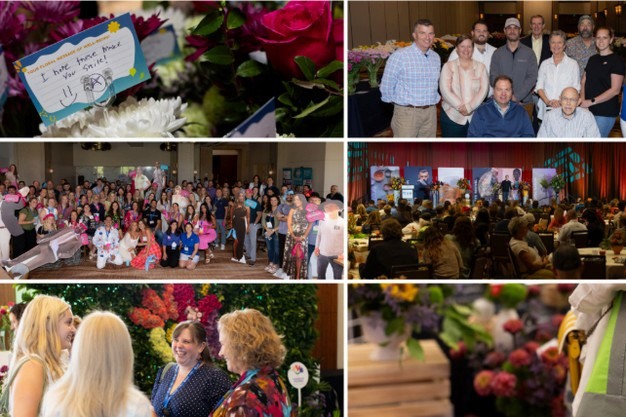
Earlier this month, Sahid Nahim attended the Society of American Florists (SAF) Convention 2025 in Phoenix, Arizona, held August 11–14. In this article, he describes his experience at the event.
"This floral industry convention was packed with value, inspiration, personal surprises, and countless opportunities to learn, connect, and celebrate the floral community.
As Williee Armellini of Flowersandcents.com put it best, conventions are about "humans interacting with humans with a common goal." Beyond the flowers, education, and awards, what stood out most this year was the inclusive energy — a true gathering of growers, wholesalers, retailers, floral designers, suppliers, and next-generation leaders.
Before I dive into the details of the convention and share some key takeaways, let me first give you a quick overview of what took place at this year's SAF Convention. There was far too much to cover in a single blog, but I'll do my best to highlight my favorite moments and insights."
A convention that spanned four days
"The SAF Convention 2025 brought the industry together for four days of education, business insights, and community-building. What follows are some of the moments that stood out most from my experience.
Day 1 opened with the 2026 Flower Trends Forecast by Talmage McLaurin, AIFD, who shared how global influences and consumer behavior are shaping the colors, styles, and design directions florists will need to watch for in the coming years. Attendees then explored innovations at the Supplier Expo before gathering at the President's Welcome Reception, where Oscar Fernandez set the tone for the days ahead and first-time attendees had a chance to connect with the broader SAF community.
Day 2 began with the highly anticipated State of the Industry Breakfast, sponsored by Asocolflores. Kate Penn, Executive Vice President & CEO of SAF, opened with an overview of the floral sector, drawing on fresh data, member feedback, and conversations with leaders across the supply chain. She outlined where the industry has seen wins, where challenges remain, and how SAF is working to support members as they prepare for 2026. After her presentation, Augusto Solano, President of Asocolflores, delivered a keynote that set an inspiring tone. Solano reminded us that tariffs remain under negotiation, with clarity expected in the weeks ahead. While acknowledging the challenges, he emphasized the opportunities to come, sharing a message that resonated deeply with many: flowers are food for the soul and essential to mental health. His call to action? In place of "MAGA," he proposed "MAHA: Make America Happy Again," encouraging people to buy more flowers. The day also marked the opening of the Outstanding Varieties Competition and a full slate of educational sessions that set the pace for the convention."
 © Society for American Florists
"Day 3 carried a contagious sense of passion, starting with the Business Session Breakfast, where Oscar Fernandez of Equiflor/Rio Roses and Michael Pugh of Pugh's Flowers spoke about how SAF is addressing industry challenges and supporting its members in real-time. That passion carried through the keynote by Seb Terry, "Unlocking Passion, Performance and Transformation," which reminded us that when we lead with purpose and reconnect with what drives us, we not only transform ourselves but also the teams and communities around us. The energy was evident throughout the day, from walking the aisles of the Outstanding Varieties Competition, where 3,000 stems showcased the innovations of breeders and growers worldwide, to the packed ballroom for the 56th Annual Sylvia Cup Design Competition. The evening concluded with the Stars of the Industry Awards Experience, where celebration and connection unforgettably united the floral community.
Day 4 closed with optional workshops and off-site tours. The Progressive Retail Operations Tour offered a behind-the-scenes look at Arizona Family Flowers and Metro Tech High School, highlighting both business innovation and workforce development. Meanwhile, the workshop "From Posts to Profits: Master Social Media Strategies" with Sarah LoBue of Main Street Florist and Kelsey Thompson of Bloom Floral focused on practical ways to build stronger online strategies, from content planning to leveraging AI. Together, these programs rounded out the convention with hands-on insights for those who attended."
Competitions to inspire
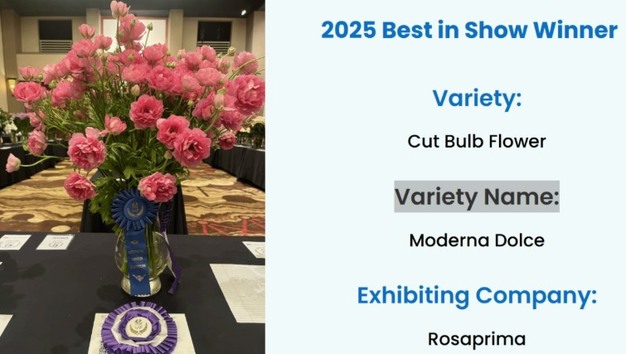
"No SAF Convention 2025 would be complete without its hallmark competitions. This year, I had the honor of serving as one of the judges for the SAF Outstanding Varieties Competition alongside respected leaders from retail, wholesale, and growing. It was an eye-opening experience to see so many remarkable products up close — a showcase of the innovation, creativity, and quality driving our industry forward. The Best in Show went to Ranunculus Maderna Dolce by Rosaprima, while the People's Choice Awards were given to Redvolution from Genviv Breeding."
 © Society for American Florists
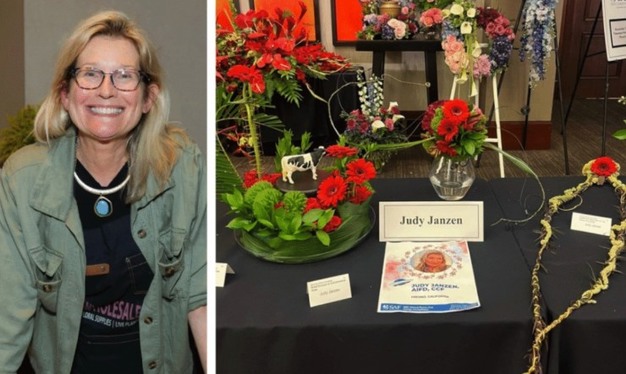
"The energy carried into the 56th Annual Sylvia Cup, where twenty floral designers were challenged to create unique designs using the same set of materials. The results were nothing short of inspiring, with each arrangement showcasing a different perspective and creative voice. Judy Janzen, AIFD, CCF, of Chase Flower Shop in Fresno, California, won the grand prize, adding her name to the legacy of this prestigious competition."
 © Society for American Florists
Education to drive the industry forward
"One of the strengths of the Society of American Florists Convention 2025 is the breadth of its educational program. Across four days, sessions covered everything from economic strategy and industry trends to hands-on skills, marketing, technology, and more. Each session offered valuable takeaways, but a few in particular sparked important conversations about the future of our industry."
State of the industry report with Kate Penn
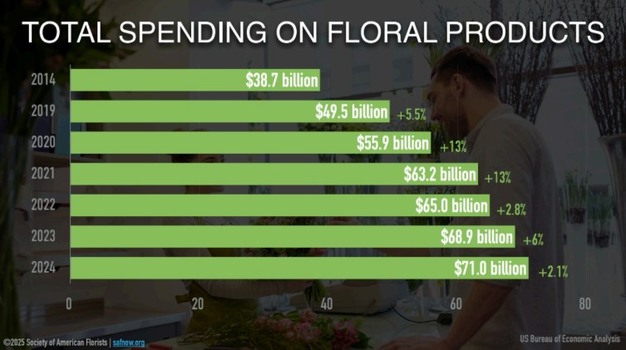
"As the CEO of SAF, Kate Penn opened the convention with her annual State of the Industry Report, drawing from new data gathered from SAF surveys, government sources, and direct feedback from members across the floral supply chain. Her presentation provided a comprehensive overview of the industry's current standing, touching on everything from sales performance to staffing challenges, while also highlighting the opportunities that lie ahead as we approach 2026.
One of the key takeaways was the strengthening consumer demand. In 2025, 35% of Americans purchased flowers for Valentine's Day (up from 28% in 2024) and 38% bought flowers for Mother's Day (up from 28% in 2020), indicating an increased engagement with floral holidays. However, retail florists are experiencing mixed results, with about one-third reporting higher sales this year, while others saw flat or declining figures. Average order values remain steady, yet profit margins continue to face pressure.
Staffing challenges persist as a critical issue, with difficulties in finding and retaining skilled designers being one of the most pressing concerns. Burnout and succession planning add complexity to these challenges. Additionally, structural changes in the industry continue as consolidation, DIY e-commerce competition, and an aging owner base with unclear exit strategies raise questions about long-term business viability.
Economic pressures, such as rising costs, tariffs, and cash flow issues, weigh heavily on the industry, with many florists expressing concern about making payroll despite robust sales. Nonetheless, adaptation is visible across the board, with businesses implementing tighter inventory controls, smarter purchasing strategies, shared ordering, streamlined operations, and expanded digital marketing efforts.
Opportunities for growth are clear, driven by value-driven purchasing (including smart spending and "quiet luxury"), sustainability, local business support, and the expansion into underserved markets. Additionally, trust has become the new brand equity, with transparency, honesty, and consistency emerging as the most important factors for consumers when selecting where to buy flowers. Generational shifts also matter, as younger consumers seek authenticity, sustainable options, and interactive retail experiences, signaling a path for the next wave of growth in the floral industry."
Why it matters
Penn's report provided a grounded yet optimistic outlook, reminding us that while costs and competition remain real challenges, the floral industry possesses unique strengths that can be leveraged: consumer demand, cultural relevance, and community trust. Her message was clear — by adapting operations, embracing innovation, and focusing on authenticity, the floral community can thrive in the years ahead.
 © Society for American Florists
"I hope this captures everything she reported — there was so much valuable information to take in. Kate's report is truly one of the cornerstones of this convention every year, and it is a must-attend for anyone serious about understanding where our industry is headed. It was inspiring to see how her insights highlighted both the progress we've made and the opportunities we must embrace as an industry."
Ready for what's next with Charlie Hall
"Professor Charlie Hall, Ellison Chair in International Floriculture at Texas A&M, delivered his much-anticipated economic outlook, which served as more than just a presentation of numbers; it was a strategic call to action for every link in the floral supply chain.
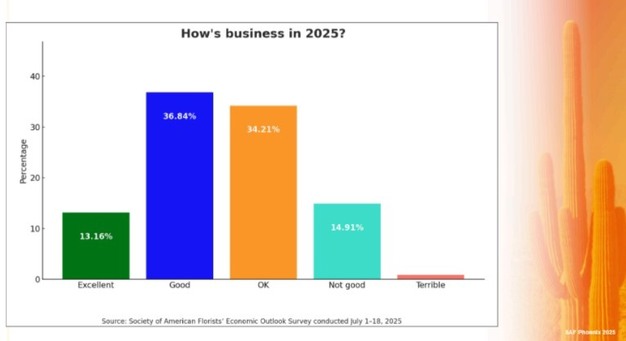
He highlighted that 2025 presents uneven terrain, with about a third of businesses reporting growth, while many remained flat and some experienced declines, illustrating the uneven distribution of market opportunities. Pricing discipline is becoming critical, as those who adapted early with price adjustments to offset tariffs and inflation are now ahead of those who waited. Moreover, inventory control is becoming essential for survival, with businesses moving toward leaner operations, smarter buying strategies, and waste reduction to protect narrow margins.
Hall emphasized that e-commerce is no longer optional and serves as a clear dividing line between businesses that are growing and those that are struggling. This strategic focus applies across all businesses and sectors. Additionally, consumers are shifting their priorities. They are demanding sustainability, with transparent sourcing and eco-friendly practices; provenance, wanting to know the origin of their flowers; and unique experiences, such as small events, personalization, and immersive retail moments.
Labor remains a significant constraint, as skilled designers are difficult to hire and retain, which adds cost pressures across the supply chain. Furthermore, Hall noted that tariffs and uncertainties are here to stay, not as "temporary challenges," but as structural realities that businesses must incorporate into their planning. Finally, he assessed the recession risk, pegging the chance at 20–40% depending on various indicators, and reminded the industry to prepare for potential economic uncertainties ahead.
This wasn't just an economic lecture; it was a blueprint for survival and growth. For growers, it underscores the need to invest in transparency and sustainability. For wholesalers and importers, it signals the importance of controlling costs while building stronger partnerships. For retailers, it calls for moving beyond mere transactions to create meaningful experiences.
Hearing his perspective reminded me that resilience and adaptability remain two of the most critical strengths we can cultivate in the floral industry."
 © Society for American Florists
"While Hall focused on macroeconomic forces, another session shifted the spotlight to A.I. and
its impact on customer engagement. Joe Aldeguer, Carma White, and Jennifer Barnard teamed up to demonstrate how artificial intelligence is already reshaping training, sales, and service in floristry."
AI in action with Joe Aldeguer, Carma White, and Jennifer Barnard
"AI is no longer a distant future; it's here, reshaping how florists train teams and serve customers. Joe Aldeguer of SAF, alongside Carma White of FiftyFlowers and Jennifer Barnard of Four Seasons Flowers, demonstrated how AI can transition from a buzzword to a practical business tool.
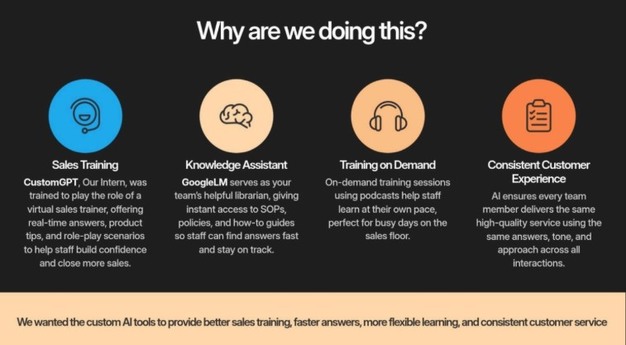
One key takeaway is using CustomGPT as a sales trainer. It allows staff to role-play, review standard operating procedures, and build confidence anytime, without needing a supervisor. GoogleLM serves as a knowledge assistant, delivering quick answers and audio guides, making training accessible on-demand and in various formats. This technology speeds up onboarding, enabling new employees to be trained faster and more consistently, which reduces the lag time before they're ready to serve customers.
In terms of service consistency, AI helps ensure that customer interactions are based on a uniform knowledge base, thus minimizing errors or missteps. This leads to scalable learning, where both small shops and large chains can offer uniform training without needing extra HR or training staff. However, the effectiveness of AI is dependent on its data sources, which include PDFs, text files, and SOP documents. These data sources require regular updates to maintain accuracy.
There are also risks associated with AI, such as hallucinations and outdated information. If left unchecked, AI can provide misleading answers. Security is crucial, and businesses must establish clear controls to prevent the mishandling of sensitive data.
The key takeaway is that while AI won't replace the human touch, it can significantly reduce training costs and free up people to focus on roles that require creativity, empathy, and connection—areas where machines cannot excel.
For an industry grappling with high turnover and labor shortages, this session served as a wake-up call. Training can be costly, but the expense of inconsistency is even greater. The speakers demonstrated how AI can level the playing field for businesses of all sizes, ensuring service quality without depleting resources.
This session allowed me to reflect on the potential of technology when responsibly embraced. It can enhance customer service and empower our teams to grow, allowing us to operate more efficiently and effectively in an ever-evolving industry landscape."
 © Society for American Florists
From insight to inspiration
"Education may fuel the future, but another cornerstone of the SAF Convention is celebrating the people who shape our industry today. The Stars of the Industry Awards bring the community together to honor floral leaders, highlight extraordinary contributions, and inspire the next generation of rising stars."
Recognition and awards
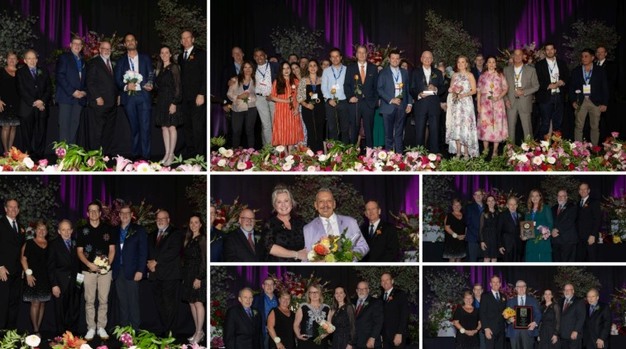
"The Stars of the Industry Awards recognized individuals and businesses whose contributions continue to shape the future of floriculture. Augusto Solano was inducted into the SAF Floriculture Hall of Fame for his decades of leadership through Asocolflores, while Jacky Lacey received the prestigious Tommy Bright Award for his artistry and influence in floral design. Other honorees included Patricia Knight with SAF's Gold Medal Award, Rick Long with the Alex Laurie Award for Research and Education, Judy Laushman with the John H. Walker Award, and Dianna Nordman with the Paul Ecke, Jr. Award. Kennedy's Flowers & Gifts was also named Marketer of the Year.
Amid such an extraordinary group of leaders, I was completely caught off guard to hear my own name announced as a recipient of the SAF Rising Star Award, alongside Sam Bowles. It was a true surprise—one of those moments that leaves you humbled and deeply reflective. To be recognized in this way is an incredible honor, but I know this award is not just mine. It belongs to the floral community that inspires me daily: the guests who have joined me on The Bloom Show, the partners who have supported our mission, and the collaborators who believe in innovation and connection.
Most of all, I am grateful for my team at New Bloom Media and New Bloom Solutions. None of this would be possible without their passion and dedication. This recognition is both a celebration of what we've built together and a motivation to keep pushing forward—to create opportunities, strengthen connections, and keep giving back to the community that has given me so much."
 © Society for American Florists
Fresh energy and industry campaigns
"Beyond the sessions and awards, the convention buzzed with fresh ideas and new energy. One notable highlight was That Flower Feeling's introduction of its new tagline, "Just Add Flowers," which evolves from its earlier message of "Flowers, Self-care Made Easy." This refreshed campaign emphasizes the everyday value of flowers as an integral part of people's lives.
Additionally, the Next Gen program, hosted by Details Flowers Software and BloomNation, provided a platform for younger members to connect, share ideas, and showcase their creativity. Their enthusiasm underscored the bright future of our industry and the importance of investing in the next generation of leaders."
A new chapter of leadership
"One of the significant moments of the convention was witnessing Lori Wheat of Lafayette Florist step into her new role as SAF's president. Succeeding Oscar Fernandez's strong leadership, Wheat's installation felt like a natural extension of the organization's commitment to serving all facets of the floral industry.
What struck me most about her remarks was her ability to connect different perspectives; she spoke not only as a florist but as someone who also understands the grower and wholesale aspects of the business. This well-rounded perspective is a valuable asset to our industry, and I am eager to see where her leadership will take us."
Final reflections
"SAF Convention 2025 proved once again why the Society of American Florists remains a
cornerstone for our industry, a place where floral industry networking, floral industry education,
and inspiration meet. From AI in floristry to timeless artistry in floral design competitions, it showcased the best of what our community can achieve together."
For more information: SAF
SAF
[email protected]
safnow.org
New Bloom Solutions
[email protected]
newbloomsolutions.com/