

"Our growth in key markets like the United States, and the momentum we see in other emerging markets such as Spain, Middle Eastern countries like the United Arab Emirates and Saudi Arabia, and in Japan, Korea, and the United Kingdom, show that Colombian floriculture is not only expanding its reach but also setting new standards of sustainability and innovation worldwide," said Augusto Solano, President of Asocolflores, as the industry released its performance balance for the first semester of 2025.
In the first half of 2025, Colombia reaffirmed its position as the world's second-largest exporter of cut flowers, with exports valued at US $1.4 billion, showing a 10% increase compared to the same period in 2024. This strong performance underscores not only the resilience of the sector but also its growing relevance as a driver for sustainable businesses.
US market: The driving force for growth
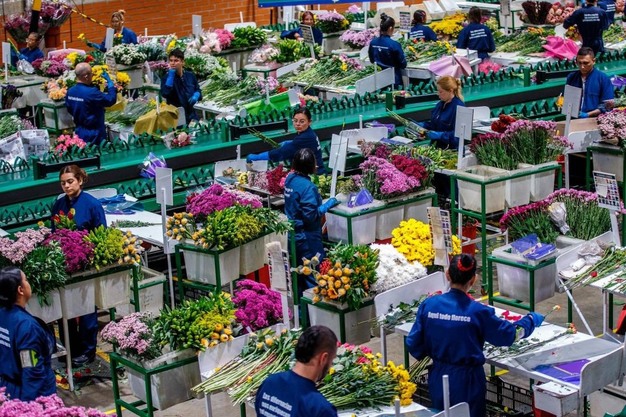
The United States remains Colombia's cornerstone market, accounting for 80% of export value and 76% of volume in the first semester of 2025. Exports to the U.S. rose by 9% in value and 2% in volume, despite uncertainty linked to tariff adjustments earlier this year. Colombia continues to enjoy a competitive edge: while its flowers face a 10% tariff, competitors like Ecuador and Canada contend with significantly higher rates—15% and 35%, respectively. This advantage, coupled with strong consumer preference, has secured Colombia a 60% market share in U.S. flower imports, with an impressive 80% of bouquets purchased by American consumers containing Colombian stems.
 © Asocolflores
Seasonal peaks, particularly Valentine's Day and Mother's Day, remain critical moments for Colombian flower exports. During Valentine's, U.S. flower imports rose 10%, while Mother's Day saw a 3% increase, further cementing Colombia's dominance in these high-demand periods.
Spain: Europe's rising star
While the U.S. remains dominant, Spain has emerged as one of the most dynamic markets for Colombian flowers. In the first six months of 2025, exports to Spain grew by 43% in value and 31% in volume, making it the fastest-growing destination among Colombia's top five markets. The demand is particularly strong during All Saints' Day in November and the Christmas and New Year holidays, which together represent 43% of Colombia's annual flower exports to Spain. This seasonal alignment, combined with a steady year-on-year growth trend, signals a bright future for Colombian flowers in southern Europe.
Other key markets
Colombia's diversification strategy is also evident in other markets. Canada grew by 16% in value and 3% in volume, remaining the second largest export market for flowers. The U.K. increased by 13% in value and 8% in volume. The Netherlands, a re-export hub, showed mixed results with a 5% increase in value but a 3% decline in volume, reflecting shifting logistics and growing competition from Kenya and Ethiopia. This diversification demonstrates the growers' ability to increasingly meet the demands of international markets, as well as the significant advances in logistical innovation achieved by the export chain.
 © Asocolflores
Flowers by species
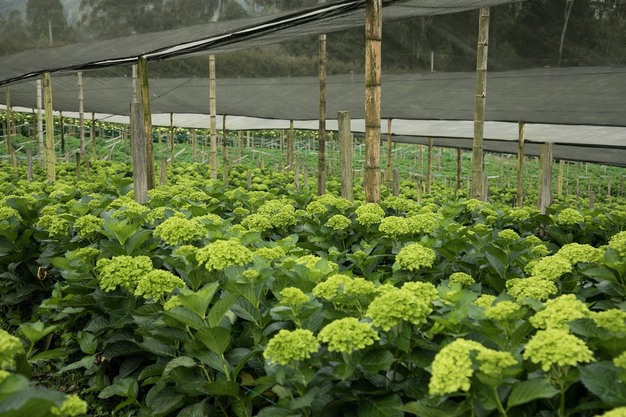
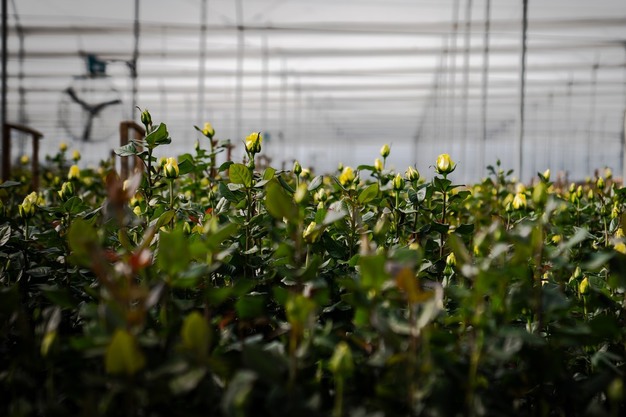
Colombian roses remain the undisputed leaders, representing 19% of total export value. In the first half of 2025, rose exports grew by 8% in value, even as volumes stabilized, which is evidence of both strong demand and the premium positioning of Colombian varieties in international markets. But roses are only part of the story. The country's extraordinary diversity of flowers continues to captivate buyers worldwide. Chrysanthemums, with a 13% increase in value and 6% in volume, and hydrangeas, with a 12% rise in value and 11% in volume, stood out as major growth drivers, reinforcing the sector's ability to adapt to evolving consumer tastes. Carnations, long a Colombian classic, also maintained steady growth and remain a staple of bouquets around the world.
This species diversity is not merely aesthetic—it is strategic. By offering a broad portfolio of varieties, Colombian growers ensure resilience in the face of changing consumer preferences and global competition. While alstroemerias and lilies saw slight declines, the continued strength of mixed bouquets and the rising popularity of new varieties underscore how Colombia's floriculture sector thrives on both innovation and biodiversity.
 © Asocolflores
Production
Production remains concentrated in Cundinamarca (71%) and Antioquia (27%), which together drive more than 95% of Colombia's cut flower exports. In the first half of 2025, Cundinamarca accounted for 84% of export value, while Antioquia outpaced the national average with a 13% increase in value and 8% in volume. Small growers are also showing momentum: exports from smallholder farms rose 55% in value and 74% in volume, highlighting the sector's inclusiveness and potential for regional development.
The first semester of 2025 confirms that Colombian floriculture is more than an industry—it is a global benchmark. With strong performance in traditional markets like the U.S., exceptional growth in Spain, and ongoing diversification efforts, Colombia's flowers are consolidating their role as both an economic powerhouse and a symbol of innovation. As the sector continues to expand its reach, its blend of quality, competitiveness, and sustainability ensures that Colombian blooms will remain at the heart of global demand.
For more information: Asocolflores
https://asocolflores.org/