


This week, the Belgian city of Ghent is a meeting point for the international floriculture industry. Since Monday, industry representatives have gathered for four days of the 77th AIPH Annual Congress. Yesterday, it was time for the Industry Conference, a full day dedicated to presentations and panel discussions on an important topic for the sector: sustainability.
What can we do? That was the question asked to a global panel. The session, moderated by AIPH Secretary General Tim Briercliffe, explored initiatives and forward-thinking approaches to sustainability across the industry.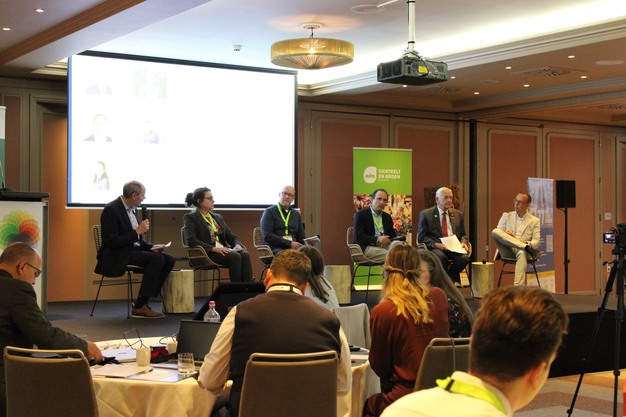 © Elvira Oosterbaan | FloralDaily.com
From left to right: Tim Briercliffe, Stefanie Miltenburg, Jeroen Oudheusden, Juan Carlos Isaza, Augusto Solano and Marco van der Sar
Who will pay?
Moderator Tim Briercliffe opened with a key question: while growers clearly want to do the right thing, sustainability efforts come at a cost. "Who is driving the demands for sustainability? And who is paying for it?"
"The market demand is changing, and there's more demand for sustainably produced products," explained Stefanie Miltenburg, Head of Public Affairs at Royal FloraHolland. "For us, it's really a matter of reputation. If we don't manage to get our things in order, it will be very difficult for our sector to remain active and keep our license to operate." She added that while certification and sustainable practices can be costly, "growers also see the benefits of having better access to the market and even increasing market share."
FSI's Jeroen Oudheusden emphasized that sustainability is no longer optional. "Think about the cost of not being sustainable," he urged. "Our sector is under pressure from NGOs, retailers, and legislation. If we don't back up our good stories with data, we remain vulnerable. We must work more data-driven, use harmonized standards, and prove that flowers and plants are always a good buy."
For GLOBALG.A.P., the challenge is balancing costs with value. "Producers often complain they bear the cost of sustainability without support from the supply chain," said Juan Carlos Isaza. "In some cases, good agricultural practices save money through efficiency, but not always. That's why we are prioritizing hotspots—allowing growers to focus on their biggest impacts—and exploring how buyers can share the cost of implementation. At the same time, certification needs to become simpler and more cost-efficient."
Asocolflores president Augusto Solano shared a Colombian perspective. "Our growers found that being sustainable is good business. Florverde, our certification scheme, began as a best practices program and has become a managerial tool. Yes, sustainability requires investment, but running out of water is more expensive than investing in water management. For us, sustainability has become a culture, not a problem."
Representing the consumer perspective, Marco van der Sar of the Plants & Flowers Foundation Holland stressed the importance of fair pricing. "Sustainability comes at a cost. Hopefully, the consumer will pay a fair price. Not being sustainable is even more expensive long term." He pointed to consumer research showing that while 50% of consumers feel positive about flowers and plants, 42% remain neutral. "That's where the opportunity lies: we need validated, internationally comparable data to show our progress and turn those neutral consumers into buyers of one more bunch or plant."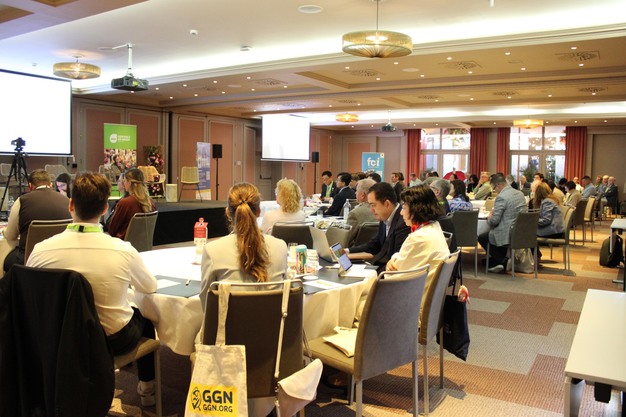 © Elvira Oosterbaan | FloralDaily.com
A full room of listeners for the presentations
Certification, data, and collaboration
Certification and data collection were recurring themes throughout the panel. Stefanie explained that Royal FloraHolland requires its suppliers to hold FSI-recognized certifications. "Certification is the only credible way to show that promises are being kept in production. Today, 75% of turnover on our marketplace is certified." She acknowledged the challenges for small-scale growers but highlighted cooperation with GLOBALG.A.P. and MPS to develop more accessible, lower-cost certification options.
However, unpredictable government policies remain a serious barrier. "Growers want certainty," she said. "Investments in electrification or geothermal energy can be derailed when subsidies suddenly stop. That's driving growers crazy."
Jeroen underlined FSI's 2030 strategy. "Sustainability has shifted from 'nice-to-have' to a license to operate. Going forward, our sector must be more data-driven, using harmonized methodologies such as the FloriPEFCR footprinting tool. With 25 years of record-keeping systems like Florverde and MPS, we already have the base. The next step is using this data to identify where improvements matter most—whether that's peat, plastics, or water use—and making science-based decisions."
Juan Carlos noted that GLOBALG.A.P. is consolidating its many standards into a more streamlined Environmental Sustainability module. "Buyers want a single solution they can trust. It's difficult to balance different requirements, but the aim is to simplify and let growers focus on where they can move the needle."
Social impact as part of sustainability
The panel also emphasized the social dimension of sustainability. "We must not forget that floriculture creates jobs and resilience," Jeroen said. "The industry provides proper employment in countries like Colombia, Kenya, and Ethiopia—something we need to tell more strongly."
Augusto echoed this from Colombia's perspective. "We generate around 250,000 direct and indirect jobs, with 16 jobs per hectare. Taking care of people is at the core of Florverde. Sixty percent of our workers are women, so we've launched programs like breast cancer detection and conflict resolution in families. Investing in people makes them happier and more productive. It's the heart of our sustainability approach."
Looking ahead
The discussion made clear that while the costs of sustainability are real, the risks of inaction are far greater. From data-driven footprinting to collaborative certification schemes, from social initiatives to consumer storytelling, the sector is moving toward a more transparent and resilient future.
Or, as was concluded: "Flowers and plants are always a good buy. Now we need to prove it—with data, with credible standards, and with a balanced story that includes both environmental and social impact."
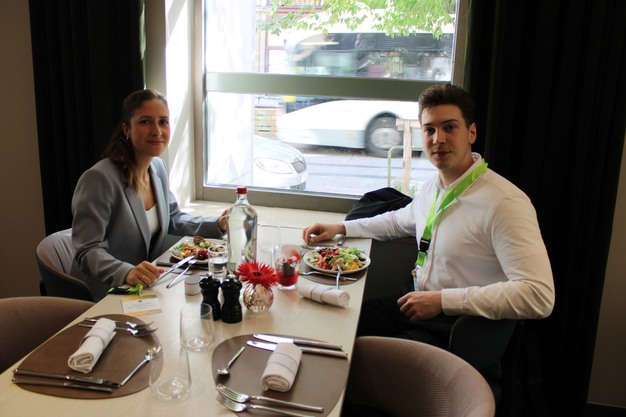
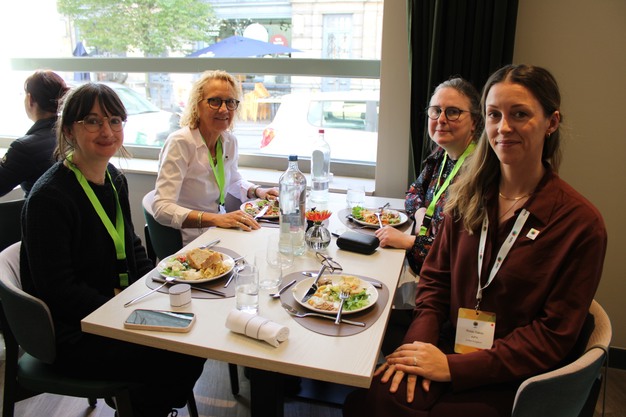
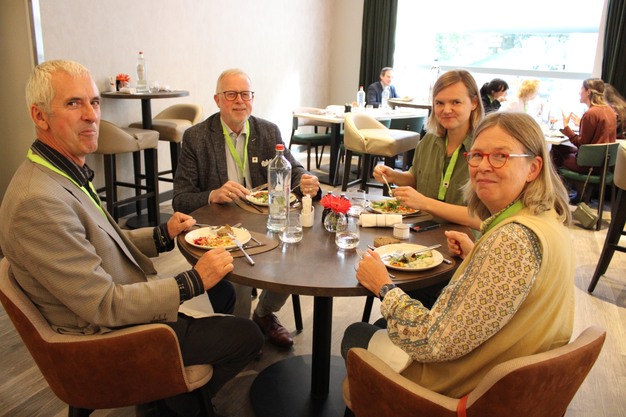
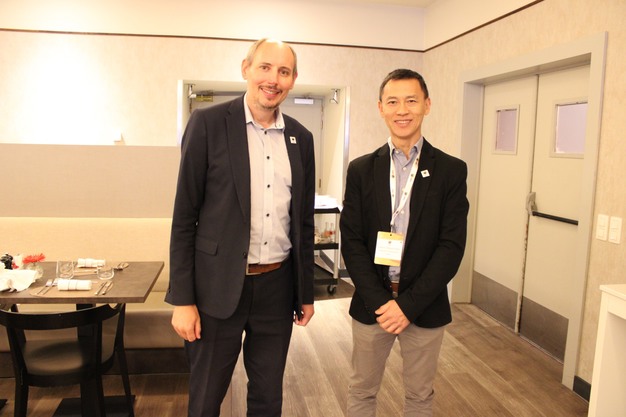
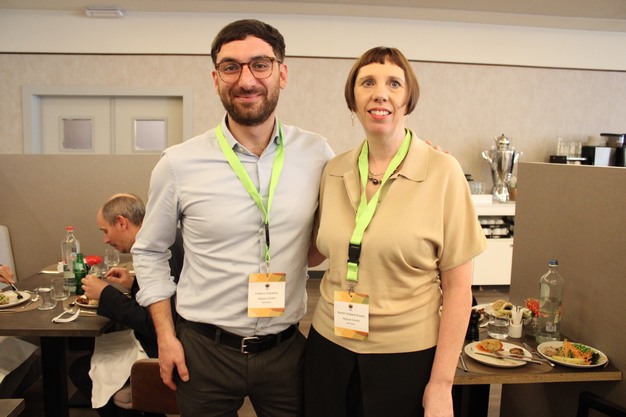
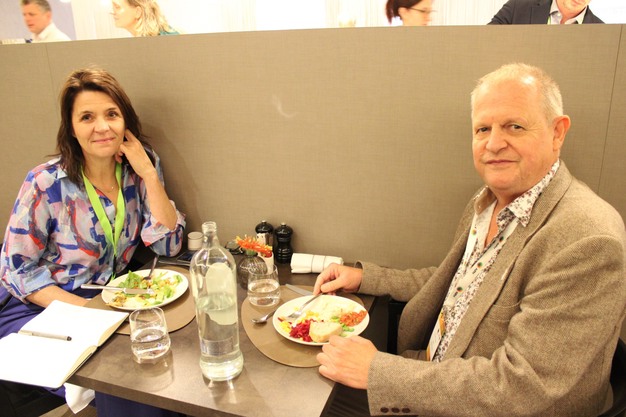
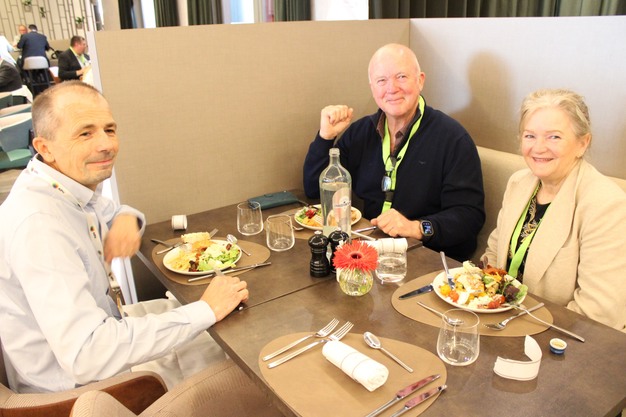
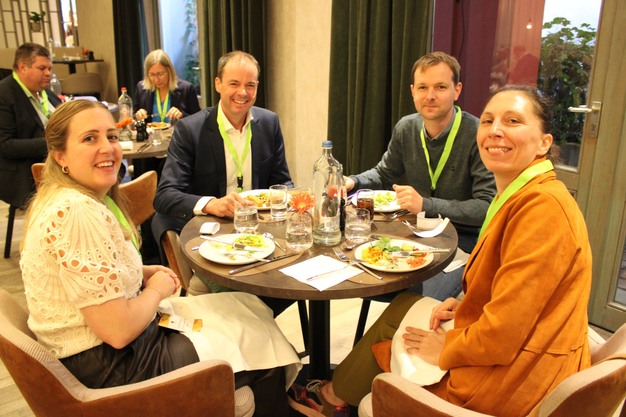
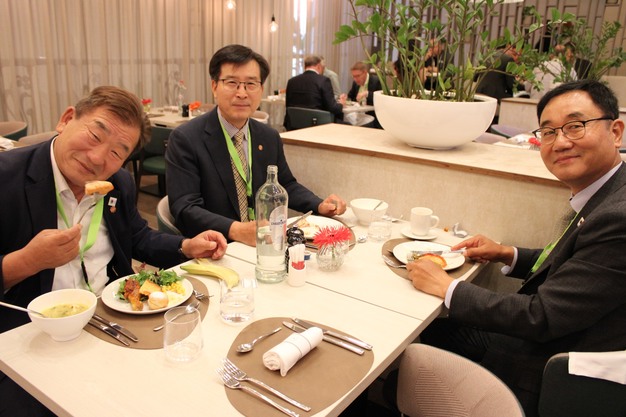
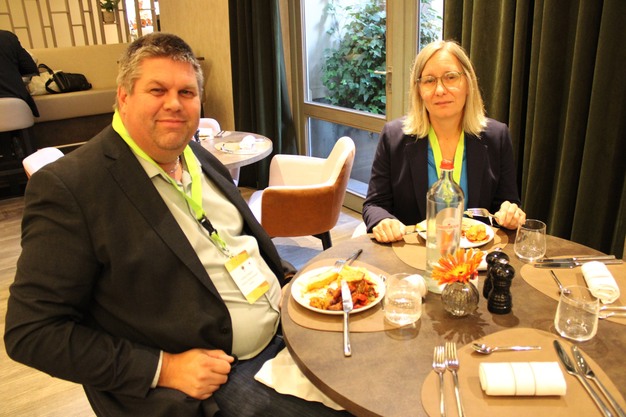
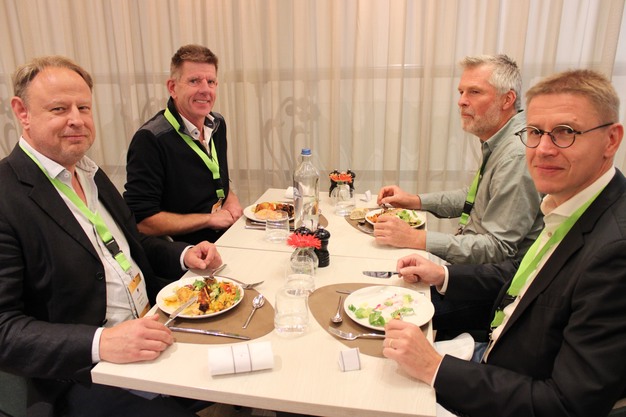
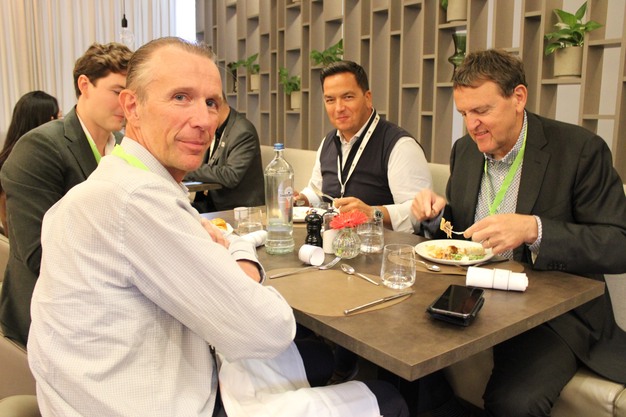
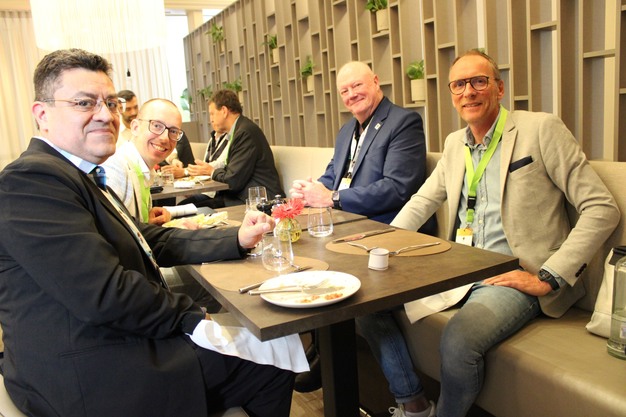
Stay tuned for more insights from the Industry Conference in the coming days. Interested in seeing who attended? Let's see who we found during lunch time!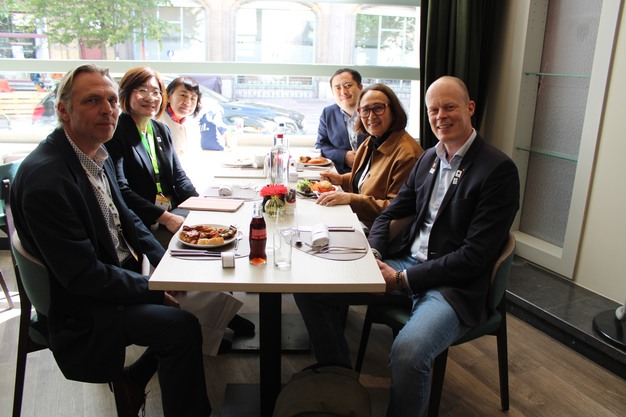 © Elvira Oosterbaan | FloralDaily.com
 © Elvira Oosterbaan | FloralDaily.com
 © Elvira Oosterbaan | FloralDaily.com
 © Elvira Oosterbaan | FloralDaily.com
 © Elvira Oosterbaan | FloralDaily.com
 © Elvira Oosterbaan | FloralDaily.com
 © Elvira Oosterbaan | FloralDaily.com
 © Elvira Oosterbaan | FloralDaily.com
 © Elvira Oosterbaan | FloralDaily.com
 © Elvira Oosterbaan | FloralDaily.com
 © Elvira Oosterbaan | FloralDaily.com
 © Elvira Oosterbaan | FloralDaily.com
 © Elvira Oosterbaan | FloralDaily.com
 © Elvira Oosterbaan | FloralDaily.com
 © Elvira Oosterbaan | FloralDaily.com
 © Elvira Oosterbaan | FloralDaily.com