


At the recent AIPH Industry Conference, Sylvie Mamias, Secretary General of Union Fleurs, took on the challenge of unpacking EU sustainability legislation and what it means for the floriculture sector.
Union Fleurs is the international umbrella organization for the floricultural trade, representing over 3,000 companies worldwide, covering more than 80% of the global trade in cut flowers and pot plants. With members in about 20 countries – including major players in the Netherlands, Colombia, Ecuador, Kenya, and Ethiopia – the organization has a strong view on how EU policies shape the industry.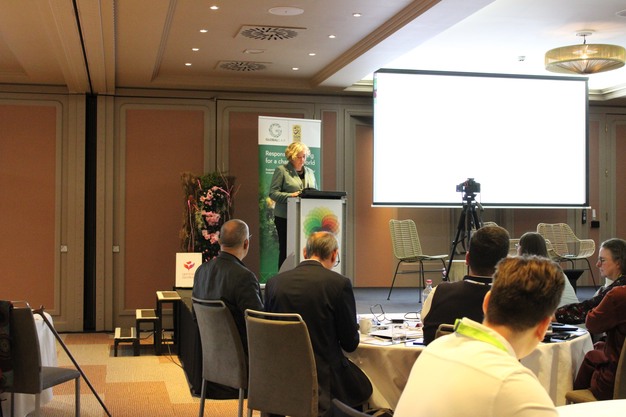 © Elvira Oosterbaan | FloralDaily.com
The EU Green Deal
Sylvie reminded the audience that the EU Green Deal, launched in 2019 as Europe's response to the Paris Agreement, is much more than just environmental legislation. "Sustainability is the combination of the three Ps – people, planet, prosperity. It's not just about environment," she stressed.
The Green Deal's overarching goal is climate neutrality by 2050, while also tackling biodiversity loss, cutting pollution, promoting circular economy practices, and improving citizens' quality of life. What makes it transformative, Sylvie pointed out, is the shift "from voluntary systems to legally binding regulations and obligations."
Direct impact on floriculture
Several pieces of legislation stemming from the Green Deal will directly affect the horticultural and floricultural supply chain. Sylvie highlighted three in particular:
- Packaging and Packaging Waste Regulation (PPWR): "This one will have a direct impact for our sector because we use quite a lot of packaging for plants and cut flowers. It will impose recyclability and reuse of packaging to limit the use of plastics. It enters into force in August 2026."
- Corporate Sustainability Due Diligence Directive (CSDDD): With international supply chains, floriculture is directly exposed. This directive will require due diligence on human rights and environmental impact at every step of the supply chain.
- Corporate Sustainability Reporting Directive (CSRD) and Sustainable Finance Disclosure Regulations (SFDR): These rules on transparency and financial reporting are being reviewed, but will impact companies across the sector.
Other initiatives – from pesticide reduction and biocontrol approval to biodiversity restoration and renewable energy – are also expected to influence horticultural production.
Challenges matched by opportunities
Sylvie acknowledged that compliance with EU sustainability legislation will raise costs. "The Green Deal is challenging because it's expected to increase costs for regulatory compliance and for production – investment in greenhouses, lighting, energy systems, and labor conditions, as well as certification."
Yet, she emphasized that each challenge can be seen as an opportunity. Harmonized EU rules could reduce market fragmentation, while higher costs could drive innovation. "We will continue to stimulate smart greenhouse technology, precision horticulture, renewable energy, water recycling, and greater use of biocontrol tools," she said.
Similarly, stricter rules on logistics, packaging, and cold chain management may result in greater efficiency and quality retention. Rising consumer demand for sustainable products – covering everything from carbon footprint to working conditions – creates pressure, but also accelerates transparency and data collection.
Sustainability as strategy
Sylvie urged companies to view sustainability not as a burden but as a business driver. "The most important thing is to treat sustainability as a strategic core business driver rather than a regulatory burden. Go beyond compliance, integrate sustainability goals into business strategy, and evaluate the full life cycle of products from sourcing to disposal."
She also underlined the importance of building robust data systems, innovating continuously, monitoring the evolving regulatory environment, and communicating transparently with stakeholders.
Cooperation
Finally, Sylvie stressed the value of collaboration within the industry. She pointed to the Floriculture Sustainability Initiative (FSI), launched in 2013, as an example of pre-competitive cooperation that anticipated regulatory demands. She also highlighted the industry's work on the Product Environmental Footprint (PEF) methodology, now endorsed by the EU.
"These initiatives show that our sector has been good at anticipating, organizing, and working together. Cooperation will be even more important in the future," she concluded.