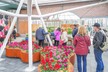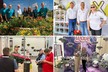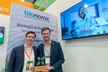


On the afternoon of Tuesday, September 23, the Platform for Accelerating Resistance Breeding in Ornamentals hosted an event at the World Horti Center in the Netherlands. The theme of the day was phenotyping and new technologies. With a full audience of breeders, researchers, and industry representatives, the program focused on both the challenges and opportunities of building a more resilient ornamental sector.
 © Mirthe Walpot | FloralDaily.com
Herold Dongemans (Greenport Aalsmeer) opened the afternoon by expressing his pride at the strong turnout and highlighting the importance of the topic. "Resistance breeding and reducing the use of crop protection products are essential for ornamental horticulture," he said. "Our sector often comes under public scrutiny, so building a strong economic and social image is crucial. We must work together to speed up the transition towards a future-proof ornamental industry."
The interactive setup of the afternoon, with plenty of time for questions and discussion, reinforced his message about listening to real-world experience.
Color, flower shape, and resistance
Sergio Harinck (Vertify) spoke about how ornamental breeding differs from the vegetable sector. "In vegetables, resistance traits are often the main focus, but in ornamentals, colour and flower form still dominate," he explained. Even so, the urgency to better assess diseases and pests such as powdery mildew and thrips is growing. But how exactly do you measure resistance in a reliable way? Is it the degree to which a leaf is covered, or how quickly visible damage develops? The search for clear criteria is still ongoing.
Data as a foundation
Egon Jansen (TNO, Cluster High Tech Greenhouses) stressed the need for a strong data infrastructure. His presentation placed resistance breeding within a much broader context that included labour, crop handling, regulations, chemicals, and emissions. "Our projects are part of the roadmap towards adaptive and autonomous greenhouses by 2027. But to get there, we all need to speak the same language," he explained. He also highlighted initiatives such as the Knowledge and Innovation System (KIS) and the Hortivation Hub.
One question from the audience raised an important point: what about crops grown outdoors? Egon acknowledged that ornamental horticulture is much broader than greenhouse crops alone, and that linking the two remains a major challenge.
Cameras, apps, and detection
The final presentation came from Jos Ruizendaal (WUR), who delved into imaging and camera technology. How can we capture reliable images, taking into account depth of field and fluctuating light conditions? He demonstrated how mobile phone apps can be used to detect diseases and provide immediate feedback. This kind of practical tool shows great promise for growers, though continuous monitoring still raises questions. For instance, how many cameras does a greenhouse really need? The answer, Jos explained, depends entirely on the specific situation.
 © Mirthe Walpot | FloralDaily.com
André van der Wurff from Vertify
Netherlands B.V.
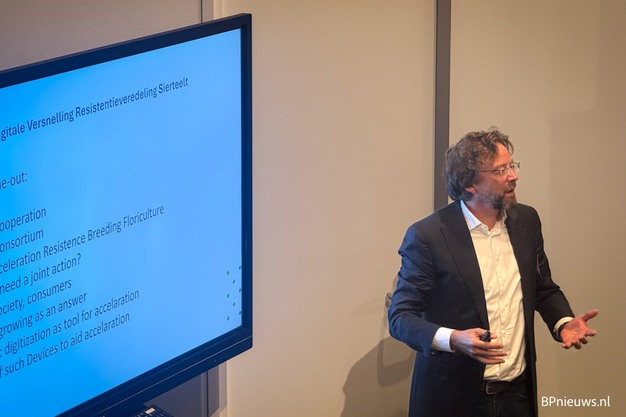
With his lively talk, André van der Wurff of Vertify got the audience thinking, and laughing. He painted a realistic picture of today's challenges: fewer crop protection products, rising costs, and tough international competition. "Is it still realistic to dedicate so many hectares of open-field production to crops like freesia in the Netherlands?" he asked. "Or do we need to accept that cereals and fruiting vegetables are simply more efficient? These are the kinds of questions large companies are asking themselves."
His call to action was clear: pre-competitive collaboration. "Only by joining forces can 'Team Netherlands' maintain its export position. Resilient cultivation actually strengthens the business model and expands our markets. The key lies in the cultivars — that's where the foundation is."
Workshops
After the presentations, the afternoon continued with smaller workshops where participants got hands-on exposure to a variety of new technologies.
 © Mirthe Walpot | FloralDaily.com
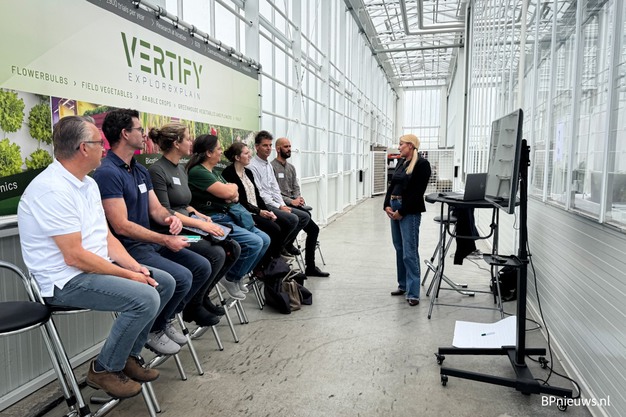
AI & Data Analysis (Kristel van Ammers, Vertify): Data collection and labeling prove to be a challenge but offer great opportunities for labor savings and precision in pest monitoring.
 © Mirthe Walpot | FloralDaily.com
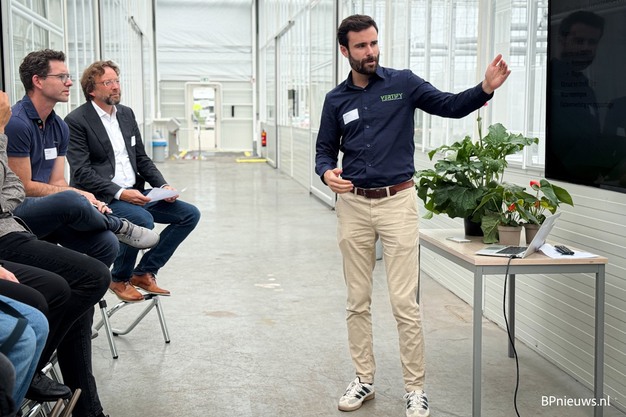
Practical Assessment (Sergio Harinck, Vertify): How do you objectively assess mildew or whitefly? Vision technology must enable automatic counting in the future.
 © Mirthe Walpot | FloralDaily.com
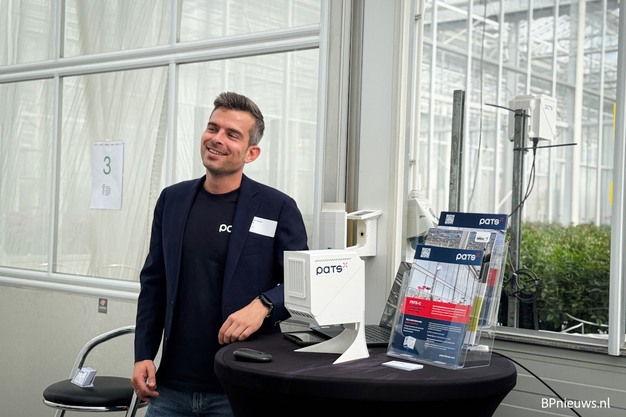
Automatic Pest Dynamics (Bram Tijmons, PATS): Continuously monitor populations with vision and sensors and send timely warnings.
 © Mirthe Walpot | FloralDaily.com
Scouting and Natural Predators (Rob van der Valk, Koppert): With the Natutec Scout app, growers can monitor pest insects and predators and compare strategies.
 © Mirthe Walpot | FloralDaily.com
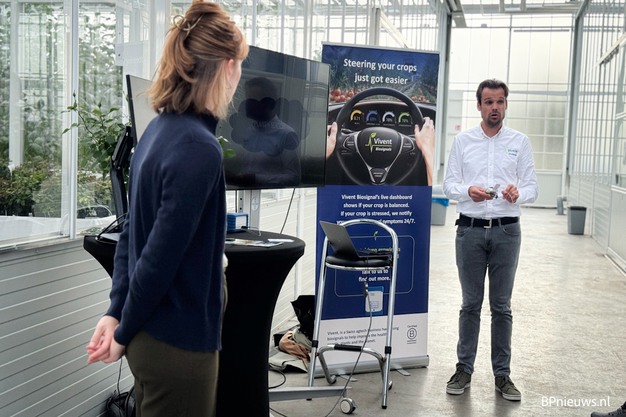
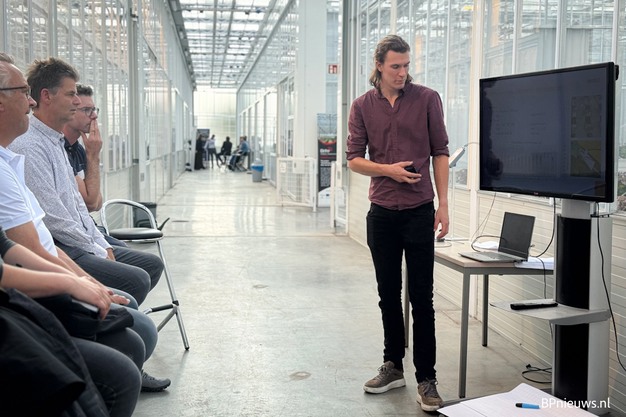
Measuring Plant Stress (Erik and Floortje, Vivent Biosignals): Detect stress signals with sensors up to a week and a half earlier than the human eye.
 © Mirthe Walpot | FloralDaily.com
Leaf Sensors (Jelle, Sendot): Measure in different crops, from thin to thick leaves, and translate insights into large populations.
The wide variety of technologies on display made one thing clear: there is plenty of room for improvement, but real progress will only come through collaboration to translate innovations into practice.
One method
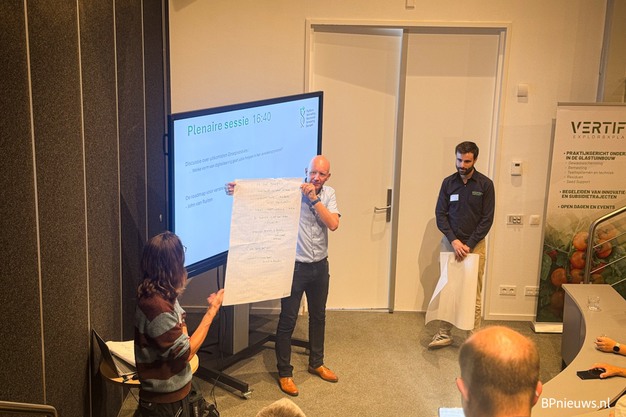
Back in the plenary session, a lively debate unfolded. Is it realistic to develop one universal method for assessing resistance? And how can data be made useful and comparable without compromising company privacy? The strongest wish voiced from the audience was simple: "One thing for all" — a broadly applicable and affordable method that can truly move the sector forward.
 © Mirthe Walpot | FloralDaily.com
Project FlorFastForward
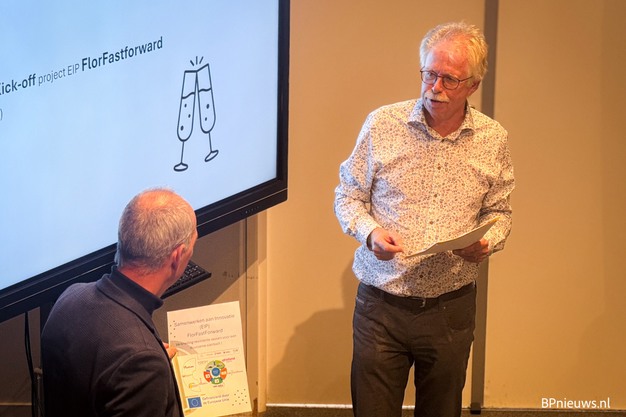
The afternoon closed with a presentation on the EIP project FlorFastForward, where five chrysanthemum breeders are working together with Plantum on uniform methods for assessing diseases. By developing an improved protocol, the partners aim to give growers greater clarity about which varieties and approaches best suit their business.
 © Mirthe Walpot | FloralDaily.com
John van Ruiten kicks off Project FlorFastForward
The key message of the afternoon was clear: only by working together can the sector move forward at the pace that's needed. As Herold Dongemans summed it up so well: "Together it becomes easier. Pre-competitive collaboration, sharing knowledge, and launching projects — that's what drives us ahead."