


Yesterday, a day before the Proflora trade show kicked off in Bogotá, international visitors were welcomed at several Colombian farms to get a closer look at production, breeding and post-harvest processes. We will soon share more in-depth information about the visits, but for now, let's take a look at an overview of the day!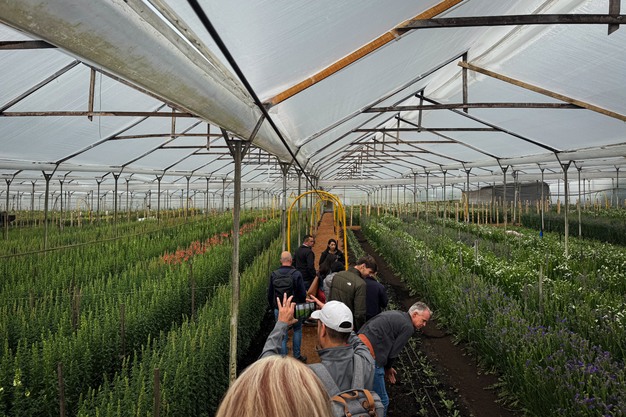 © Mirthe Walpot | FloralDaily.com
One of the stops was La Plazoletta, celebrating 40 years in the industry. Christian guided the group around the 40-hectare farm, where alstroemeria, solidago, snapdragon and statice are grown. With 700 employees – 80% of whom are women – the farm produces some 80,000 stems of alstroemeria per week, offering 40 different varieties. Social responsibility plays an important role: the company provides restaurants and even a kindergarten for people living close to the farm. Sustainability is also on the agenda, with rainwater covering 80% of the crop's needs, solar panels in the post-harvest area, and vacuum cooling technology (Dry-C) that ensures an optimal balance of temperature and humidity.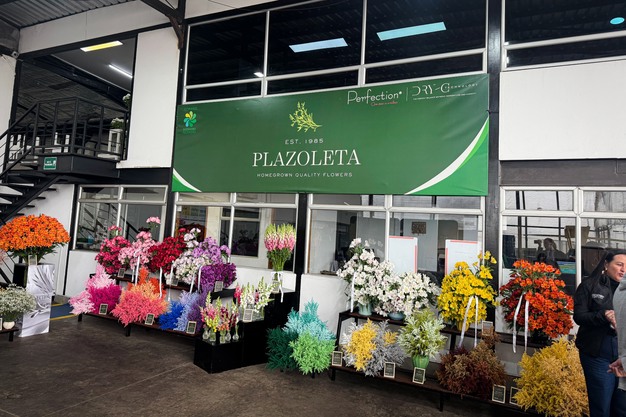 © Mirthe Walpot | FloralDaily.com
As one visitor remarked after seeing the many steps and hands involved in the process: "If everyone knew this story and how many hands touched their arrangements, they would understand the value of flowers."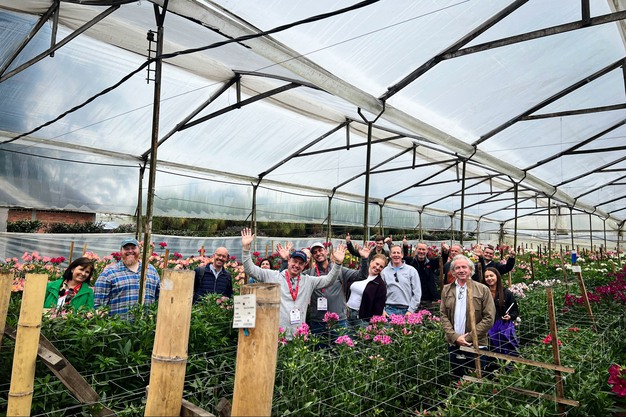 © Mirthe Walpot | FloralDaily.com
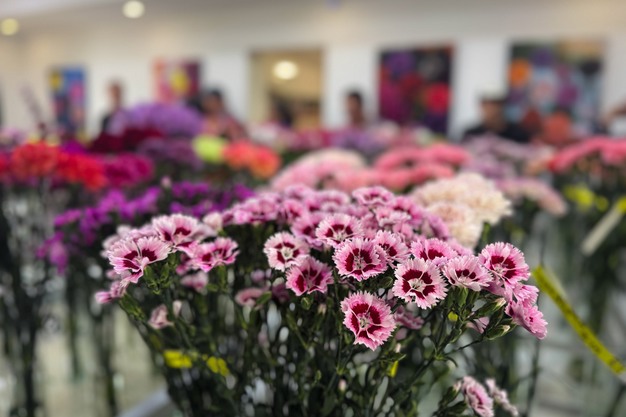
The group also visited Geoflora and SB Talee, companies with Italian roots. Founded in Tuscany in the 1960s, the family business expanded to Colombia 40 years ago. SB Talee is active in breeding – mainly carnations – while Geoflora is focused on cultivation and export. Spread across 54 hectares and 5 farms, the company employs over 1,100 people. While alstroemeria and spray ranunculus are also grown, dianthus remains the core crop. The breeding work is extensive: out of some 30,000 seeds, only about 30 varieties make it to the fourth year of selection. Their parental collection includes lines that have been maintained for over 50 years.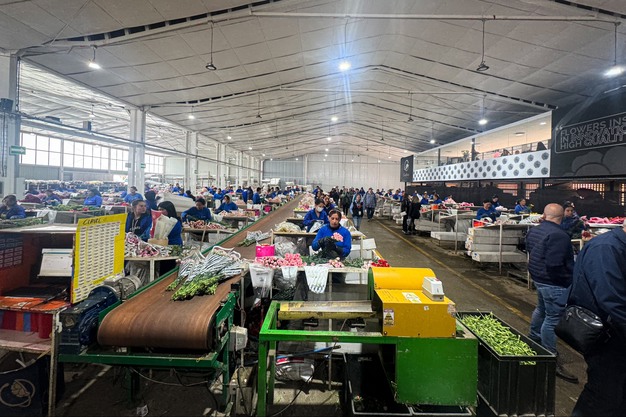 © Mirthe Walpot | FloralDaily.com
 © Mirthe Walpot | FloralDaily.com
Carnations, they note, are enjoying a true renaissance in the market. To ensure quality, flowers undergo strict vase life testing – even for shipments to Japan, where transit can take up to six weeks.