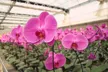


Marking 50 years of statehood with India, Sikkim stands as the nation's greenest state and its first organic state, embodying a vision of living in harmony with nature. This ethos underpins the state's policies and governance, exemplified through the creation of India's first Cool House Orchidarium—the largest in the world—alongside a museum dedicated to orchids and a public festival plaza crowned with monumental insignia.
These initiatives signal Sikkim's commitment to growth where nature is paramount, supported by its leading GDP per capita and a 5% increase in forest cover, positioning the state as a pioneer in sustainable development.
The design concept celebrates five decades of Sikkim's integration with India by place-making that symbolises harmony and dharma, drawing on Buddhist teachings and the Ashoka Chakra. Set against the majestic Kanchenjunga range, the plaza represents fifty years of friendship and progress, with the Orchid Museum and the technologically advanced Cool House Orchidarium serving as emblems of ecological preservation and nature-first values.
The architectural challenge was to create a controlled indoor environment suitable for over 122 orchids and 600 plant species from diverse climate zones, each requiring precise regulation of humidity, UV exposure, CO2 levels, and temperature. This was achieved through the use of digital and physical test models, continuous data monitoring via sensors, and hydraulic actuators programmed to optimise fenestration openings in response to environmental conditions, ensuring energy efficiency in a 24/7 operation.
Read more at Architects and Interiors India