


The European Union's new Entry/Exit System (EES) will be introduced on Sunday, 12 October, with phased implementation expected to reduce disruption at border crossings.
EES is designed to automatically register non-EU citizens as they cross into the Schengen area. On their first entry, travellers will need to create a digital record by providing biometric data. The scheme applies across the Schengen area but excludes the Republic of Ireland and Cyprus.
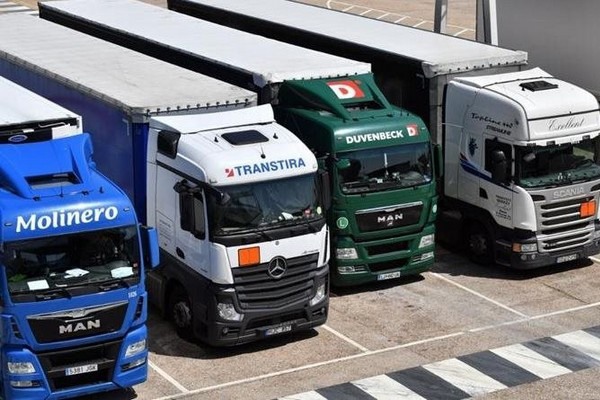 © UK Logistics
At the UK's Short Straits crossings, where almost 60% of UK-EU trade in goods passes, concerns remain about the potential impact on freight flows. The registration process for passengers could slow down movements and cause delays to heavy goods vehicles. According to industry analysis, a 90-minute delay for the 3.35 million HGVs using the route each year could cost the UK economy around £400 million annually.
The system was originally scheduled to begin in 2024, but was postponed. The delay has allowed additional preparation time, although disruption is still anticipated during the early stages as travellers register their details. Logistics organisations are advising operators to allow extra journey time and are urging governments to explore solutions such as remote registration to ease border pressure.
EES will also automatically enforce the rule limiting non-EU citizens to 90 days within a 180-day period inside the Schengen area. This includes both personal and work-related travel. For commercial drivers, this means time spent on deliveries and holidays is counted together towards the 90-day limit.
Industry groups have called for a review of this rule, suggesting that professional drivers should be granted an exemption to prevent potential barriers to UK-EU goods movement. Until then, operators are advised to ensure compliance with the existing regulations to avoid penalties or disruptions.
For more information:
Logistics UK
Tel: +44 (0) 3717 11 22 22
Email: [email protected]
www.logistics.org.uk