

Plant Heritage has awarded National Plant Collection status to 30 new collections across the UK in the last 5 months, highlighting the growing popularity of the charity's flagship conservation scheme.
The new National Collections cover a huge diversity of plants, from houseplants and apples to native Welsh ferns. The charity's new chairman, Sir Roderick Newton, has his own collection of 600 bearded Iris varieties, built up over 60 years. There's also a remarkable collection of Camellia sinensis grown for tea production that thrives at Tregothnan Estate in Cornwall.
Pershore College, based in Worcestershire, has been awarded National Plant Collection status for its collection of plants raised by and associated with the college. This includes the beautiful pelargonium 'Pershore Princess' which is not available commercially and a popular choice in Plant Heritage's annual plant exchange for members. The college has done a lot of research to get to this point and the National Collection status highlights its important contribution to plant breeding over the years.
Held either in homes, gardens, greenhouses or on allotments by passionate individuals, or at nurseries, garden centres, arboretums or botanical gardens, the National Plant Collections (of which there are over 730) contain nearly 100,000 plants. Encouraging people to grow a wide variety of plants is good for biodiversity, and the plants in the National Collections can help us to find varieties that are resilient to the challenges of climate change.
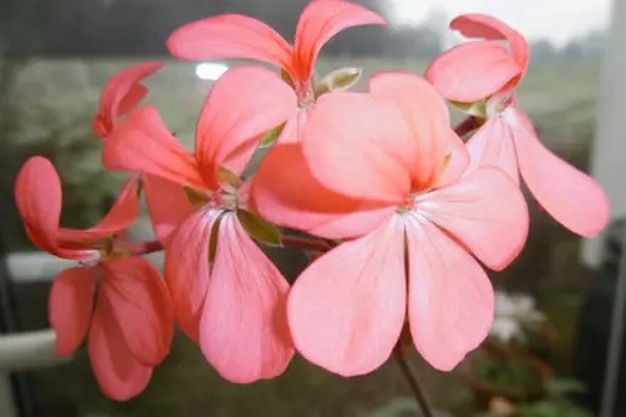 © Margaret StonePelargonium 'Pershore Princess'
In June 2025, several new National Plant Collections were awarded. These include Ajuga species and cultivars held by the Surrey Group of Plant Heritage; Camellia sasanqua and Camellia sinensis at the Tregothnan Estate in Cornwall; and the heritage collection of Camellia at Worth Park in Sussex. Also recognised were collections of Cymbidium by The Mathers Foundation in Sussex, Eriosyce curated by Victoria Davies in Sussex, and Iris—specifically bearded irises of the early 20th century—held by Sir Roderick Newton in Suffolk.
Further awards went to the Gloucestershire Orchards Trust for its collection of Malus domestica (Gloucestershire apple cultivars), Pershore College in Worcestershire for plants raised by and associated with the institution, and Whatton House in Leicestershire for its Philadelphus bred by Lemoine. Additional collections include Pinguicula (Mexican and South American species) by Wack's Wicked Plants in Yorkshire, Sarracenia purpurea and S. rosea by Paul Katz in Norfolk, stapeliads curated by Clive Russell in Dorset, Tetrapanax by English Heritage at Walmer Castle in Kent, and Veronica longifolia and V. spicata by Penny Whitehurst in Staffordshire.
In September 2025, further National Plant Collections were added. These include Asimina triloba (North American pawpaw) by Stuart Senior in Somerset and Bistorta amplexicaulis by Helen Picton and Ross Barbour at Old Court Nurseries and Picton Gardens in Worcestershire. Other recipients were George Holmes of Gloucestershire for cacti mentioned by Richard Evans Schultes, and Diane Corbett of Pembrokeshire for Corylopsis species and cultivars. The University of Exeter received recognition for its Dierama species collection, and Ian Ladd of North Lincolnshire for Dionaea muscipula cultivars and hybrids.
Dr Alison Evans of Lancashire was awarded for her collection of British native and naturalised alien ferns, while Treborth Botanic Garden in Gwynedd was recognised for native Welsh Polypodiopsida. Hatfield Park in Hertfordshire received recognition for Malus domestica (17th-century cultivars), and Graham Warner at Herstmonceux Castle in Sussex for the Nymphaea Ken Warner Memorial Collection. David Barrett in Gwynedd was honoured for Origanum vulgare cultivars, while the University of Oxford Botanic Garden and Arboretum in Oxfordshire received an award for Orobanche. Stella Abrahams of Hertfordshire was recognised for Pelargonium Deacon cultivars, and Richard Marshall of Gloucestershire for Philadelphus bred by Lemoine. Finally, RHS Garden Wisley in Surrey received a new collection award for Sequoia sempervirens and its cultivars.
For more information:
Plant Heritage
plantheritage.org.uk/