


Day of the Dead is one of the most emblematic traditions in Mexico, a time to honor and remember those who have passed. For this celebration, families prepare altars decorated with flowers, candles, food, drinks, photographs and personal belongings of their loved ones.
Among the decorations, the marigold flowers stand out. Known in Nahuatl as cempoalxochitl, they are considered a traditional symbol and a guide for the souls of the deceased as they return to their homes.
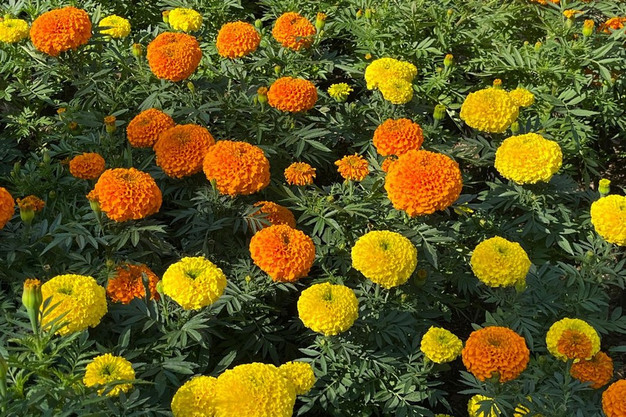 © Secretaría de Agricultura y Desarrollo Rural - Gob. México
The term cempoalxochitl comes from Nahuatl: cempoal meaning twenty and xochitl meaning flower. It is a crop grown under irrigation and seasonal rain, and distribution peaks in October and November. The petals from organic flowers are even used in foods such as atole, gelatin, bread, cookies and pulque based beverages.
For producers, this celebration also brings an important commercial opportunity. Growers supply marigold flowers from their fields to markets, convenience stores and other outlets. Mexico City has a wide range of ornamental flowers across seven municipal districts, especially those with conservation land such as Xochimilco and Tlahuac.
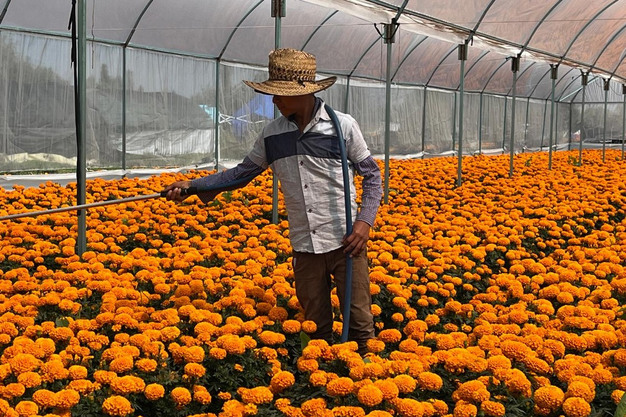 © Secretaría de Agricultura y Desarrollo Rural - Gob. México
According to the General Directorate of the Agrofood and Fisheries Information Service DGSIAP, production in 2024 reached 2 million 061 thousand 820 plants and 26 thousand bundles of marigold, thanks to the work of approximately 700 growers.
The most common varieties grown in pots are Marvel gold, Marvel orange and Marvel lemon. These are preferred for their characteristic orange color and soft aroma. Prices range from 10 to 20 pesos depending on size and the point of sale.
Another noteworthy variety is the clemolito, native to Mexico. It is a smaller marigold plant with more intense colors ranging from yellow to deep red, and a stronger and longer lasting fragrance.
The distribution and sale of marigold takes place at local markets in Xochimilco such as Cuemanco, Madre Selva, San Luis Tlaxialtemalco and Palacio de la Flor. It is also sold at the Central de Abasto, local shops, mobile markets and department stores.
Source: gob.mx