

Kenya has officially commenced exports of Solanaceae plants (Petunia spp. & Calibrachoa spp.) to the European Union (EU), marking a major milestone for the country's floriculture sector. For many years, Kenya was unable to export these plants to the EU because the Solanaceae family also includes potato, tomato, and capsicum, which are economically important crops in the Union and were considered at risk of virus diseases. However, after sustained effort, EU Regulation 2025/1082 issued in June 2024 approved Kenya to export unrooted Petunia and Calibrachoa cuttings and their hybrids to all EU member states.
On 1st November 2025, Kenya successfully exported its first consignment of these unrooted cuttings to the EU market, with Savanna Flowers PLC (located along Moi South Lake Road in Naivasha, Nakuru County) being the first facility to ship the plants. Petunia and Calibrachoa are widely valued as popular bedding and ornamental plants, known for drought tolerance, ease of cultivation, and beautiful flower varieties, and are commonly used in gardens, landscapes, homes, offices, and public environments in temperate regions including the EU, Japan, Russia, and North America.
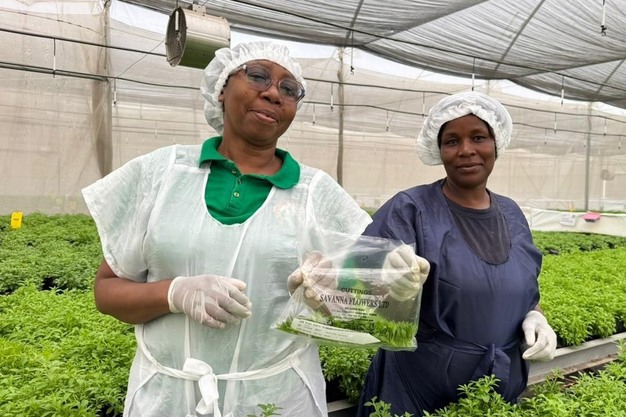 © Kenya Plant Health Inspectorate Service
During this process, the KEPHIS Managing Director, Prof. Theophilus Mutui, met with facility representatives to reaffirm KEPHIS' commitment to support all producers in meeting the EU's phytosanitary import requirements. He emphasized that KEPHIS will continue conducting regular inspections, certification procedures, and advanced laboratory diagnostic services to ensure consistent compliance and sustain long-term market access.
This achievement is expected to boost Kenya's horticultural export earnings, expand production capacity, create more employment, and strengthen Kenya's competitiveness within the global floriculture market.