


Colombia is the world's second largest exporter of flowers. Its privileged location and ideal climatic conditions allow flowers to be cultivated all year round and reach more destinations around the world than almost any other origin.
Each stem grown in Colombian soil carries a story of social contribution, environmental commitment, and exceptional quality — a story still little known beyond the country's borders. In one of the most biodiverse nations on Earth, floriculture not only reflects Colombia's natural wealth but actively contributes to preserving it, making the country's flower fields a landscape worth discovering.
 © Asocolflores
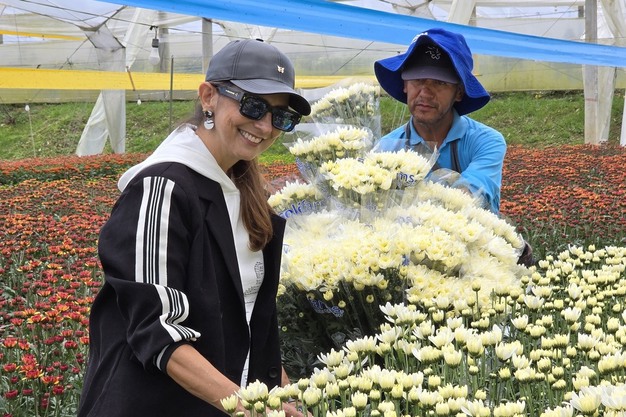
Through the Flowers of Colombia brand, Asocolflores — The Association of Colombian Flower Exporters — strengthens sustainable floriculture in Colombia so that the country's flowers bring well-being and inspiring experiences. This approach also opens a new door: tourism as a way to promote and connect visitors with the people and places behind the country's emblematic flowers.
According to ACOTUR (Colombian Association of Responsible Tourism), Colombia received 5.86 million international tourists in 2023, marking a 173 percent increase compared with 2021. Nearly 40 percent of those travelers sought rural or nature-based experiences — an ideal opportunity for flower farms to engage with a global trend that values authenticity, sustainability, and human connection. Worldwide, 70 percent of travelers now prioritize sustainability when choosing destinations, and demand for genuine, lesser-known experiences continues to rise.
 © Asocolflores
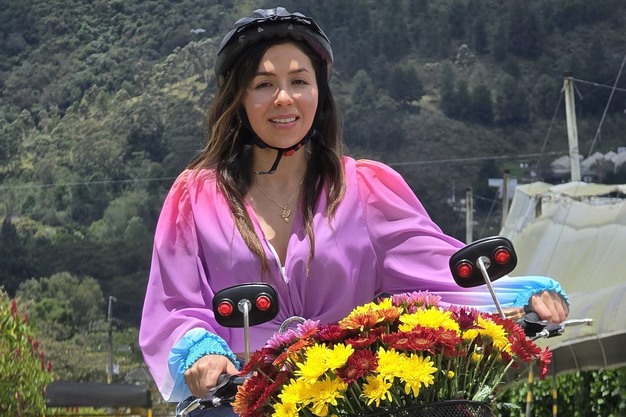
In the municipality of La Ceja, Antioquia, Jardines de San Nicolás has become a reference point for this vision. Through its "Open Doors" program, and in partnership with the tour operator ZonaBici, the company welcomes visitors who explore the farm by bicycle, pedaling through green corridors and vibrant fields to witness each stage of cultivation — from planting to harvesting.
"Every visitor leaves with Colombia in their heart," says Marleni Carmona, Human Resources Director at Jardines de San Nicolás. "They discover that behind every stem there are hands that cultivate life, families that grow together, and communities that bloom."
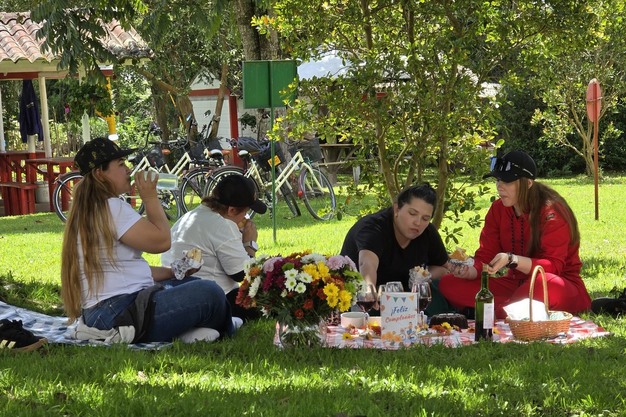
These guided experiences have attracted more than 40,000 visitors in recent years, promoting a positive image of Colombian floriculture while generating tangible economic and social benefits for the region. Local suppliers in gastronomy, transportation, and bicycle services have joined the initiative, creating a model that connects sustainability, community, and rural innovation.
 © Asocolflores
Beyond their promotional value, initiatives like this also show the potential for flower growers to diversify their income streams. Opening farms to visitors — through carefully designed and sustainable experiences — can become an additional business model, allowing producers to strengthen local economies, create rural employment, and reinvest earnings in community and worker-well-being programs.
For Asocolflores, these encounters represent more than tourism — they are an opportunity for visibility and shared growth. They allow the world to see that Colombian floriculture is not only an export success but also a human and environmental story rooted in purpose.
For more information: Asocolflores
https://asocolflores.org/