

While attending the Royal FloraHolland Trade Fair Aalsmeer and IFTF this November, Plant Healthy, the UK-based charity promoting robust plant biosecurity standards, used the opportunity to highlight the importance of proactive biosecurity in international horticulture. Working with the Dutch-based consultancy group GTC+, the organisation is encouraging growers, traders, and certification bodies across Europe to integrate good biosecurity practice into everyday business.
Plant health risks are increasing across the world, largely as a result of the level of international trade, personal travel and climate change. Pests and diseases know no borders and are a potential threat to the production and sale of all kinds of plants, including ornamentals, trees, cut flowers and edibles, so it makes sense to consider this in a proactive way to minimise risks in the first place, rather than dealing with a problem that can be very damaging and expensive.
Plant Healthy operates a standard and a certification scheme which provides all types of businesses growing, selling or moving plants with the framework for, and recognition of, a high standard of plant biosecurity. It works under the umbrella of a Plant Health Alliance of 24 leading trade, professional and government bodies covering the full spectrum of plants and trees.
Established in the UK in 2020, the Plant Health Management Standard can be applied anywhere in the world. Plant Healthy's own certification scheme now has 103 members, up 36% over the last year. These are all in the UK, where it has been shown to add value, and it is now time to extend the same protection and benefits in other countries.
Malcolm Catlin, Project Director at Plant Healthy, said: "We were very pleased to have attended Trade Fair Aalsmeer and IFTF to meet with a number of key businesses and certification and other trade bodies active in Europe and beyond. The purpose of the discussions was to stress the need to include biosecurity as an integral part of doing business in horticulture, and how this can best be applied in a way that fits in with everyday working and existing certifications. We also discussed the many potential benefits for a biosecurity certified supply chain."
Plant Healthy is being supported in this work by GTC+, the Dutch-based consultancy group with a particular focus on sustainability and efficiency. Malcolm Catlin added: "I am proud to have been associated with GTC+ for the past three years and their expertise and network of contacts is proving invaluable in progressing the conversation on the need for - and application of - good biosecurity to protect our trade as well as our environment. Many businesses may already be doing some of this, but not in a systematic way, or as effectively as Plant Healthy."
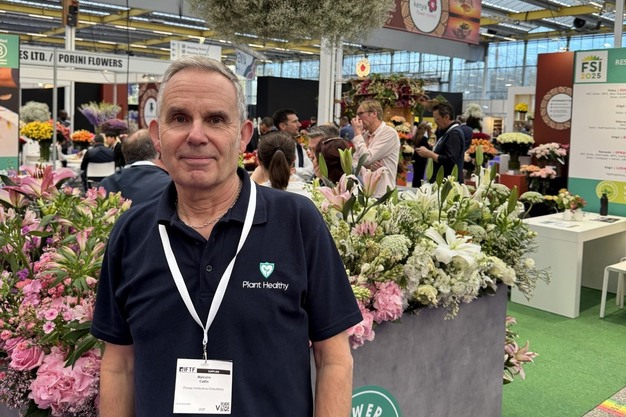 © Plant HealthyMalcolm Catlin
Remco Jansen, partner at GTC+, added: "With a background for many years at MPS, I understand the need for schemes and businesses to continually evolve and improve based on the latest challenges, but without adding too much to the burden of certification. The Plant Health Management Standard is compact and only focused on biosecurity, so should be reasonably straightforward to apply alongside existing practices and standards, whilst providing many benefits."
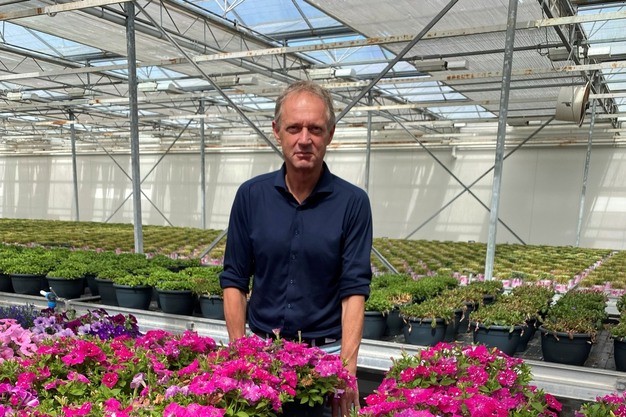 © Plant HealthyRemco Jansen
Businesses that experience a major plant pest or disease problem can face big financial costs, reputational damage, or both. The potential risks to the wider trade throughout the supply chain are also huge, whilst damage to our landscapes threatens biodiversity, carbon capture, flood and heatwave mitigation and personal wellbeing.
Putting in place good practice is also a promotional tool, and provides a good way of keeping up to date with ever-changing threats and rules. In some places biosecurity certification is already becoming a recommendation or a requirement, and work is underway to consider other incentives and benefits, possibly including an insurance scheme.
Plant Healthy welcomes discussions with enterprises and bodies on the subject of strengthening plant biosecurity. If you are interested in finding out more, please contact Malcolm Catlin ([email protected]) or Remco Jansen ([email protected]).
For more information:
Plant Healthy
https://planthealthy.org.uk/