

Asocolflores has received its third consecutive recognition in less than two years for promoting efficient water use and strengthening biodiversity in Colombian export flower farms. The latest award is Xposible 2025.
"Our project, recognized today, was born from a clear vision," says Augusto Solano, president of Asocolflores. "The goal is to move toward positive agriculture that can regenerate ecosystems instead of only mitigating impacts. Colombian floriculture has shown for more than thirty years that sustainability is a strategic pillar. The sector continues to work to evolve toward production models that restore, protect, and create environmental value."
 © Asocolflores
Integrating highly technical production infrastructure with environmental regeneration has been one of the main challenges for Colombian flower growers. Adapting irrigation systems, investing in technology, dedicating areas to conservation, restoring soils, and strengthening applied science all require time, resources, and a deep cultural shift.
Even so, Asocolflores says facing this challenge has helped consolidate a model that combines efficient production, water stewardship, and ecosystem restoration. This has positioned the sector as a reference point for sustainability in export floriculture.
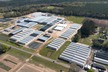
The project has achieved concrete results. Today, sixty percent of the water used on farms comes from rainwater captured and stored in reservoirs. Ninety five percent of farms have efficient drip irrigation systems. More than ninety percent have programs for rational water use and for recirculating wastewater. These actions help optimize water use, reduce pressure on underground and surface sources, and close the water cycle within the farms.
A separate study titled Las Aves de las Flores identified one hundred fifty eight bird species on flower farms, including migratory species and some listed as threatened. Among them is the Tingua Moteada, previously considered at risk and now the symbol of the national floriculture sector. The findings show how flower farms act as biodiversity refuges and conservation nodes that align production with ecosystem protection.
"Safeguarding water security for the country and its communities while preserving natural habitats is a constant priority," says Daniela España, sustainability director at Asocolflores. "Without water there are no crops and no economic or social development, so water is seen as the sector's strongest ally."
The sector has also advanced in the active restoration of biological corridors and conservation areas inside and outside the farms. This work is supported by sixteen propagation banks for native species that supply reforestation and ecological restoration projects. More than fifty five thousand trees have been planted in strategic areas, creating resilient and diverse landscapes.
The Xposible 2025 recognition adds to other awards received by Asocolflores in less than two years. These include the recognition for conservation, restoration, and protection of paramo ecosystems and water resources from the Congress of the Republic, and the Britcham Lazos a la Sostenibilidad award.
For the Colombian floriculture sector, these awards show that sustainability is more than a commitment. It is a strategy that transforms territories, strengthens communities, and builds competitiveness. Solano states that the recommendation is to start with rigorous measurement, science, innovation, and strategic partnerships. "Every action counts. A reservoir that becomes a habitat, a single tree that restores a corridor, a species that returns to the productive landscape. That is the real impact."
 For more information:
Asocolflores
https://asocolflores.org/