


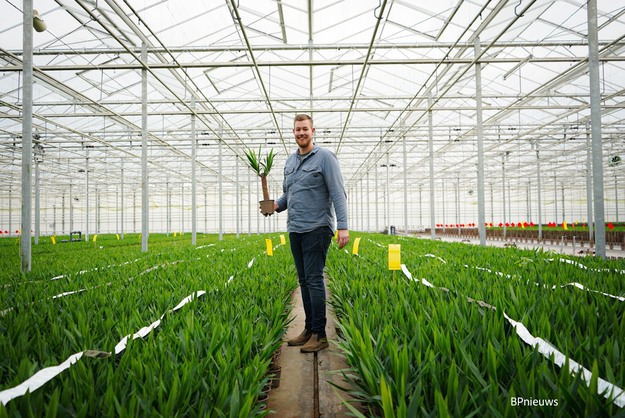
At Luiten Kwekerij in Pijnacker, the Netherlands, the assortment is broad, but according to Sander Kerklaan it is the balance that really makes the company strong. "We have a plant for every type of customer. Our mix is roughly 40 percent indoor plants and 60 percent Mediterranean lines. In January we are closer to 80 percent indoor plants, and in spring that ratio flips the other way. But April is definitely our busiest month, when every square meter is packed with plants."
 © Mirthe Walpot | FloralDaily.com
Over the past ten years, the nursery has experienced significant growth, including several moves. In 2018 they relocated from Bleiswijk to Hoefslag in Pijnacker, and since 2024 the entire nursery, now covering about six hectares, has been operating from the Lange Campen site in Pijnacker. "This year was actually our first normal year at the new location, and it has gone well," Sander explains.
Mediterranean offering
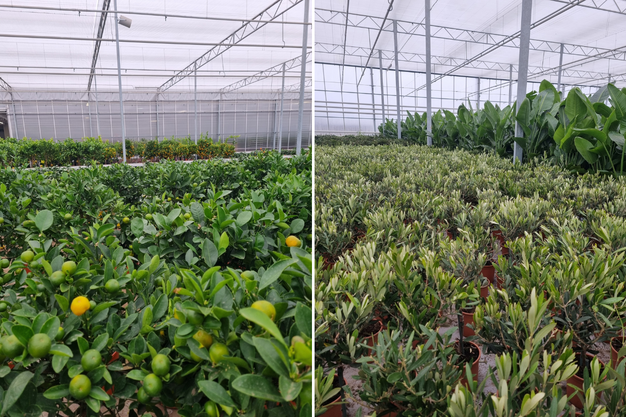
Around 70 percent of the Mediterranean imports come from Sicily, supplemented with products from mainland Italy, Spain and Portugal. The range varies from small citrus trees to large palms. "Customers who run market stalls often come here themselves to handpick their plants. Garden centres and retailers are mainly supplied through day trading and planned promotional programmes. In spring, about 70 percent of our volume goes into promotions and 30 percent into day trade."
 © Luiten Kwekerij
Luiten Kwekerij has long-standing partnerships with several growers, including a Sicilian grower. Large photos of this nursery can be found on the office walls and on the company's trucks. "We have been working with our Sicilian grower for almost fifty years. Relationships like that are incredibly valuable to us."
 © Mirthe Walpot | FloralDaily.com
Camelias
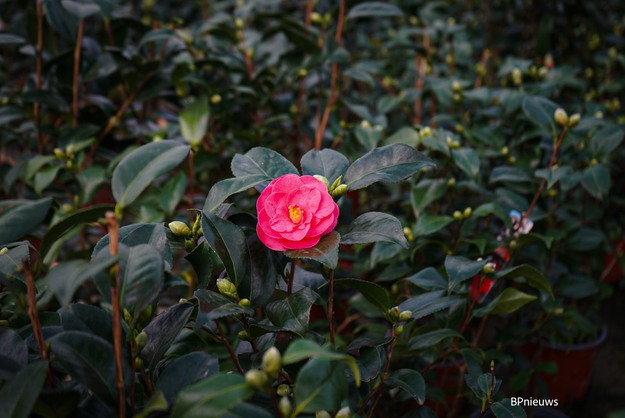
Camellias and other flowering plants form an important part of the assortment. They are sourced partly from Spain and Ireland, complemented by Dutch-grown plants in 19 cm pots. "We have been handling the sales of Camellias for a fellow grower for more than ten years. The peak runs from January through early March," Sander explains.
 © Mirthe Walpot | FloralDaily.com
Yuccas and dracaenas
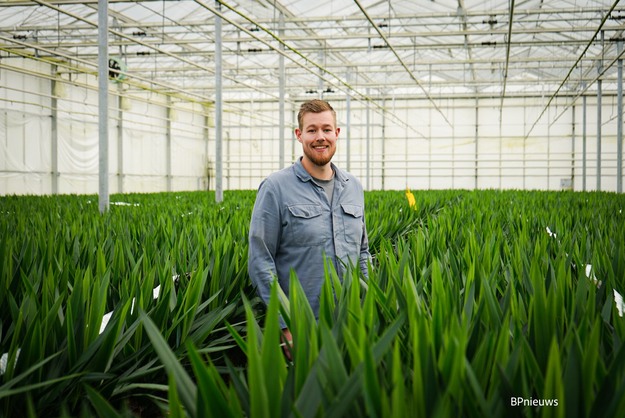
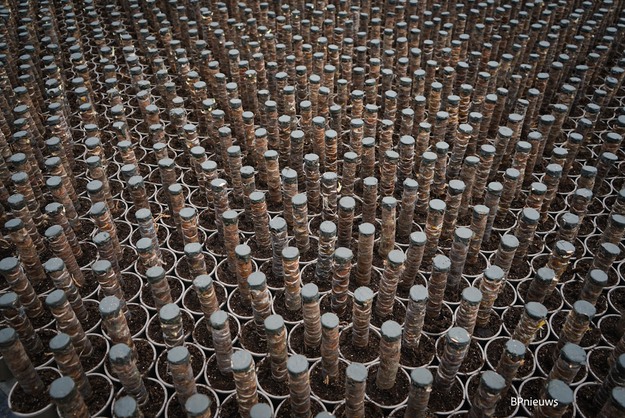
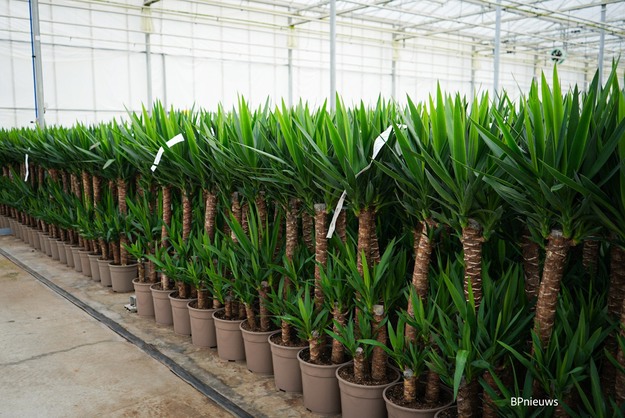
The indoor plant section relies for about half of its volume on yuccas, which have been grown at the nursery since 1973. From September onward, production ramps up so that the largest volumes are ready in January. Imports from Guatemala arrive every two weeks. Luiten Kwekerij offers a wide range of pot sizes, yet the yuccas always arrive with fixed stem heights to ensure consistently uniform batches.
 © Mirthe Walpot | FloralDaily.com
For the yuccas, the nursery uses biological control. "We started about two months ago. Thrips still requires close monitoring, but the future is biological, so we are fully committed to it," he says.
 © Mirthe Walpot | FloralDaily.com
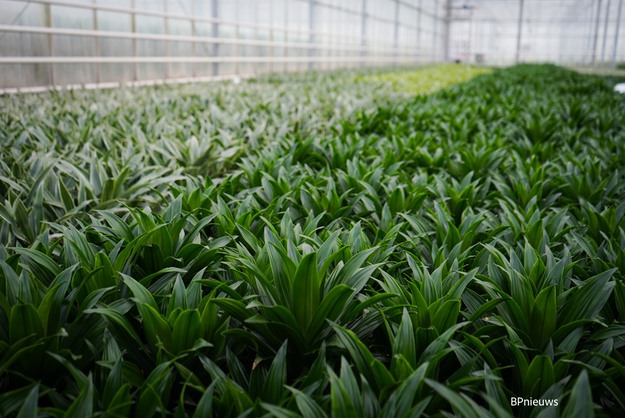
The dracaena line has been running since 2023 and has grown into a solid part of the business. These plants are imported from Costa Rica and also arrive with fixed stem heights.
For yuccas, about 20 percent is sold through pre-orders and the remaining volume goes into day trade or last-minute promotions. "Dracaenas, on the other hand, are at least 90 percent day trade, although that share is slowly decreasing as more customers know where to find us," Sander adds.
 © Mirthe Walpot | FloralDaily.com
Challenges
Energy and biological control remain the biggest challenges. "At our previous location we were on geothermal heat. Here we heat with gas. Prices have stabilised, but the upcoming surcharges are worrying. We are actively exploring serious alternatives. We are not here for just a few years, so we have to think ahead," Sander explains. "And of course, having good people on the nursery remains essential."
Luiten offers its assortment through Floriday and promotes new items via HortiHeat. The company also recently launched a new website.