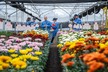


GrowTech Antalya is a trade show with two distinct faces. On one hand, the aisles are filled with thousands of Turkish growers eager to discover new varieties, fertilizers, and greenhouse coverings. On the other hand, many exhibitors are not primarily targeting the domestic market. Despite the scale of Turkey's greenhouse sector and the presence of several modern projects, suppliers note that the Turkish market can be difficult when it comes to adopting innovation. Currency pressures, export dependency, and limited local demand for new technology all shape the landscape. As a result, many high-tech exhibitors focus instead on visitors from the Middle East and Central Asia who come to the show looking for advanced solutions.
Click here for the photo report.
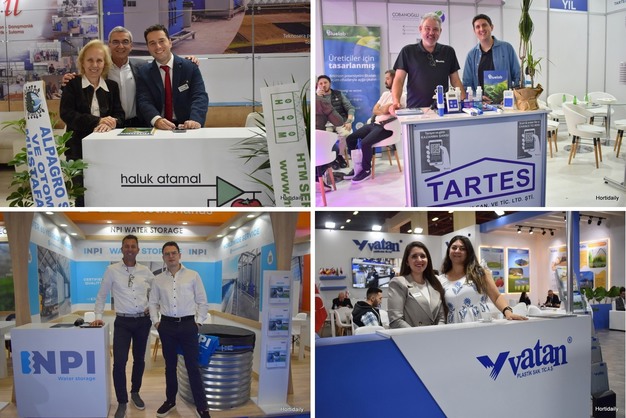 © Priscilla Heeffer | FloralDaily.com
The Turkish market
In spite of some new large-scale greenhouses being developed, many companies active within Turkey continue to point to pricing as a major concern for growers. The lira continues to lose value, and many growers depend on export channels linked to long-standing agreements with Russia. Export activity toward surrounding regions remains the main priority, while the domestic market shows little momentum.
Suppliers describe the Turkish market as broad but not specialized. With no clear niche segments, the country grows a wide variety of crops, yet crop-specific expertise remains limited. Many decisions are still made within family structures, and companies observe that improved knowledge transfer is essential to strengthen production practices.
Greenhouse construction in Turkey is allowed only in designated zones. Although subsidy schemes exist in these areas, industry participants say the regulatory framework limits how effectively these programs can be used. Plastic-covered greenhouses remain the norm, with little interest in alternative materials or system upgrades. Plastic films are increasingly imported due to concerns about local production quality.
Water availability adds further challenges. In some regions, growers can only access water every other day during the summer.
Geothermal development is another topic gaining attention. Three geothermal zones are currently in operation, and growers are still learning how to use geothermal heat effectively in greenhouse systems. Enorpa is involved in guiding these projects and helping growers understand how geothermal heat can be integrated into heating systems while keeping upfront investment manageable.
International scope
Most exhibitors confirm that their participation at GrowTech is aimed more at surrounding markets than at Turkey itself - and we'll update you with more information about this. Nearby regions with similar climates remain the preferred target markets for many suppliers, and some local suppliers report growing inquiries from Mexico as well.