
The same greenhouse that once hosted the first trials of nanobubble hydroponics in the Atacama desert is now blooming with new colors and aromas. From the Azapa Valley, on Chile's northern border, Mallkivitor has turned agricultural science into a form of gastronomy: hydroponic edible flowers grown with oxygenated water through nanobubbles in a place where rain barely exists.
 © Mallkivitor
"Edible flowers started almost out of curiosity. Clients were asking for something beyond traditional vegetables, so we tried. At first, it was small trials between the lettuces and basil; now we have a greenhouse dedicated entirely to flowers", says Pedro, cofounder together with Michelle.
The project, launched in early 2024 with support from Corfo, aims to build the foundations of an agricultural artificial intelligence system applied to hydroponic edible flower production. The team has integrated environmental and water sensors that collect data on temperature, radiation, pH, oxygen and nutrients in order to adjust conditions in real time and optimize each stage of the crop.
 © Mallkivitor
Between science and gastronomy
"Chile has a very traditional cuisine, and our challenge has been to show that people can also eat color, texture and aroma. Flowers are not only decoration: they bring antioxidants, vitamins and new flavours", Pedro explains.
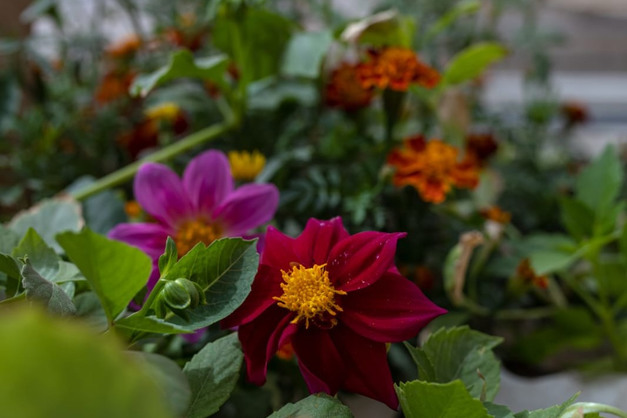
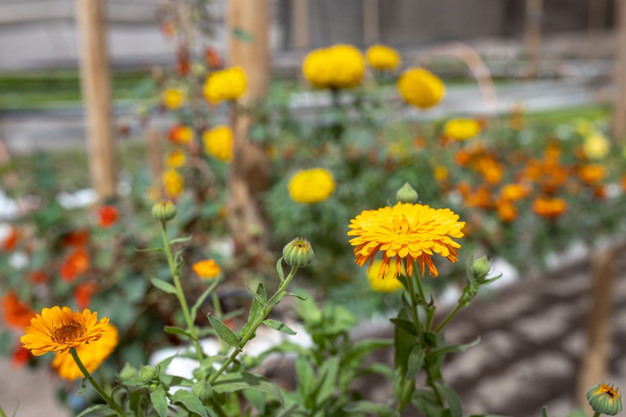
The current catalog includes tagetes, zinnias, alyssums, calendulas and dahlias, along with trials of nasturtium, borage, mallow, physalis and poppy, all grown without agrochemicals and irrigated with oxygenated nanobubble water. "We have had to learn everything: production cycles, postharvest, packaging, labelling. It is a full product development process", he adds.
 © Mallkivitor
Each flower is grown under extreme conditions, with just 0.1 millimetres of annual rain and the highest solar radiation in the world, yet the technology keeps production stable and sustainable. Plants grow in closed systems that optimise both water and nutrient use, showing that even the desert can produce beauty and food.
"We work with hotels, restaurants, bakeries and cafés across northern cities like Arica and Iquique, and we have started sending orders to Santiago. It is an emerging market but very receptive, especially in fine dining", Pedro says.
Flowers with identity and technology
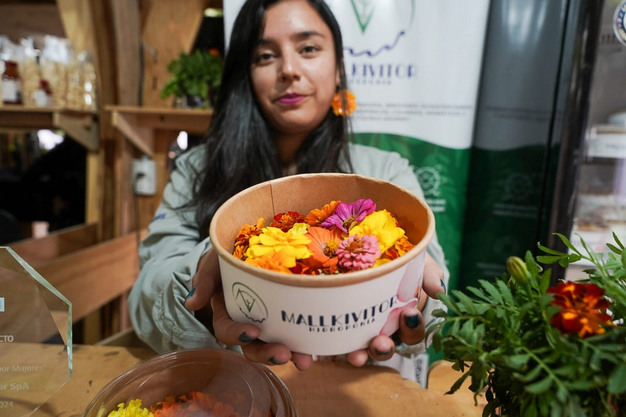
Product presentation has been another key element in the project. Mallkivitor designed its own packaging, bowl-style containers, validated through nutritional tests by the National Food Institute INTA, so each pack includes information about the species and its nutritional properties.
"We wanted consumers to understand that these flowers are not only attractive, they are also healthy. They are the result of years of research and of applying technology in one of the most inhospitable places on the planet", Pedro notes.
The project, still underway, has positioned the company as a national reference in innovative agriculture. Following the success of their first nanobubble experience, Michelle has represented Chile at international events such as Macfrut in Italy and Expo Osaka in Japan, bringing desert-grown flowers to global stages.
 © Mallkivitor
From the Atacama to the world
Alongside flowers, Mallkivitor is experimenting with speciality crops such as salicornia, a halophytic plant that stores sodium in its tissues and is emerging as a plant-based alternative to sea salt, and rock clover (Oxalis), which has a green apple flavour. Both products, increasingly used in European kitchens, aim to broaden Chile's gourmet offer.
"We are inspired by international trends, especially from Europe. Today, there is a lot of talk about probiotic drinks, botanical cocktails and functional cuisine, and flowers, salicornia or oxalis fit perfectly into that new gastronomy", Pedro says.
With roots in the desert and an outward-looking approach, Mallkivitor has grown into a model of sustainable innovation. What began as a family experience in a fishing cove has become an example of how technology, science and sensitivity can reshape agriculture in Latin America.
"Our message is simple", Pedro concludes. "It is possible to produce without harming, to optimise resources, to teach people to care for water and revalue food. If we can do it here, in the world's driest desert, it can be done anywhere".
 © MallkivitorFor more information:
Mallkivitor
El Ródano 674, Km 11.5
Azapa Valley, Arica (Chile)
Tel: +56 9 44536271
[email protected]
https://hidroponiamallkivitor.cl