


The following article is by Mekonnen Solomon from the Ethiopian Ministry of Agriculture.
As a senior staff member and horticulture export coordinator at Ethiopia's Ministry of Agriculture, I have enthusiastic to advancing the nation's floriculture sub sector, particularly its vibrant rose, summer flower and ornamental cutting export business. This subsector stands as a beacon of economic promise, generating substantial foreign exchange and employment opportunities. However, in the face of mounting challenges—ranging from escalating costs of jet fuel and increasingly stringent sustainability regulations—the industry's traditional reliance on air cargo is proving unsustainable.
I contend that the pilot sea freight shipment of flowers executed in June 2025 represents a ssignificant milestone. This initiative, involving four prominent Ethiopian flower farms from low land, mid land and highland and transport of approximately 247,915 stems of summer flowers and roses totalling 7,177 kilograms to Europe, not only demonstrates the feasibility of ocean transport but also illuminates a pathway toward cost reduction, enhanced resilience, and long-term competitiveness. By potentially slashing logistics expenses by 50-70%, this approach could fundamentally reshape Ethiopia's horticultural exports, serving as a model for other developing economies navigating similar transitions.
To fully appreciate the significance of this pilot, one must contextualize it within the broader dynamics of Ethiopia's flower trade. Our flower industry has grown exponentially since the early 2000s, positioning Ethiopia as one of Africa's leading exporters, second only to Kenya in some metrics. According to reports from the Ethiopian Customs Authority, flower exports contribute over 10% of the nation's agricultural exports, yielding more than $500 million annually and supporting thousands of jobs, particularly for women in rural areas. Yet, this success has been predicated on airfreight, which accounts for the majority of shipments due to the perishable nature of cut flowers. Air cargo offers speed—typically 2-3 days to European markets—but at a steep price. Freight rates have surged in recent years, exacerbated by global events such as the COVID-19 pandemic, fuel price volatility, and geopolitical disruptions. Moreover, environmental imperatives, including carbon footprint standards imposed by the European Union, demand greener alternatives. In this context, the shift to sea freight is not merely an option; it is an economic and ecological necessity.
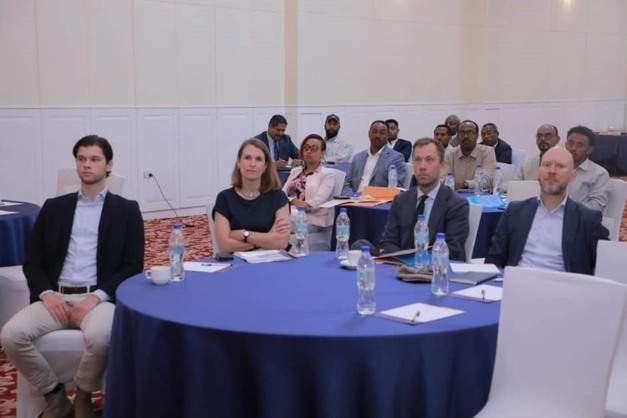 © Ethiopia Ministry of AgricultureNov 28, 2025 Fresh Fruits and Vegitable export event in Addis Ababa, Haila Grand
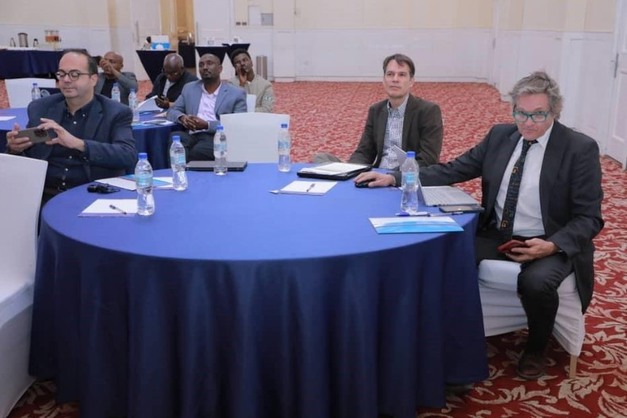
The 2025 pilot shipment, evaluated during the Fresh Fruits and Vegetable Export event on June 27, 2025, at the Haile Grand Hotel, was a collaborative endeavour involving farms, freight forwarders, shipping lines, and regulatory bodies. This multi-stakeholder approach exemplifies the kind of partnerships required for innovation in developing markets. The selection of the Mediterranean Shipping Company (MSC) for flower shipment as the carrier was a astute decision, leveraging its secure route through the Red Sea and Suez Canal—a corridor that many competitors have shunned amid Houthi attacks from Yemen. MSC's feeder service from Djibouti to King Abdullah Port in Saudi Arabia, combined with the reuse of inbound reefer containers, minimized equipment repositioning costs, saving an estimated $3,000 to $3,500. As someone deeply involved in export coordination, I advocate for such strategic alliances, which not only reduce financial burdens but also build capacity through knowledge transfer.
Delving into the logistical framework, the choice of a standard refrigerated (reefer) container over a controlled atmosphere (CA) variant merits particular attention. CA containers, commonly used in Kenyan flower shipments, maintain optimal oxygen and carbon dioxide levels to extend shelf life. However, for this pilot, the team opted against it, citing cost savings of about $1,500, the challenges of uniform settings for diverse flower types, and a projected transit time under 30 days where temperature control sufficed. This pragmatic decision paid off in terms of economics but highlighted vulnerabilities in product quality during extended voyages. Pre-shipment preparations, including a pre-trip inspection (PTI) by a Thermo King engineer in Ethiopia—due to the lack of local facilities—ensured equipment reliability. Yet, this reliance on external expertise underscores a critical infrastructure gap. In my view, investing in domestic PTI centers is imperative; such facilities would not only streamline operations but also create skilled jobs and reduce dependency on imports.
 © Ethiopia Ministry of Agriculture
Packaging and loading processes further revealed areas for improvement. Flowers, pre-treated under guidance from Flower Watch, were repacked from airfreight boxes into sea freight cardboard containers at a central packhouse. These were then stacked on plastic pallets to comply with European regulations prohibiting untreated wooden materials, which could harbor pests. The loading operation, completed in 1.5 hours with a hired forklift, exposed physical mismatches: container heights incompatible with loading bays and insufficient door clearances for tall pallets. Upon arrival in the Netherlands, inspections noted collapsed boxes from aged materials, leading to poor air circulation and temperature inconsistencies. These issues, while surmountable, emphasize the need for tailored infrastructure.
I strongly recommend distributing sea freight packaging directly to farms to eliminate repacking inefficiencies, training dedicated packing teams, and upgrading facilities with adjustable bays. Such enhancements would mitigate quality risks and align with international standards, ultimately boosting exporter confidence.
Inland transportation utilized the return leg of an import truck, promoting cost efficiency through equipment reuse. However, the potential of the Ethiopia-Djibouti railway looms large as a superior alternative. This rail link, connecting Mojo to the port, offers lower costs, reduced emissions, and direct terminal access, potentially shortening inland transit from days to hours. Challenges remain, such as advance booking requirements and genset compatibility— the pilot's genset, owned by the freight forwarder Intermodal, could not enter Djibouti's terminal without complications. Exploring options from Djibouti Container Services or Ethiopian Shipping and Logistics could resolve this. From my perspective, integrating rail into flower logistics would catalyse a modal shift, alleviating road congestion and enhancing sustainability. Policymakers should prioritize incentives for rail adoption, including subsidies for compatible equipment, to realize these benefits.
The ocean transit phase presented a tapestry of complexities and insights. Departing from Djibouti, the container transited to King Abdullah Port, then Al Aqabah in Jordan, Port Said and Damietta in Egypt, and finally Valencia in Spain before reaching the Netherlands. An unplanned transhipment in Damietta accelerated the journey, but the route's intricacies—navigating Red Sea risks and multiple ports—underscored geopolitical vulnerabilities. Alternatives like direct routes to Rotterdam or Antwerp were evaluated but rejected due to longer times (32-38 days to Rotterdam, about 28 to Antwerp), heightened transshipment risks, and port congestions from labor strikes. Remote monitoring via MSC's iReefer system provided real-time temperature and status data, yet access was limited to the booking party, restricting shipper involvement. To address this, Mekonnen proposes assigning booking responsibilities to exporters or consignees, enabling direct oversight and quicker issue resolution.
Regulatory and documentation challenges formed another layer of hurdles, demanding formulation of systemic guideline. An unforeseen requirement confirmation letters from some sectors involved stamped applications and physical submissions, delaying preparations. Customs clearance necessitated commercial invoices, packing lists, bank permits, and USD payments to Djiboutian accounts— a stark contrast to the local currency simplicity of airfreight. Discrepancies, such as mismatched quantities, absent preferential origin statements, and incorrect consignee details, compounded timelines. Phytosanitary inspections, sampling only two boxes per farm, required meticulous certificates with precise shipper data, net weights, and pre-shipment preparation dates.
In Valencia, transhipment extended beyond the anticipated 2-3 days due to procedural issues: the consignee's (Rosa Plaza) EUROPO registration for CHED.PP documentation, demands for original signed letters of authority and indemnity, and inconsistencies like missing False Codling Moth statements. Physical surrender of original bills of lading highlighted the advantages of master bills for streamlined clearances. Phytosanitary documents and T1 transit forms also required exact weight and address alignments, with local agent refusals adding friction.
These experiences reinforce my opinion that digitalization is key to future success. Adopting platforms for electronic documentation, pre-arrival verifications, and proactive CHED.PP filings could condense transits to 2-3 days. Collaborative frameworks among shippers, forwarders, and authorities would standardize processes, eliminating ad hoc demands like ministerial letters. Moreover, harmonizing regulations across East Africa could foster regional synergies, allowing Ethiopia to learn from Kenya's established sea freight practices while tailoring solutions to our unique context.
Economically, the pilot's implications are profound. At the June 24, 2025, exchange rate of 0.86801 USD to EUR, sea freight demonstrated savings of 50-70% over air transport, making it accessible for smaller farms and diversifying market access. However, extended transits—aggravated by infrastructural deficits and geopolitical risks—pose quality threats to perishables, necessitating cold chain investments. For Ethiopia's economy, scaling this model could mitigate airfreight volatility, bolster competitiveness, and drive inclusive growth. Thousands employed in the sector stand to benefit from stabilized operations, while foreign exchange earnings could surge with expanded volumes.
In conclusion, the 2025 sea freight pilot, though fraught with obstacles, validates ocean transport's potential for Ethiopian horticulture. As we adapt to global uncertainties, refined logistics—emphasizing direct monitoring, upgraded infrastructure, and regulatory efficiency—will unlock sustainable progress. Policymakers must act decisively: establish PTI facilities, integrate rail, and digitize processes. Ethiopia's leadership in this arena could inspire emerging markets worldwide, transforming challenges into opportunities for resilient, eco-friendly trade. This is not just an opinion; it is a call to action for a thriving future.
For more information
Mekonnen Solomon
Ethiopia Ministry of Agriculture
Email: [email protected]
www.moa.gov.et