
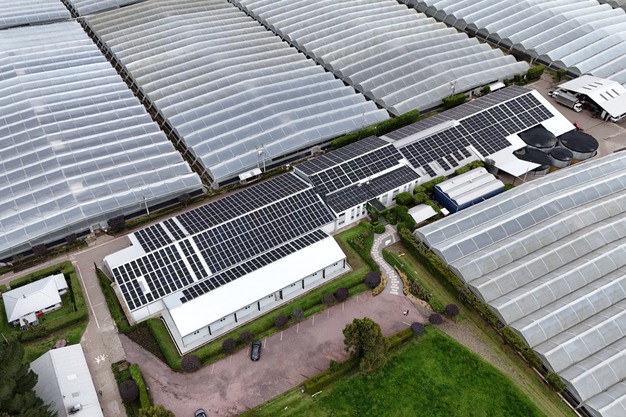
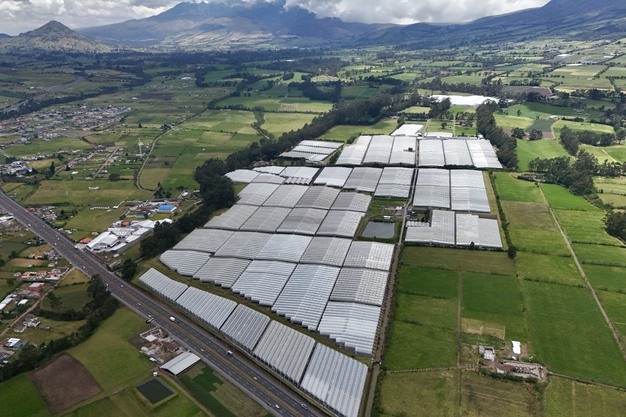
At Ecoroses, sustainability has long been part of the farm's identity—but now it is visible on the rooftops. The Ecuadorian grower recently completed the installation of 1,019 solar panels, which have been fully operational for about two months. "More than plans, solar power at Ecoroses is now a reality," says Paulina Malo of Ecoroses. "Sustainability has always been part of who we are, of our corporate responsibility; that's why we are embracing technology and innovation by integrating solar panels into our operations."
 © Ecoroses
Clean energy now powering the entire operation
The photovoltaic system is already covering the company's current energy needs. "The energy will be used basically for all the electronic and electrical activities in our business," she explains. "We power all the electric equipment for water pumps for irrigation, the whole area of the cold rooms, for lighting all the buildings, and for all the electronic equipment required for our production facilities."
The installation generates 652 kWh of clean energy and reduces over 178 tons of CO₂ emissions annually—equivalent, according to Paulina, to planting more than 32,600 trees each year. The company is now interconnected with the local power grid and is already able to deliver surplus electricity back to the national system.
The project began in July 2024 together with supplier Airis and required nearly a year of approvals from the national electricity company. "They took around eight months to approve the project," she says. "Meanwhile, we already had the solar panels at the farm and installed them on the ceilings of the office buildings and cold room facilities." The full investment amounted to approximately USD 500,000.
 © Ecoroses
Why solar?
Beyond operational benefits, the shift forms part of the company's broader commitments. "We believe that true quality goes hand in hand with respect for nature, and investing in renewable energy is a critical part of that promise," Paulina states. The system also helps address Ecuador's seasonal electricity shortages by reducing dependence on the national grid.
She adds that the transition is aligned with the company's certifications: "Part of our compromise with FlorVerde and with our carbon neutral certification is to generate clean renewable energy and reduce our carbon footprint."
 © Ecoroses
Expansion of rose and ranunculus production
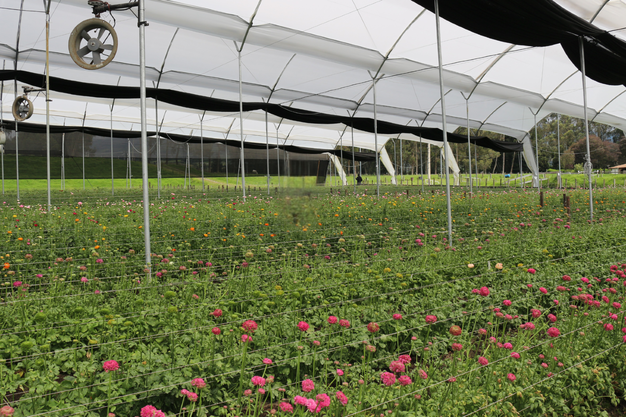
In addition to the solar project, Ecoroses is undergoing production expansion. "We have built six more rose greenhouses and tripled our ranunculus production area," Paulina shares. The farm now operates with over 60 greenhouses, with additional structures scheduled to be completed early next year.
The expansion includes both classic rose varieties—such as Mondial and Explorer—and new introductions, including among many others 'Mamma Mia' and 'Melon Expression'. Ranunculus production has also grown steadily. "We started growing ranunculus three years ago. Before that we were a rose farm exclusively," she says. Ecuador's stable climate enables year-round harvests. "One of the advantages of Ecuador is that we can harvest them the whole year under greenhouses. That was one of the reasons we moved to expanding our assortment of flowers."
 © Ecoroses
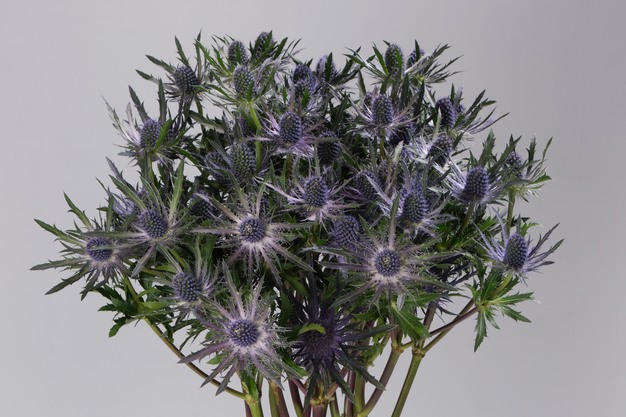
The company has also diversified into eryngium. "It's an open-field product, and our product is coming with an intense blue color," she notes. The variety planted is Magical Blue Lagoon.
Chickens
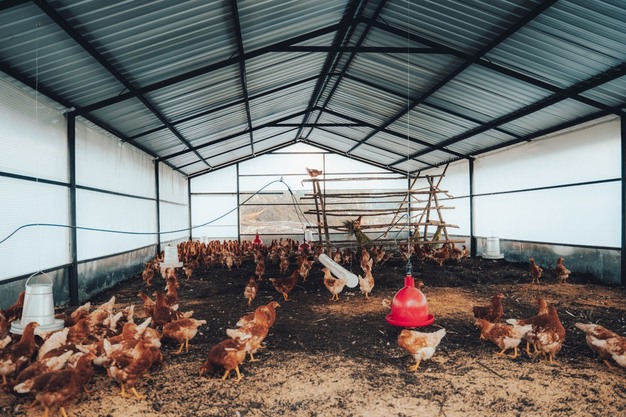
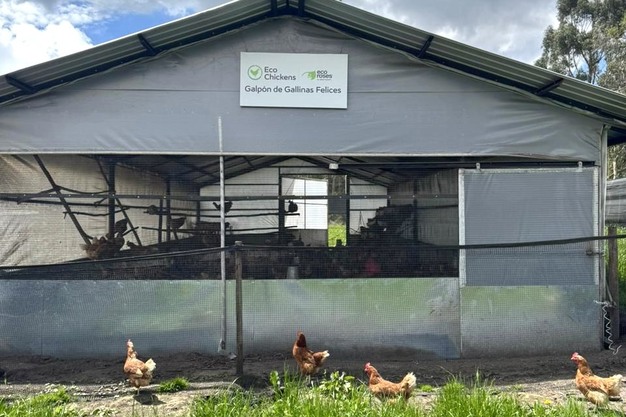
Among the lesser-known initiatives at Ecoroses is an unusual sustainability project: Eco-Chicken. "Eco-Chicken is a project that implements circular economy principles," Paulina explains. The farm keeps 250 pasture chickens in an area with four pasture zones and a dedicated barn.
 © Ecoroses
Food scraps from the company's kitchen—such as rice, lentils, quinoa, and vegetable peels—are transformed into feed for the chickens, enriched only with calcium and water. "In our chicken barn, it's not just about happy, free-range chickens," she says. "They also provide us with fresh, organic eggs. These eggs nourish our employees, completing another important cycle of sustainability."
 © Ecoroses
The chickens' manure enriches the compost used on the rose beds, closing the loop. "Through this circular process, we are reducing waste, recycling materials, and reusing resources in a way that benefits our people and the planet," she adds. "We close the loop embracing the 3 Rs—Reduce, Recycle, Reuse."
For more information:
Paulina Malo
Ecoroses
[email protected]
https://ecoroses.com.ec/