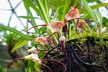

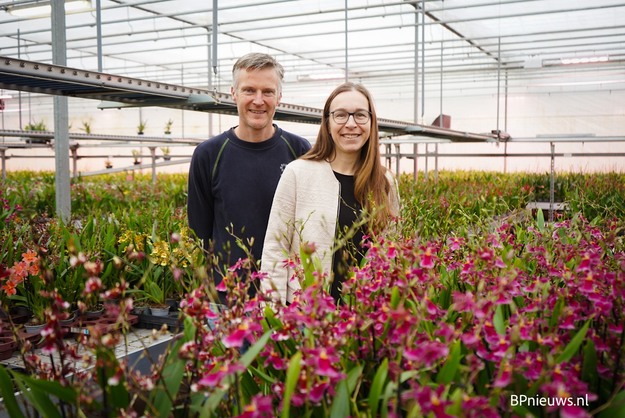
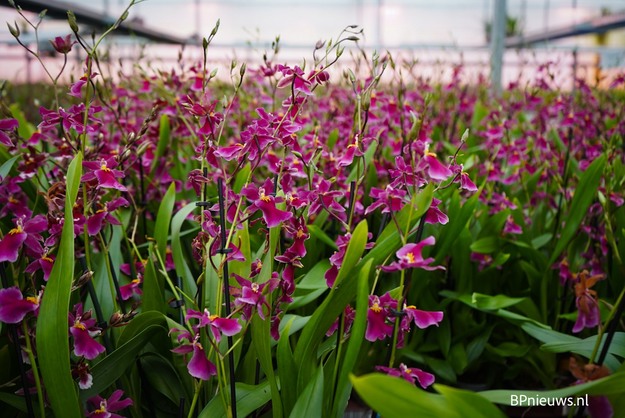
Anyone stepping into the greenhouse of Inca Orchids in Nootdorp, the Netherlands, immediately sees that these are no ordinary orchids. Striking colours, a wide range of species and, in many cases, even fragrant varieties fill the space. On two hectares, André and Carolien van der Goes grow a broad and constantly changing assortment, with each species having its own growth habit, flowering rhythm and growing strategy.
 © Mirthe Walpot | FloralDaily.com
"At our place, orchids aren't grown, they're raised," Carolien says with a smile. "That really says it all." From tissue culture to sale, a plant easily spends four years at Inca Orchids. The tissue culture phase alone takes about two years, after which the young plants are potted up step by step and carefully selected. "There are countless selection moments," she explains. "That's essential, because the variation within a batch can be huge."
Top-level growing
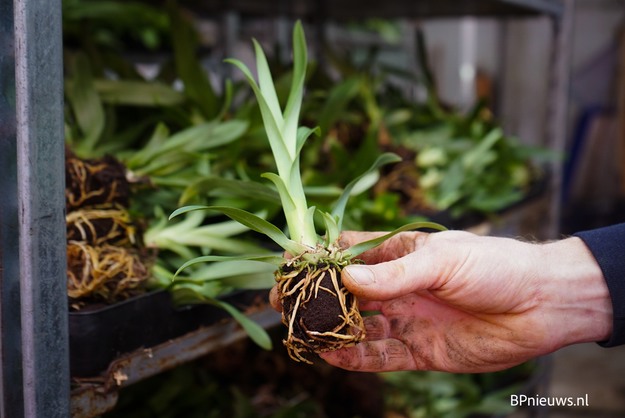
Most of the orchids grown at Inca Orchids originate from South and Central America. The main groups include Odontoglossum, often referred to as Cambria, Oncidium, Brassia, Zygopetalum and Miltoniopsis, alongside ongoing trials with new varieties. "Take Panama Orchid, for example, we only grow that one in winter," André explains. "We're always looking for new types, but the real challenge is not to look too much. The existing collection already demands a tremendous amount of attention."
 © Mirthe Walpot | FloralDaily.com
Their growth habit is very different from that of Phalaenopsis. These exclusive orchids flower through shoot development, with root formation playing a crucial role. "The flower spikes emerge from a thickened structure, which requires a completely different approach," says André. The growing conditions are also cooler than those for Phalaenopsis and the process is divided across four departments: processing, propagation, cooling and a long-day department where temperatures are slightly higher. "Some species need lots of light first and then a phase of darkness and cold. Others thrive on warmth. Even the required day length varies from species to species."
Unpredictable and labor-intensive
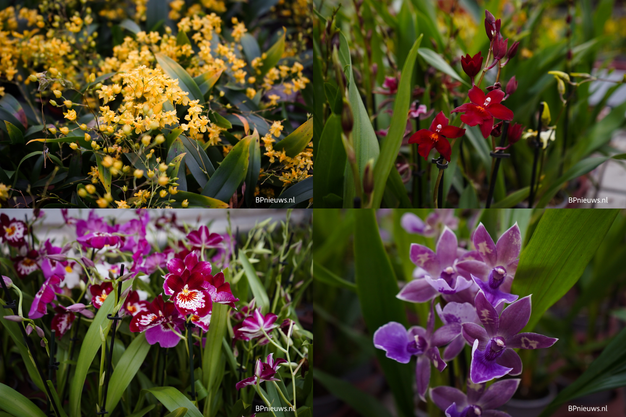
That diversity is exactly what makes the crop challenging and sometimes unpredictable. "Flowering periods and peaks differ every year," Carolien explains. "We produce year-round, but the assortment and flowering shift throughout the seasons, always resulting in a colourful mix. A large part of our range therefore goes to market as mixed assortments or colour mixes. We work with both day trading and forward contracts, and a strong relationship with our customers is essential."
 © Mirthe Walpot | FloralDaily.com
The plants stay in the nursery for a long time. "Some are at least two years old when they're sold, sometimes even older," André says. "Because flowering is not uniform, we may harvest the same batch up to three times." This requires a lot of skilled labour. During staking, the orchids are sorted by height and checked for the number of spikes. Quality selection is still largely done by hand.
Sustainable and future-oriented
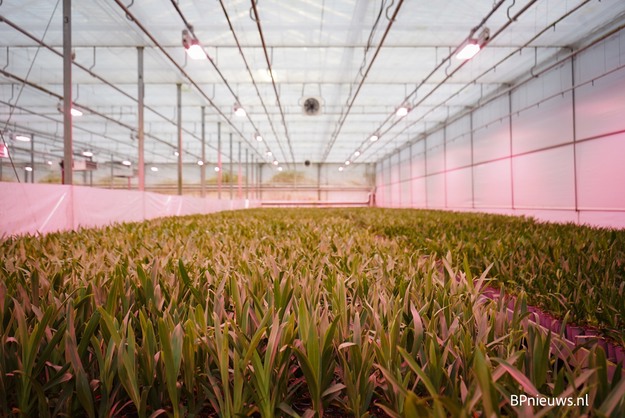
Inca Orchids consciously invests in sustainability. The nursery has more than 400 solar panels and an underground water storage system with full recirculation, meaning no mains water is needed. "We're now running our second winter entirely under LED lighting," André explains. "That's beneficial for the crop, because LEDs emit less heat and allow us to control the climate much more precisely." This year, a heat pump system was also put into operation, enabling both heating and cooling and allowing the crop to be grown without gas.
 © Mirthe Walpot | FloralDaily.com
Working with mixes
With two hectares, Inca Orchids is a relatively larger player within the niche of exclusive orchids, but they also collaborate with other specialised orchid growers. "That way, we can meet demand together much more effectively," Carolien explains.
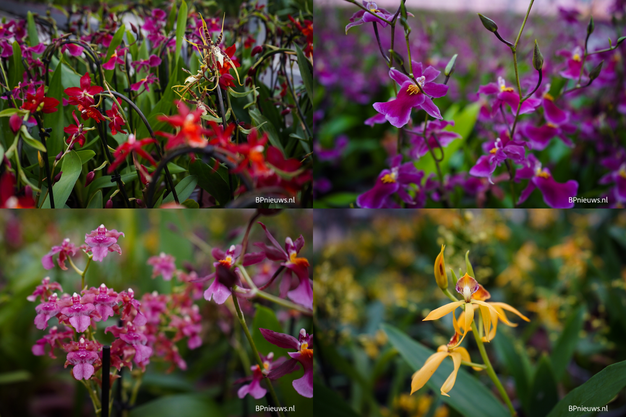
The assortment is often sold as mixes. "For example, we offer pink, yellow, red or mixed lines," she continues. "We have product available year-round, but fixing specific varieties on a strict schedule is difficult. That works better in short-term day trading. Those surprising mixes are exactly what make it interesting, because the assortment keeps changing throughout the year."
 © Mirthe Walpot | FloralDaily.com
Growing interest in Europe
Sales are mainly focused on Germany and France, with increasing demand from Southern Europe. The UK and Scandinavia are also emerging markets. "You can really feel consumer interest growing," Carolien says. "Not everyone is familiar with these orchids or aware of their possibilities. Some varieties are even fragrant, and those are especially popular right now."
 © Mirthe Walpot | FloralDaily.com
A niche with potential
"It remains a niche market, which can make exporters hesitant," Carolien explains, "but that's exactly why we want to be visible, for example at the Trade Fair. Exporters walk around there with their end customers, who often become enthusiastic about our orchids. That enthusiasm then carries over to the exporter. And once they hear that care is just as easy as with Phalaenopsis and that the vase life is long, there's very little holding them back."
For André and Carolien, the future is clear: keep telling the story, keep showing the product and keep surprising people. "There is so much variation in types, colours and species," Carolien concludes. "It makes the work intensive, but also incredibly rewarding."