


On December 17, 2025, the China (Nanping) Lily Industry Development Conference was held in Yanping District, Nanping City, Fujian Province. The conference was organized by the National Flower Engineering Technology Research Center and the Fujian Flower Association, and hosted by the Fujian Lily Flower Industry Development Group Co., Ltd. It attracted representatives from major lily-producing regions across the country, industry experts, and business leaders.
Yanping District in Nanping City, Fujian Province, is one of the six major production regions for fresh-cut lily flowers in China. Since the mid-to-late 1980s, the district has been cultivating lilies. After years of continuous efforts, the lily planting area in the district has now reached 8,500 mu (approximately 566.67 hectares).
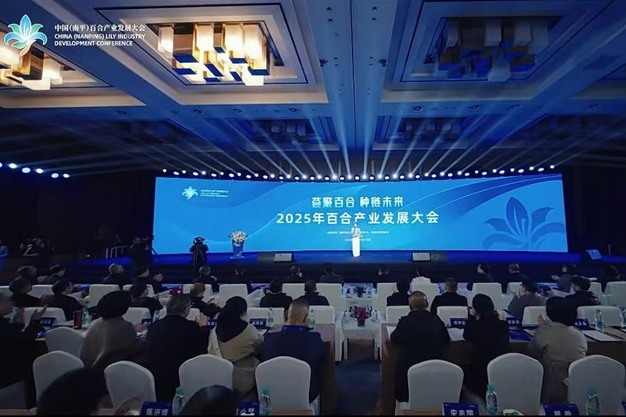 © Luo (Cathy) Rong | FloralDaily.com
At the opening ceremony, the Yanping Lily Industry Development White Paper was released, systematically summarizing the achievements, core advantages, and future directions of the lily industry in Yanping. For a long time, lily bulbs have relied on imports, posing challenges in key areas such as new variety breeding. To address this, the Fujian Academy of Agricultural Sciences and Yanping District jointly established a Lily bulb Industry Innovation Center to accelerate the cultivation of new varieties.
During the conference, experts and scholars from various fields of the lily industry across the country shared insights on topics such as mainstream lily varieties in the market, the current status of ornamental and edible lilies, and changes in the international bulb market. A professor from Beijing Forestry University introduced a key breakthrough in lily fragrance research by their team, which identified critical transcription factors such as LiMYB. These factors can precisely regulate the synthesis of major aromatic components. This achievement can shorten the breeding cycle through molecular marker-assisted breeding and use cultivation regulation techniques to "customize" fragrance intensity, addressing issues such as overly strong scents in some varieties. This provides technical support for industry upgrading.