
The year 2025 posed one of the most complex scenarios in recent history for Colombian floriculture. Diplomatic tensions with the United States, the imposition of tariffs on flowers, a sustained appreciation of the Colombian peso, rising production costs and an uncertain geopolitical environment created significant pressure on a sector that exports nearly 80 percent of its production to the U.S. market.
Despite the challenging context, Colombian floriculture demonstrated a remarkable ability to adapt, maintaining its international presence, safeguarding employment, and reinforcing its position as a reliable and sustainable supplier in global markets. This resilience, long a defining characteristic of the sector, was tested in an exceptional way in 2025. Rather than retreating, the industry, led by Asocolflores, assumed an active role in national and international dialogue, contributing technical perspectives and promoting constructive engagement to protect long-standing trade relationships.
Operational continuity was achieved even during the most critical periods of the year. Colombian growers successfully fulfilled demand during Valentine's Day and Mother's Day, the two most important commercial seasons representing close to 30 percent of annual revenues, while absorbing part of the economic impact and maintaining export quality standards.
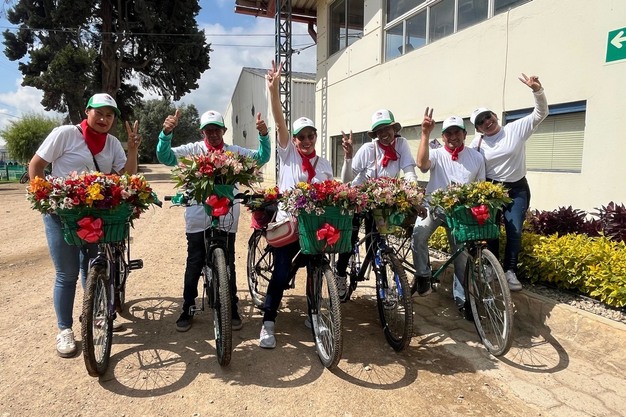
This performance was essential to preserving the sector's social footprint. Colombian floriculture generates more than 240,000 formal jobs, making it one of the most important sources of rural employment in the country and a key pillar of social stability in the territories where it operates.
 © Asocolflores
Sustainability with international credibility
Sustainability remained a central pillar of the sector's competitiveness in 2025. Colombian floriculture continued to demonstrate that environmental and social responsibility are not complementary activities, but core elements of a production model aligned with global market expectations and long-term resilience.
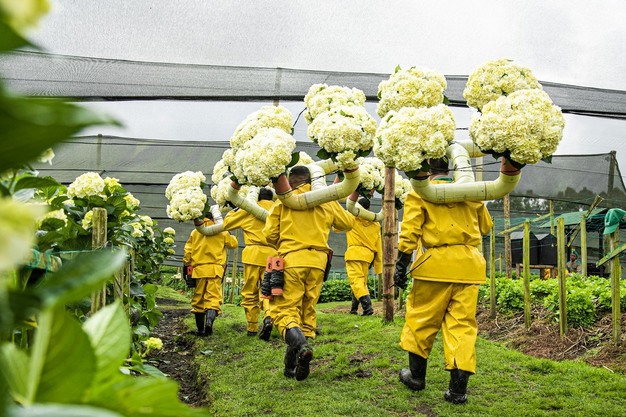
Throughout the year, the sector strengthened its sustainability performance through concrete actions at farm and landscape level. These included responsible water management, largely based on rainwater harvesting, biodiversity conservation initiatives, the restoration of environmentally strategic areas, and the expansion of circular economy practices aimed at reducing waste and improving resource efficiency.
Over the past three years alone, more than 50,000 native trees have been planted in floriculture regions, contributing to ecosystem restoration and climate adaptation.
At the same time, a growing number of companies across the sector advanced in sustainability pathways and initiated internationally recognized certification processes, reflecting a shared commitment to transparency, traceability and continuous improvement. These efforts have enabled producers of different sizes to respond to increasingly demanding requirements from global buyers and retailers.
International recognition reinforced this progress. In 2025, the Sustainable Supply Chain Initiative of the Consumer Goods Forum ratified the recognition of Florverde Sustainable Flowers as a sustainability standard verified by independent auditors, highlighting its Corporate Ethics chapter as a distinctive feature within global floriculture.
In parallel, the Global Nature Fund of Germany referenced Colombian floriculture practices as a benchmark for biodiversity management in its guide Recommendations for Biodiversity Management and Improvement in Floriculture Production, sponsored by the German Federal Ministry for the Environment.
Together, these developments underscore how Colombian floriculture is strengthening its environmental and social performance at sector level, positioning itself as a reliable supplier capable of meeting evolving international sustainability expectations while maintaining competitiveness in global markets.
 © Asocolflores
Social impact rooted in the territories
The social dimension of Colombian floriculture remained equally strong in 2025. Beyond job creation, the sector continued to invest in community development across producing regions, particularly in Cundinamarca and Antioquia.
Programs focused on education, sports infrastructure, cultural activities and food security reinforced the sector's commitment to shared value. Special attention was given to women's wellbeing through the consolidation of a pioneering breast cancer prevention program, which has already delivered more than 1,500 screenings directly in rural workplaces using FDA-approved technology.
Another significant achievement was the international recognition granted by the UN Global Compact Network Colombia to the program Cultivemos la Paz en Familia, a long-standing initiative that promotes peaceful coexistence, conflict resolution and social cohesion within floriculture communities. Its expansion into new municipalities reflects the scalability and relevance of this social approach.
Collectively, these efforts benefit more than 720,000 people across 116 municipalities where floriculture is present, reinforcing the sector's role as a driver of inclusive rural development.
Proflora 2025: a global showcase for the industry
A key milestone for Colombian floriculture in 2025 was Proflora, the country's flagship international flower trade fair, held under the theme "Proflora 2025: A Global Showcase for the Industry." The event brought together international buyers and industry leaders from more than 60 countries, consolidating its role as one of the world's most relevant platforms for the global flower business.
Proflora facilitated commercial partnerships while showcasing Colombia's leadership in sustainability, innovation and floral diversity. For international visitors, the fair offered tangible evidence of the sector's resilience and its ability to remain competitive in an increasingly complex global market.
 © Asocolflores
Global recognition and outlook
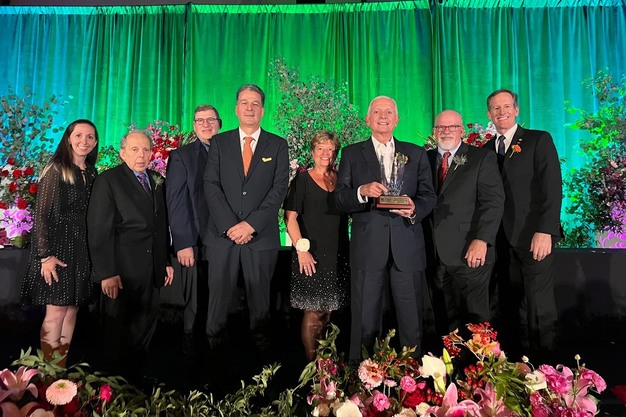
The sector's international standing was further strengthened by the induction of Augusto Solano, President of Asocolflores, into the Floriculture Hall of Fame of the Society of American Florists. This recognition, one of the highest honors in the global floral industry, brought unprecedented visibility to Colombia and underscored the country's long-term contribution to international floriculture.
Looking ahead to 2026, Colombian floriculture anticipates another demanding year shaped by economic volatility, geopolitical dynamics and evolving trade regulations. In response, Asocolflores will continue to lead an agenda focused on protecting formal employment, strengthening competitiveness and advancing a floriculture model that aligns sustainability, social responsibility and global trade.
In a world facing increasing fragmentation, Colombian floriculture in 2025 demonstrated that resilience, cooperation and sustainability remain essential foundations for long-term success in international markets.
For more information:
Asocolflores
https://asocolflores.org/