

Algae growth on plug trays is a common challenge during bedding plant propagation, particularly under the warm temperatures, frequent misting, and high humidity required for successful germination and seedling establishment. While algae are not directly pathogenic, their presence can interfere with uniform water distribution, reduce substrate oxygen availability, and serve as a food source for fungus gnat and shore fly larvae, increasing the risk of secondary pest issues.
Algae development is driven by excess moisture, light exposure on the substrate surface, and nutrient availability. During propagation, prolonged surface wetness from mist creates ideal conditions for algae to establish on trays, propagation substrate surfaces, and greenhouse floors and benches. Once present, algae can spread rapidly and become difficult to manage.
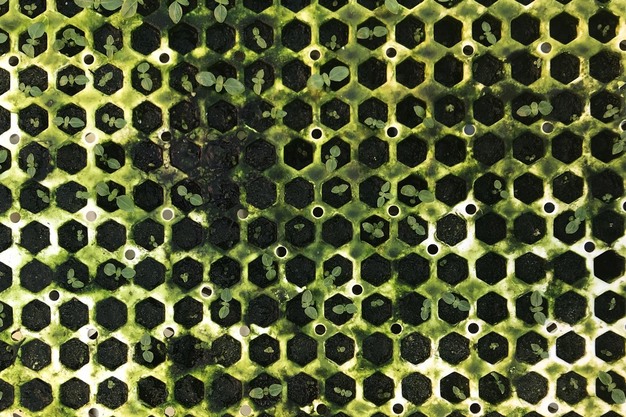 © e-Gro
Effective algae management begins with cultural practices. Allowing the substrate surface to dry slightly between mist events, reducing mist frequency as soon as seedlings are established, and improving air movement can significantly limit algae growth. Using well drained propagation substrate and avoiding excessive fertilizer concentrations, particularly phosphorus, can further reduce algae pressure. Sanitation is also critical. Clean and disinfect trays, benches, and floors between cropping cycles to prevent carryover.
Chemical and physical control options may be incorporated as part of an integrated management program, including labeled disinfectants, oxidizing agents, or surface treatments applied to empty trays or non-crop surfaces. Always follow label directions and avoid applications that may contact sensitive young plant tissue.
Read more at e-Gro Blog