

After Roberto Corea was recently named the Canadian Greenhouse Grower of the Year, Jolly Farmer is reflecting on nearly six decades of evolution. From its beginnings as a bedding plant grower to becoming one of North America's leading plug and liner producers, the Canadian company has built its reputation on integrity, quality, service, and long-term customer relationships.
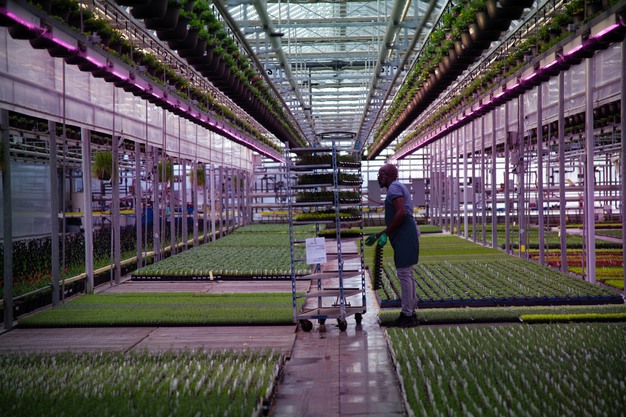
"Plugs and liners are really the core of our business today," says Joel English. "That's where we've seen the biggest shift over the years."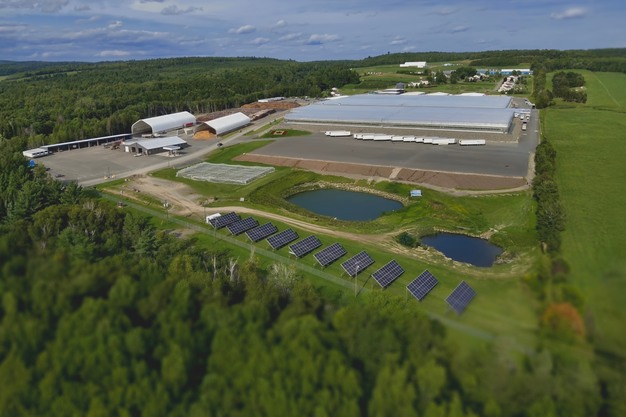 © Jolly Farmer
From bedding plants to plugs and liners
Jolly Farmer's story began in the early 1980s, when the company focused primarily on spring bedding plants. "We started out producing retail-ready bedding plants because that's what people were asking for," Joel explains. "Impatiens, begonias, marigolds—very straightforward crops."
By 1984–85, the company began producing plugs for its own use, and just a few years later, customers started requesting plugs as a product in their own right. "In 1987, customers began asking us to ship plugs to them," he says. "That really changed the direction of the business."
In 1988, Jolly Farmer also began producing its own stock plants for cuttings. That continued into the late 1990s, after which the company transitioned away from in-house stock production. "We now buy unrooted cuttings from specialized farms around the world," he explains. "There's more light for mother plants in places like Central and South America, Africa, and Israel, and labor costs are lower. Stock farms have also developed very strong sanitation protocols and quality systems."
 © Jolly Farmer
Expansion into New Brunswick
Originally based in New Hampshire, Jolly Farmer expanded northward in the late 1990s. "We built here in New Brunswick in 1996," Joel says. "For a few years, we operated both locations to overlap production."
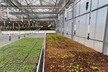
Since then, the New Brunswick site has grown steadily. Today, Jolly Farmer operates 13 acres of fully indoor greenhouse production. "We used to grow some outdoor crops, like flowering kale and mums, but a few years ago we brought everything inside," says Roberto Corea.
Growth isn't slowing down. "This will be our fourth expansion," Joel adds. "We're doing the groundwork now, and it will add about four more acres. We expect to start growing in the new houses next season."
 © Jolly Farmer
Shipping across North America
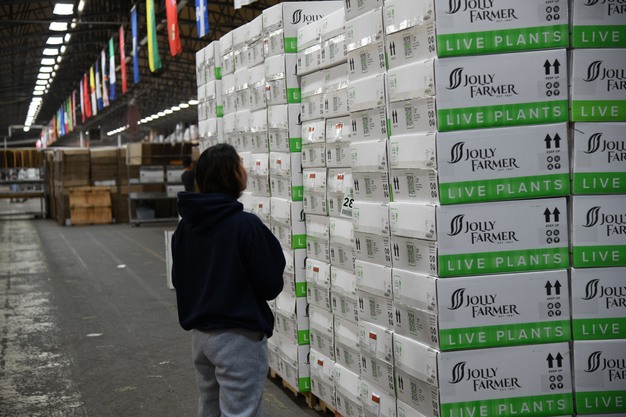
Over the years, both the market and logistics have evolved significantly. "When we first started shipping plugs, we wrapped every tray in paper and put it into boxes with cardboard inserts," Joel recalls. "It was extremely labor-intensive."
Today, shipping is far more streamlined, allowing the company to serve customers across the continent. Jolly Farmer ships throughout Canada and the US, using its own trucks as far as Texas, with FedEx and UPS handling many boxed shipments as well.
"We now ship to well over 4,000 customers," he says. "We offer around 3,000 varieties, often in multiple sizes, which brings us to more than 9,000 SKUs."
 © Jolly Farmer
Managing variety selection
With such a wide assortment, variety management is key. According to Roberto, customer demand is the main driver. "A lot depends on what customers are asking for and what suppliers have available," he says. "Management has made a conscious decision not to endlessly increase the number of SKUs."
Instead, older or lower-demand varieties are phased out. "If fewer than 70 customers order a specific variety, we'll drop it," he explains. "Overall, about 20% of our assortment turns over each year."
New varieties are carefully evaluated. "Sales will ask us if we can produce something," he says. "We trial it first. There's no point saying yes if we can't grow it reliably and consistently."
As for trends, some crops clearly stand out. "Vegetative petunias are the big ones right now," Joel notes. "Calibrachoas are also strong. Geraniums have declined slightly, and succulents have pretty much leveled off."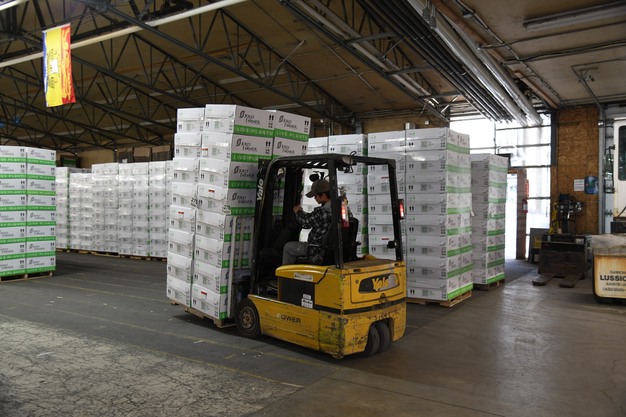 © Jolly Farmer
Focus on small and mid-sized growers
Jolly Farmer has positioned itself strongly with small and mid-sized growers. "We specialize in that segment partly because we have almost no minimum order," Joel explains. "Customers can order as little as a half box, and they can mix and match trays to fill it efficiently."
This flexibility gives the company a clear niche. "It's not that we're the only ones doing it," he says, "but it's definitely a highlight of what we offer."
Another distinguishing factor is that Jolly Farmer does not sell through brokers. "The most obvious advantage is that there's no broker cut," he says. "But just as important is that we deal directly with our customers. Our sales team builds real relationships with them."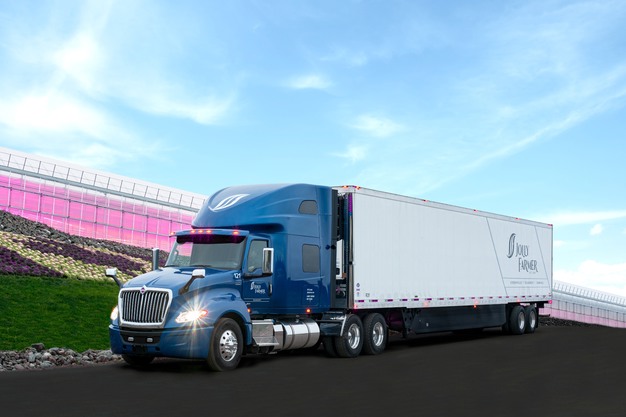 © Jolly Farmer
Supporting customer success
That direct relationship extends well beyond the sale. "Supporting our customers' success is a big part of what we do," Joel says. One example is free access to a third-party greenhouse consultant. "If a customer calls and says their petunias are yellow, we connect them with a consultant whose time we pay for."
The company also puts significant effort into customer communication, cultural information, and logistics. "We publish cultural advice, we're available to talk through issues, and we put a lot of effort into packing and shipping so plants arrive in top condition," he says.
Temperature management is another key focus. "We check weather forecasts for shipping destinations ahead of time," he explains. "Based on that, we decide whether to insulate boxes or even delay a shipment by a week to protect the plants."
Pricing transparency is also important. "We give customers the full price upfront, including freight," he says. "They're not surprised later by big shipping charges. We even help them figure out how to fill boxes efficiently."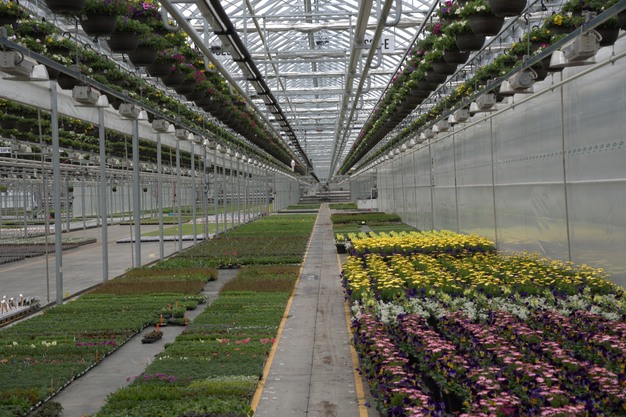 © Jolly Farmer
A growing team
Behind the operation is a diverse and experienced team. Roberto Corea joined the company in 2018 after moving from Nicaragua via the US. "I started in propagation, and now I'm head grower for propagation," he says. His background includes working at stock farms, which adds valuable expertise. "It helps us understand where things can go wrong and how they can be improved."
Nearly 60 years in business, Jolly Farmer continues to grow—both in size and in ambition. "We like to keep growing," Joel says. "Not just plants, but the business as a whole."
For more information:
Jolly Farmer
[email protected]
https://www.jollyfarmer.com/