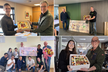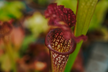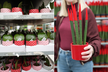


In a novel fusion of spaceflight and agriculture, a batch of precious rose seeds from Henan Province in central China has returned from a journey to the edge of space, marking a fresh advance in the country's space breeding program. The seeds, from the famed rose-growing region of Nanyang, were transported on the return capsule of the Lihong-1 Y1 suborbital vehicle, a commercial recoverable spacecraft designed for space tourism, according to a report by China Media Group on Friday.
This vehicle, developed by commercial Chinese aerospace enterprise CAS Space, successfully completed its inaugural test flight from the Jiuquan Satellite Launch Center in northwest China on Jan. 12. The capsule was later safely recovered having used a parachute, while its biological payload was formally delivered on Friday. The flower seeds spent 300 seconds in space, where they were exposed to cosmic radiation that can induce gene mutations, said Shi Xiaoning, chief designer and project commander of Lihong-1 Y1.
Carefully selected and artificially crossbred by a coalition of institutions including Nanyang Vocational College of Agriculture, Nanyang Academy of Forestry and Henan Agricultural University, these seeds represent a reservoir of premium genetic material, according to the report.
Their brief exposure to the intense cosmic radiation and microgravity environment beyond the Karman line, at an altitude of about 120 kilometers, was designed to induce valuable genetic mutations.
Read more at People's Daily Online