

Ohio-based Buchwalter Greenhouse is a nearly-century-old family business that built its operation on two pillars: scale and continuity.
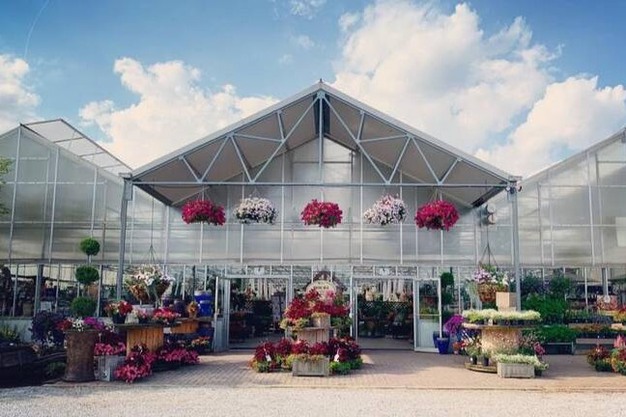 © Bulchwater Greenhouse
Founded 99 years ago as a small local growing operation, Buchwalter Greenhouse has developed into a year-round, multi seasonal business, producing the vast majority of its plant material on site. "I am truly honored to be part of such a unique family legacy," Sustar says. "For a business to last, it takes determination, but also the ability to adapt as times change," says Tiffany Sustar, the latest in the Buchwalter family at the helm of the greenhouses. The philosophy behind this success is based on prioritizing long-term performance over short-term savings.
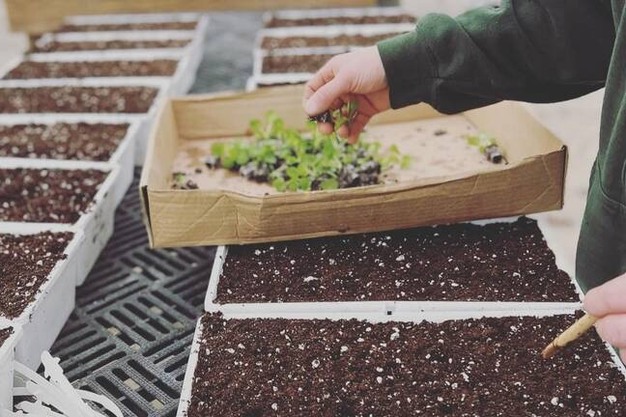
In other words, Buchwalter Greenhouse has always been laser focused on combining tradition and innovation to allow the company to defy time. Early production relied entirely on manual labor, from soil mixing to irrigation. Over time, Buchwalter Greenhouse has introduced automation where it adds value, including automatic ventilation and drip irrigation systems, while maintaining close daily oversight of crops. "We are always looking for ways to improve crop quality while managing time and labor more efficiently," Tiffany explains.
 © Bulchwater Greenhouse
Perpetual cycle
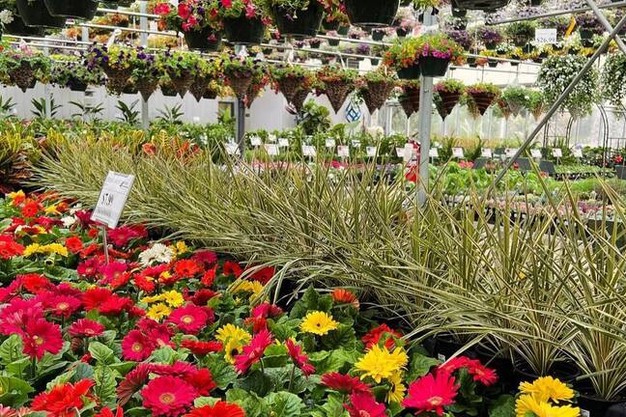
Production runs continuously throughout the year, with a broad crop mix that includes hanging baskets, poinsettias, mums, vegetables, perennials, shrubs, and houseplants. More than 90% of what is sold at retail is grown in-house. "We are planting different crops throughout the year," she says. "Hanging baskets are one of our largest categories. We begin planting in January and stagger production through June, so we can consistently offer fresh color."
As spring production winds down, moms are planted in June for fall sales, while peonies and other perennials are planted in autumn for the following spring. Crops move from production houses into the retail space as they mature, keeping inventory flowing without interruption. To achieve that, careful planning is obviously essential. Team meetings play a central role in coordinating production schedules, while historical data is used to forecast material needs well in advance. "We plan soil, fertilizer, and container needs typically a year ahead," Tiffany explains. "Each year is a little different, especially depending on how holidays fall, but by reviewing previous performance we can adjust and keep improving."
The guiding light is obviously quality. "Quality matters because we want customers to succeed with their plants and come back," she says. That focus influences every production decision, from variety selection to input choices. Buchwalter invests deliberately in soil, fertilizer, heat, and crop care, avoiding shortcuts that can compromise plant longevity after sale. "We have seen what happens when growers cut back in one of those areas," she remarks. "The result is often a plant that looks acceptable at retail but performs poorly for the customer."
 © Bulchwater Greenhouse
Thanks to that approach, the company has earned the reputation as a reliable local source of healthy plants, particularly known for its hanging baskets, which regularly sell out during the Mother's Day period. In addition to retail sales, the extra-large baskets are used throughout the community, contributing to seasonal street displays that have become a recognizable feature of the area.
Maintaining consistency
Growing media plays a key role in maintaining consistency across such a wide crop-range. Buchwalter Greenhouse uses PRO-MIX BK and PRO-MIX BX, both containing beneficial biologicals such as Bacillus and mycorrhizae. "The mycorrhizae made a significant difference for our poinsettia crop," Tiffany says. The improved drainage of PRO-MIX BK has also proven beneficial for perennials and garden mums, supporting stronger root development and more uniform growth.
Support from the PRO-MIX team has also been an important factor. "When issues come up, they are responsive and willing to test media, answer questions, and provide direct support. That reliability matters in a production environment where timing is critical."
 © Bulchwater Greenhouse
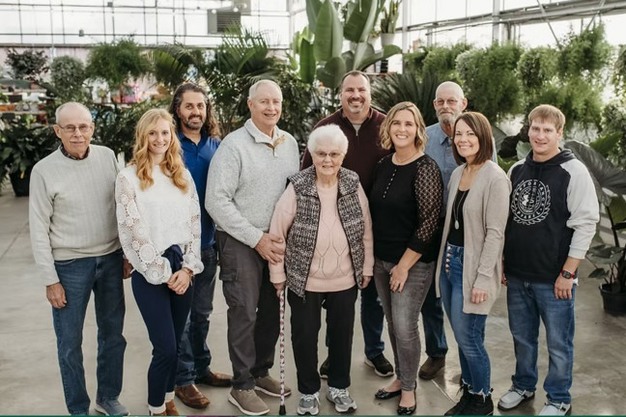
Despite the emphasis on systems and planning, Tiffany takes care to point out that the operation ultimately depends on people. "Our crew handles countless details every day," she says. "From cleaning and spacing to planting and finishing, everyone contributes. Teamwork is what allows the business to function at this level."
Like many growers, Buchwalter Greenhouse has faced recent challenges related to weather variability. Adjustments to crop plans, reductions, and repurposing of plantings have been necessary to maintain quality standards. "We have had to be flexible," Tiffany says. "The goal is always to keep crops looking their best, even when conditions are not ideal."
 © Bulchwater Greenhouse
One of the moments she was particularly proud of was seeing Buchwalter-grown moms featured prominently at Barberton Mumfest, a major local event. "It was rewarding to see months of work displayed on that scale," she says. "Seeing the hillside filled with color made the effort tangible."
For younger growers entering the industry, Tiffany points out how curiosity is the key. "Take classes, attend Cultivate, ask questions, and visit other greenhouses. Never stop learning."
Read the complete article here
For more information:
Premier Tech Growers and Consumers
pthorticulture.com

Buchwalter Greenhouse
6554 Back Orrville Rd., Wooster, OH 44691330-669-3489
buchwaltergreenhouse.com