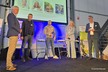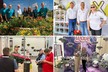


During an official ceremony at IPM Essen in Germany, the winner of the Green Cities Europe Award 2025 was announced. Belgium received the award for its Zuidpark project in Antwerp, an ambitious urban transformation that turns a former parking and event area into more than eight hectares of climate-resilient green space. France, with Parc des Ateliers in Arles, and Poland, with the Burza Action Park and Warsaw Uprising Mound in Warsaw, were awarded second and third place respectively.
The winning project
The jury praised the Zuidpark project for its scale, ambition and multifunctionality. By relocating parking underground, the project reclaims valuable surface space for greenery and public life while restoring the historic dock structure of the site. The park brings together heritage, ecology and social use, offering a variety of atmospheres and spaces that serve residents of all ages. According to the jury, Zuidpark is a strong and forward-looking example of how cities can create high-quality green space while addressing climate challenges. The project stands out for its ecological value, sponge-based water management, ecosystem services and its potential to inspire similar transformations across Europe.
 © Isabelle PateerZuidpark
"After working on the project for ten years, it is wonderful to see that residents have embraced the new park as part of their daily lives," said Jeroen Pasman, Project Leader at AG Vespa.
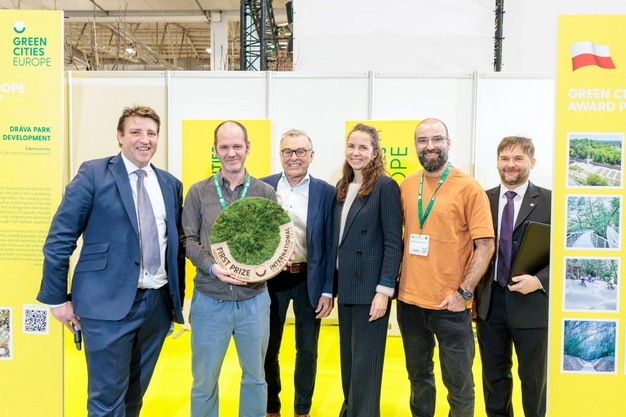 © Green Cities Europe
Second place: France – Parc des Ateliers, Arles
France was awarded second place for Parc des Ateliers, a transformation of a former industrial site into a resilient Mediterranean landscape. The project integrates architecture, topography and climate-adaptive planting to create natural microclimates and reduce heat stress. With its autonomous water system and strong biodiversity performance, the park serves as a reference for ecological urban design.
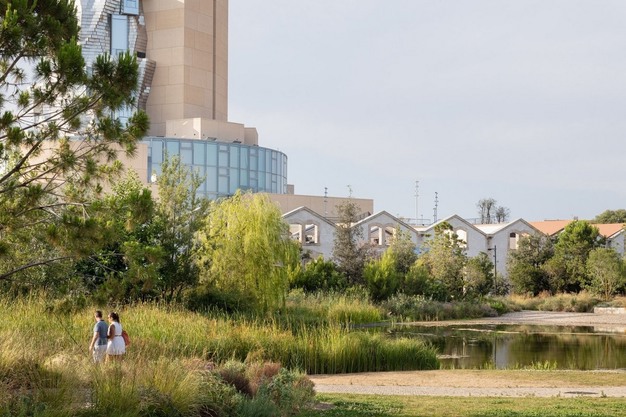 © Michiel de Cleene Parc des Ateliers
Third place: Poland – "Burza" Action Park & Warsaw Uprising Mound, Warsaw
Poland received third place for a project that combines memory, ecology and everyday use. The Burza Action Park and the adjacent Warsaw Uprising Mound form a living monument where history, recreation and biodiversity coexist. The jury highlighted the strong use of native vegetation, the preservation of existing woodland and the project's positive impact on well-being, climate resilience and accessibility.
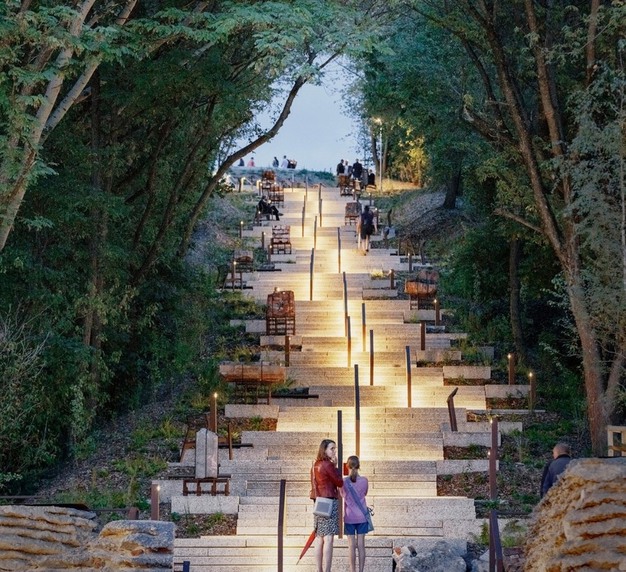 © Michał Szlaga "Burza" Action Park
Eight European projects
Organised by the European Nurserystock Association and the Green Cities Europe campaign, the annual award celebrates outstanding European projects that demonstrate how greenery can enhance climate resilience, biodiversity and quality of life in urban environments. This year's competition brought together eight national projects, each reflecting a different approach to urban greening across Europe, from Antwerp and Arles to Berlin, Budapest, Leiden, Pazardzhik, Värnamo and Warsaw.
Together, the projects show the wide range of ways greenery can be embedded in cities. They span large-scale parks and post-industrial transformations as well as smaller, community-driven and highly reproducible initiatives, highlighting the versatility and impact of green solutions in urban contexts.
Jury and assessment
An independent international jury evaluated the projects based on criteria including the quality and quantity of greenery, design, environmental and economic impact, innovation, material use and reproducibility. The jury noted the overall high quality of submissions and the shared recognition of nature-based solutions as essential to contemporary urban life.
For more information:
Green Cities Europe
Email: [email protected]
https://thegreencities.eu/